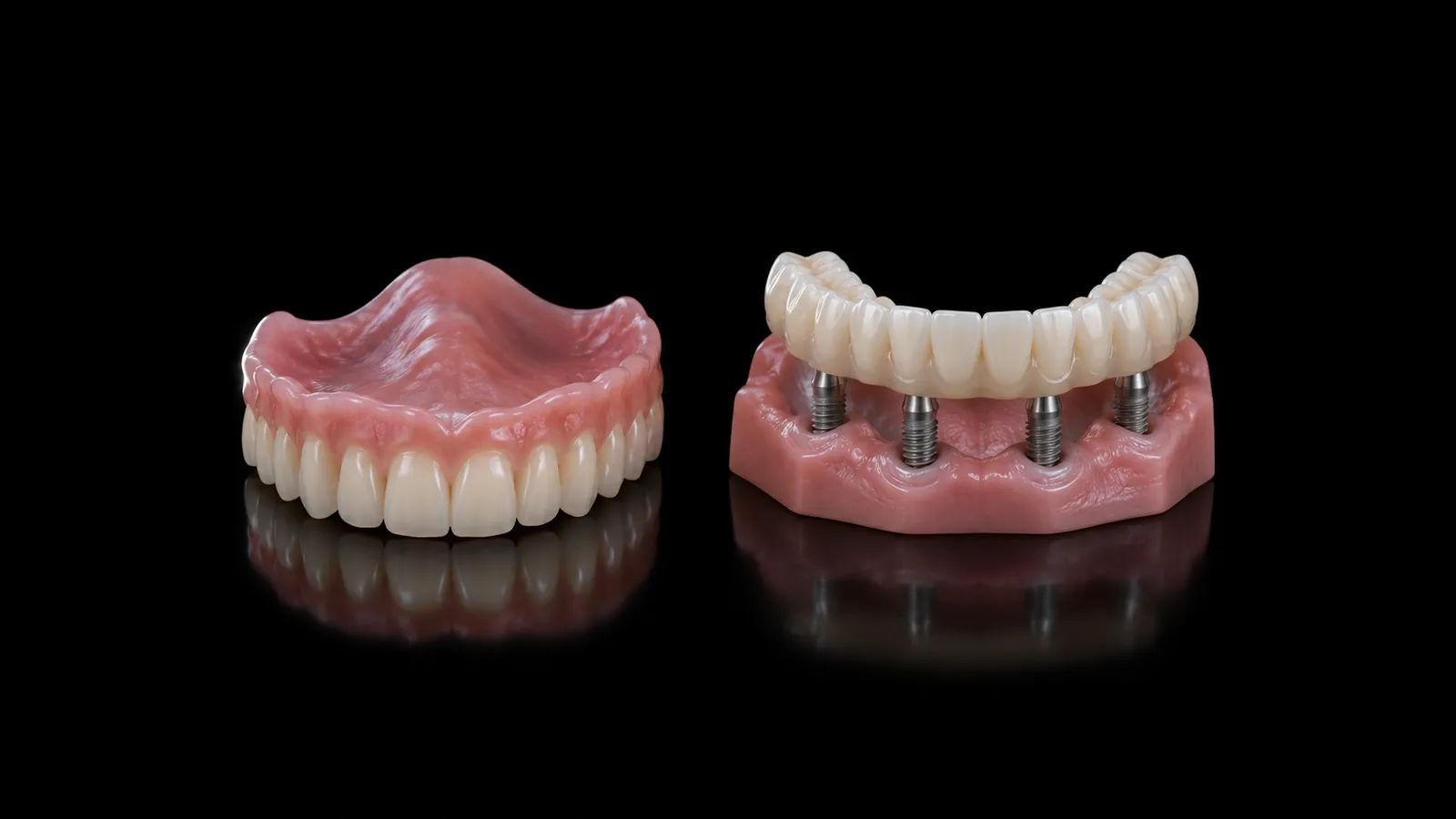
Replacing all your teeth: dentures, implant-retained dentures or a fixed arch
Replacing all the teeth in a jaw can mean a removable denture, a denture held by implants or a fixed arch. Each option has its own steps and upkeep.
Read the articleBefore replacing a tooth, it helps to understand why it was lost. Treating the cause, then the number and position of missing teeth, guide the choice of solution.
Published by Dr Hafça Moqadem, Dental surgeon in Marrakech4 min read
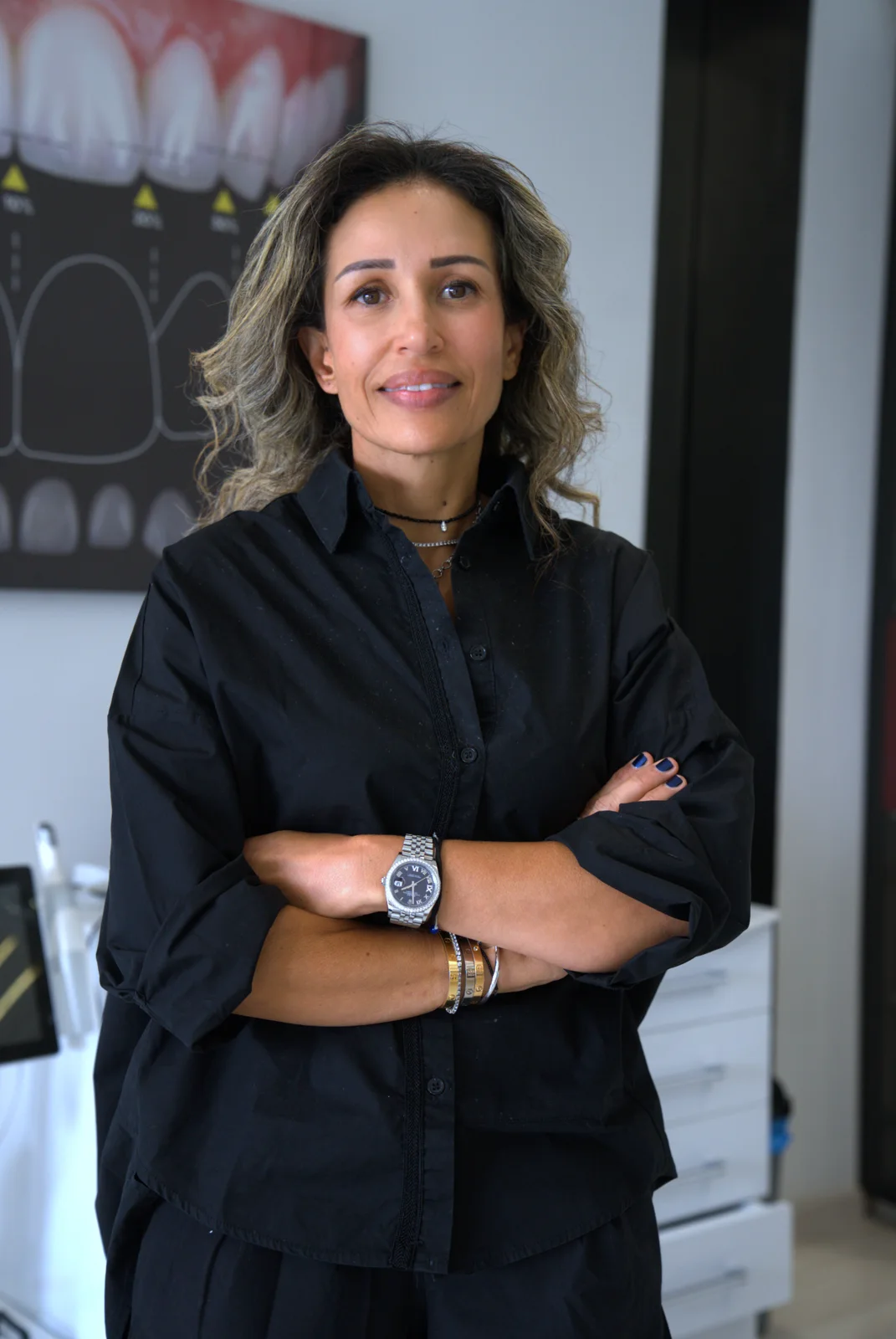
Holding the CFI diploma in oral implantology and periodontology (Paris V Faculty of Medicine), Dr Hafça Moqadem places implants and performs bone grafts at the clinic. The treatment plan is based on 3D imaging and explained to you step by step.
Looking for a dentist in Guéliz? Dr Hafça Moqadem welcomes you at Madani Plaza, Guéliz.
A tooth is rarely lost for no reason. Common causes are decay that has gone too far to be treated, a fractured root, a knock, or gum disease. The NHS notes that gum disease can make teeth loose until they fall out, and that it often starts with gums that bleed when brushing, or that are swollen or red. These signs are easy to miss because they are rarely painful. Understanding the cause is the first step: replacing a tooth without treating what made it fall out exposes the neighbouring teeth, and the future restoration, to the same problem.
A missing tooth is not only about how your smile looks. Chewing shifts onto other teeth, some foods become harder to eat and speech can change when a front tooth is missing. Where the tooth was lost, the bone that held it tends to shrink over time; the FDA lists limiting this bone shrinkage among the possible benefits of an implant. The neighbouring and opposing teeth can also drift into the gap. These changes are gradual, which is why an examination is useful even when the gap does not yet bother you day to day.
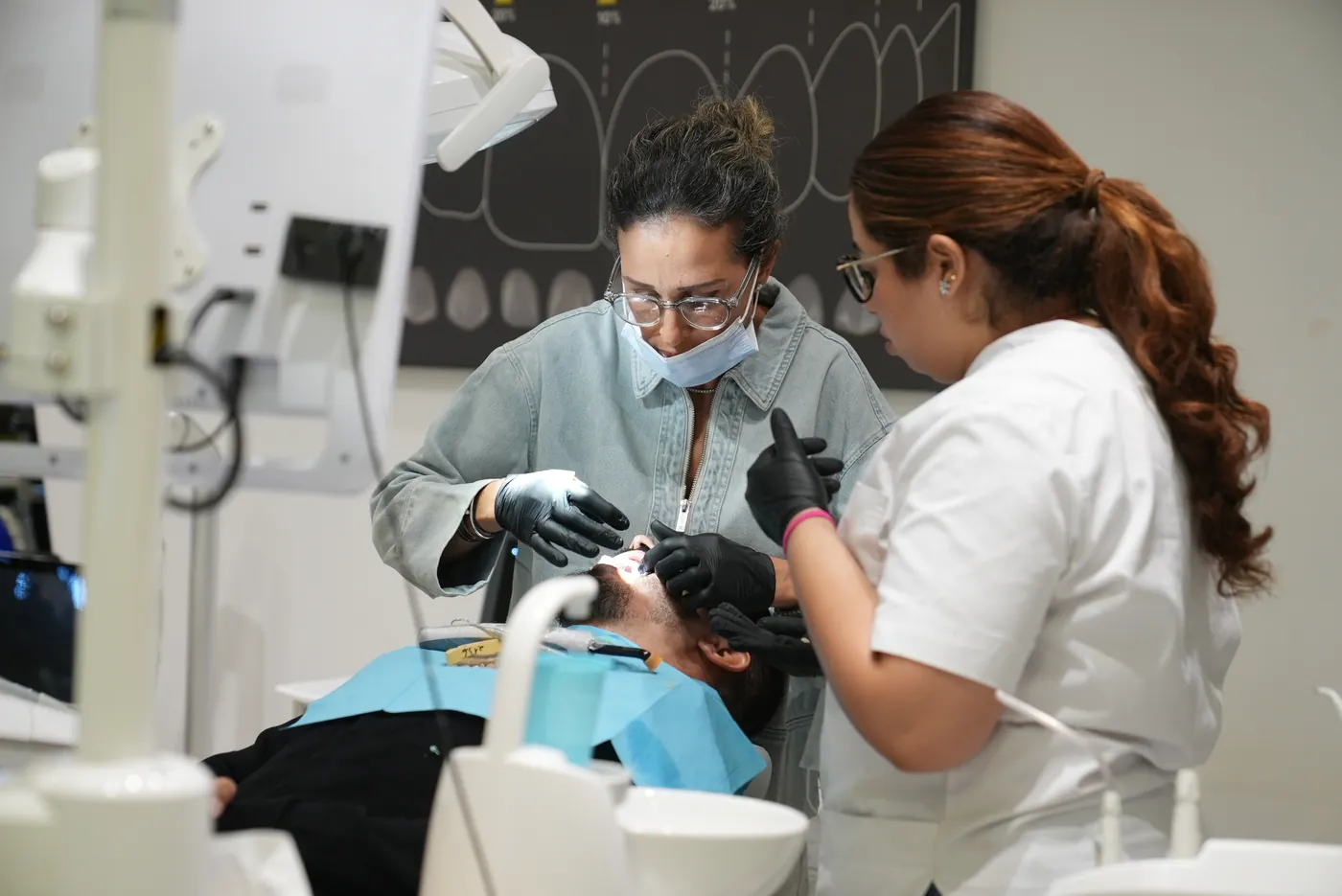
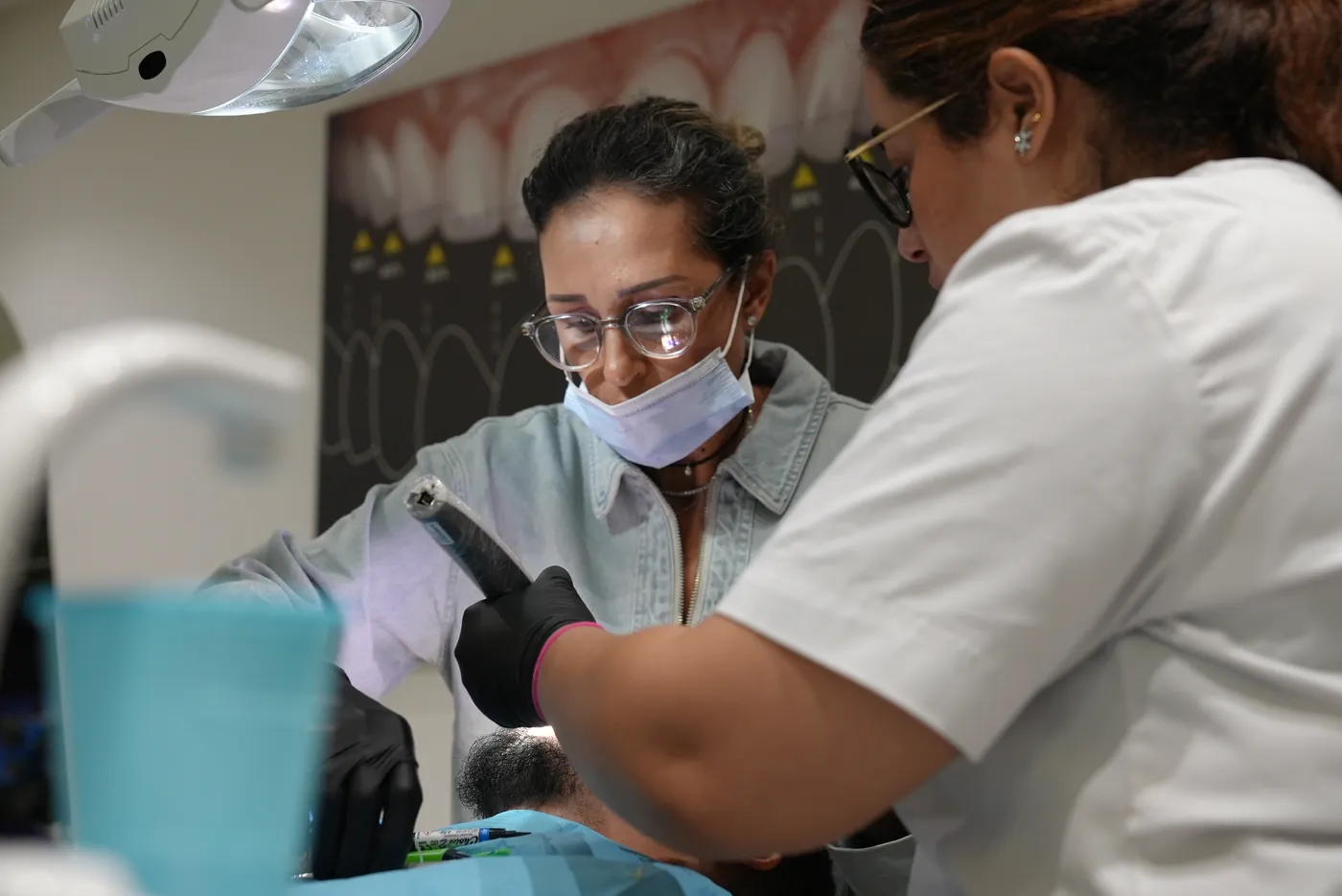
If the loss is linked to the gums, periodontal treatment comes first: cleaning below the gum line, learning a suitable brushing technique, sometimes surgery. If several cavities are active, they are treated before any replacement plan. The NHS recommends brushing at least twice a day with fluoride toothpaste, cleaning between your teeth every day with floss or interdental brushes, not smoking, and seeing a dentist if you have not had a check-up for two years. A stable mouth gives better conditions to an implant, a bridge or a removable denture alike.
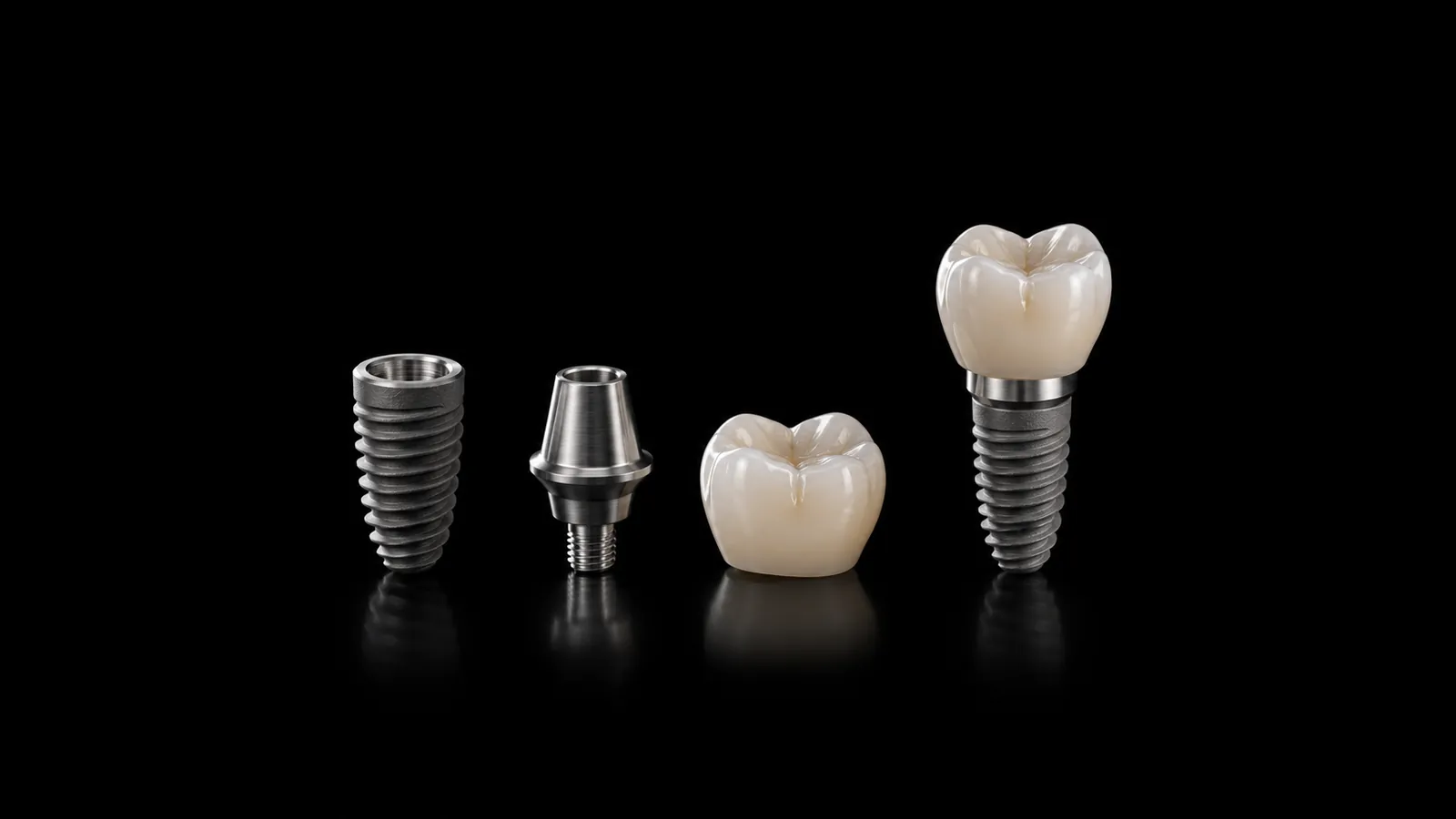
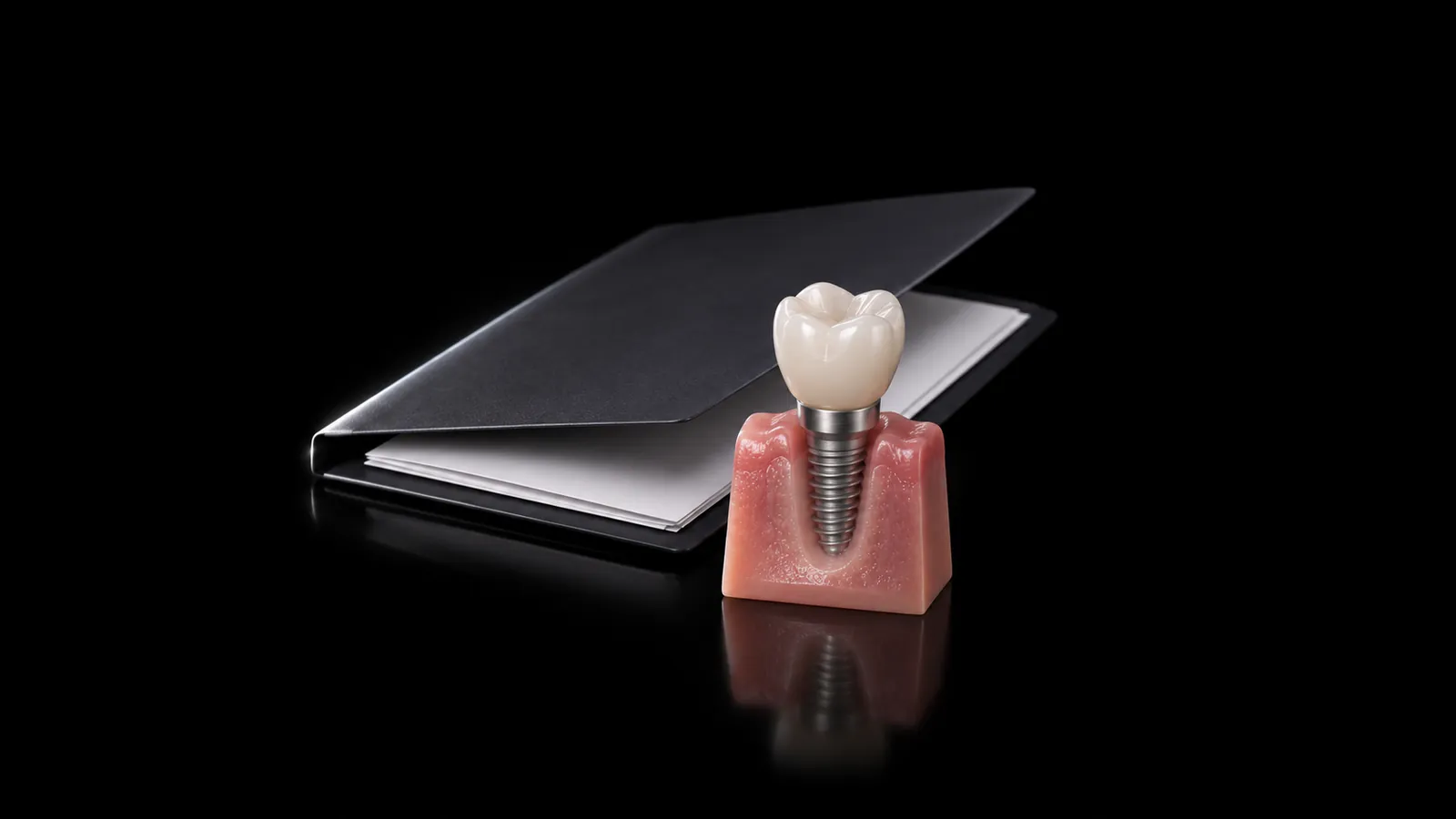
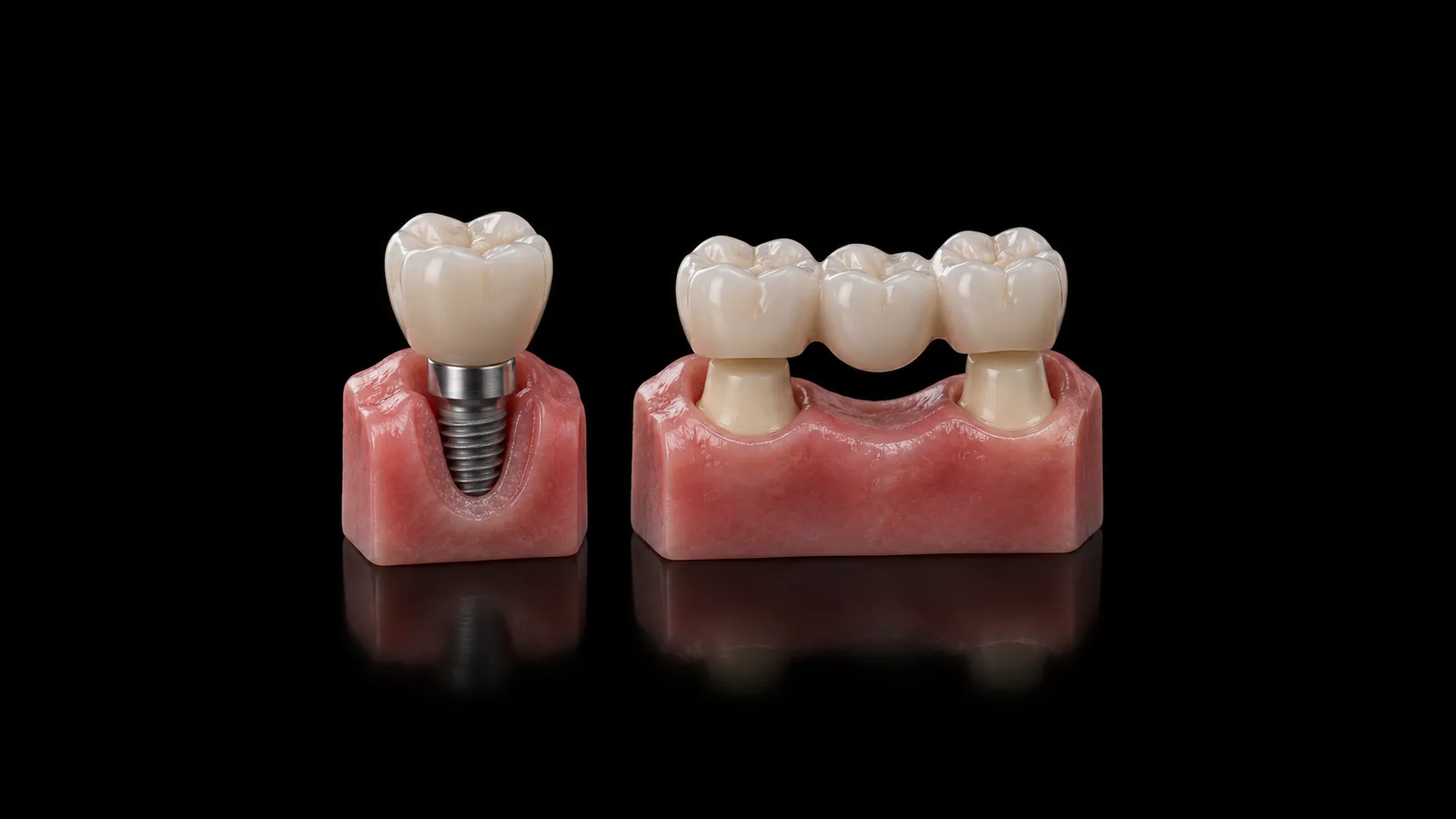
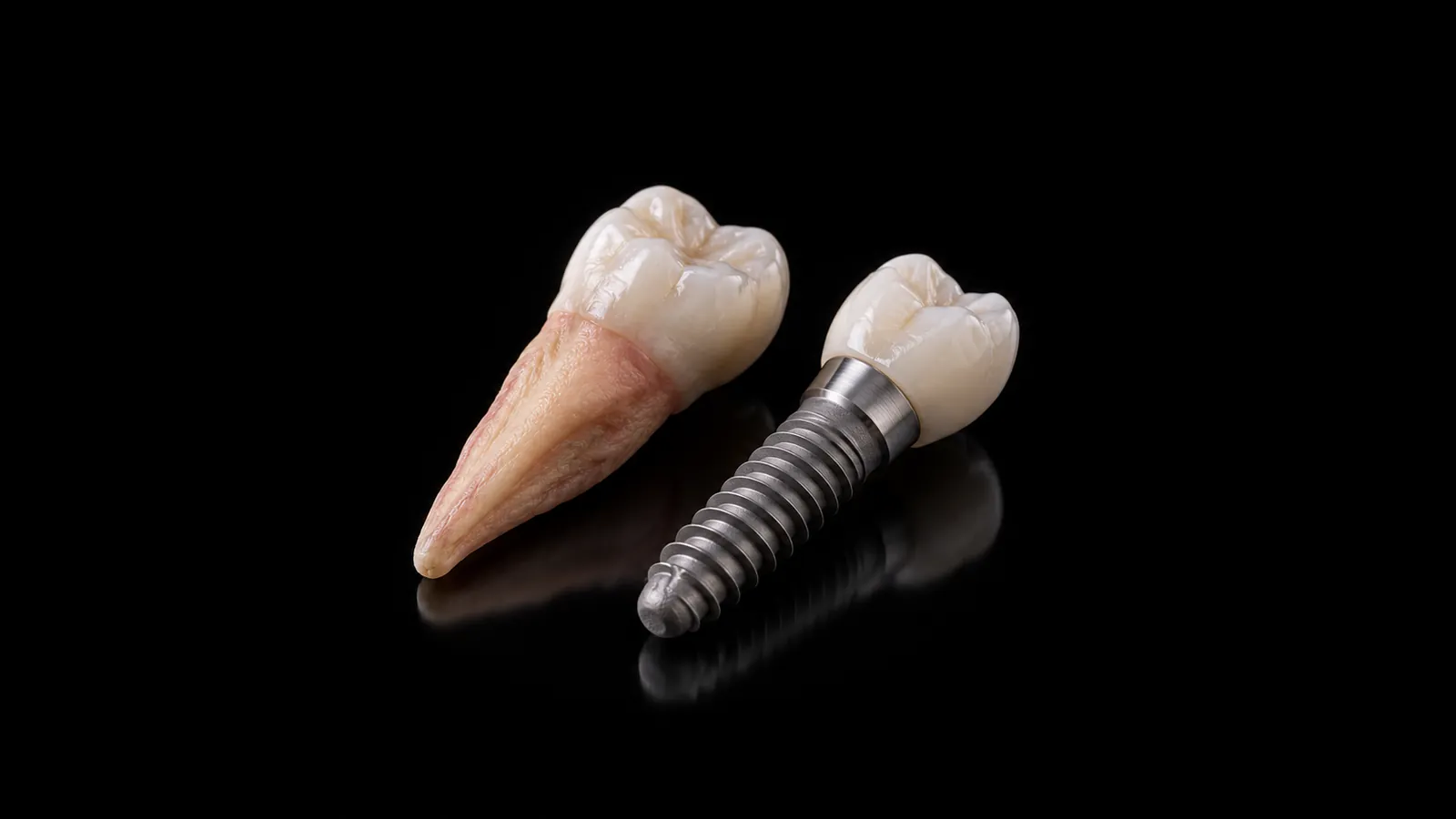
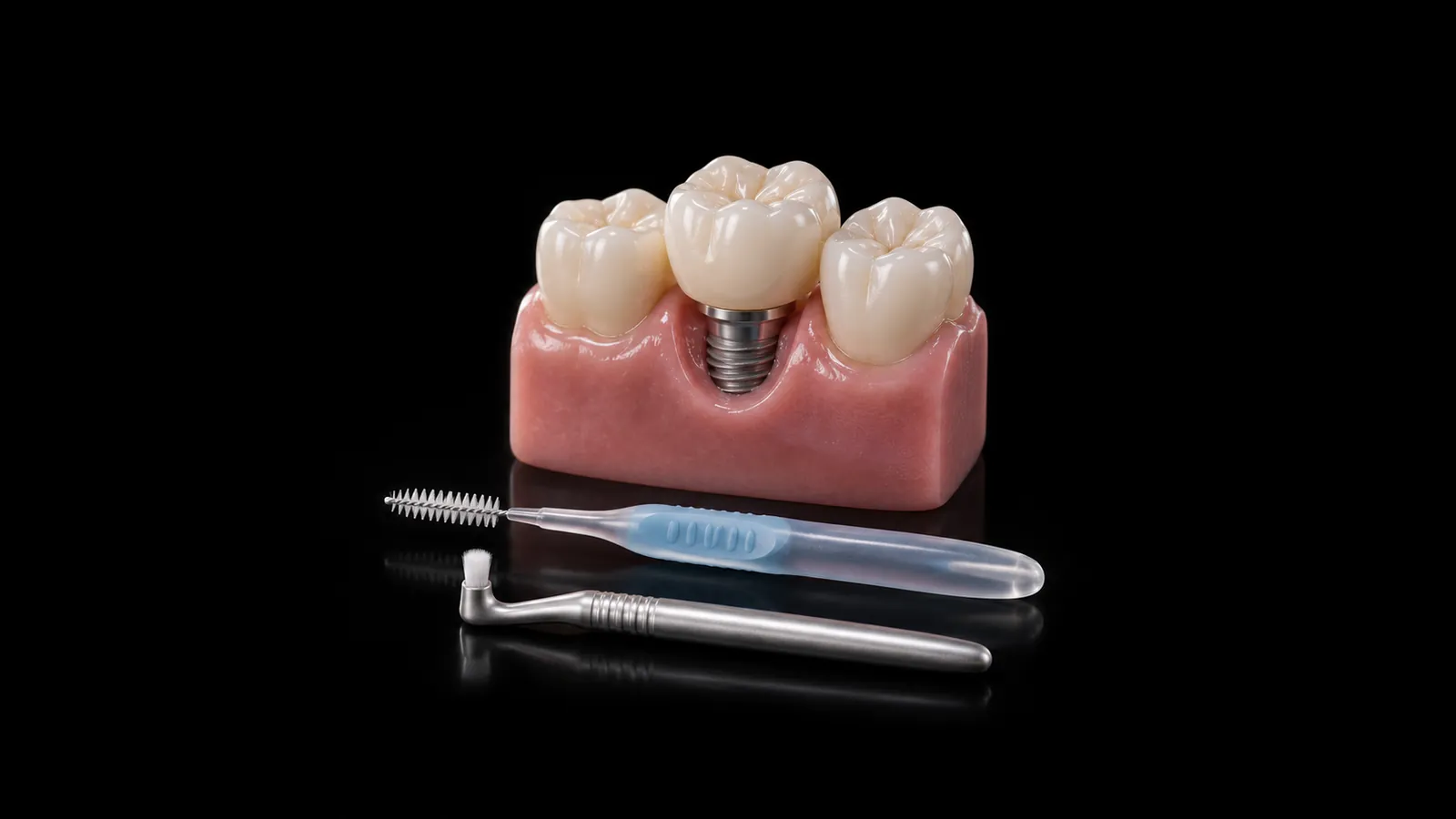
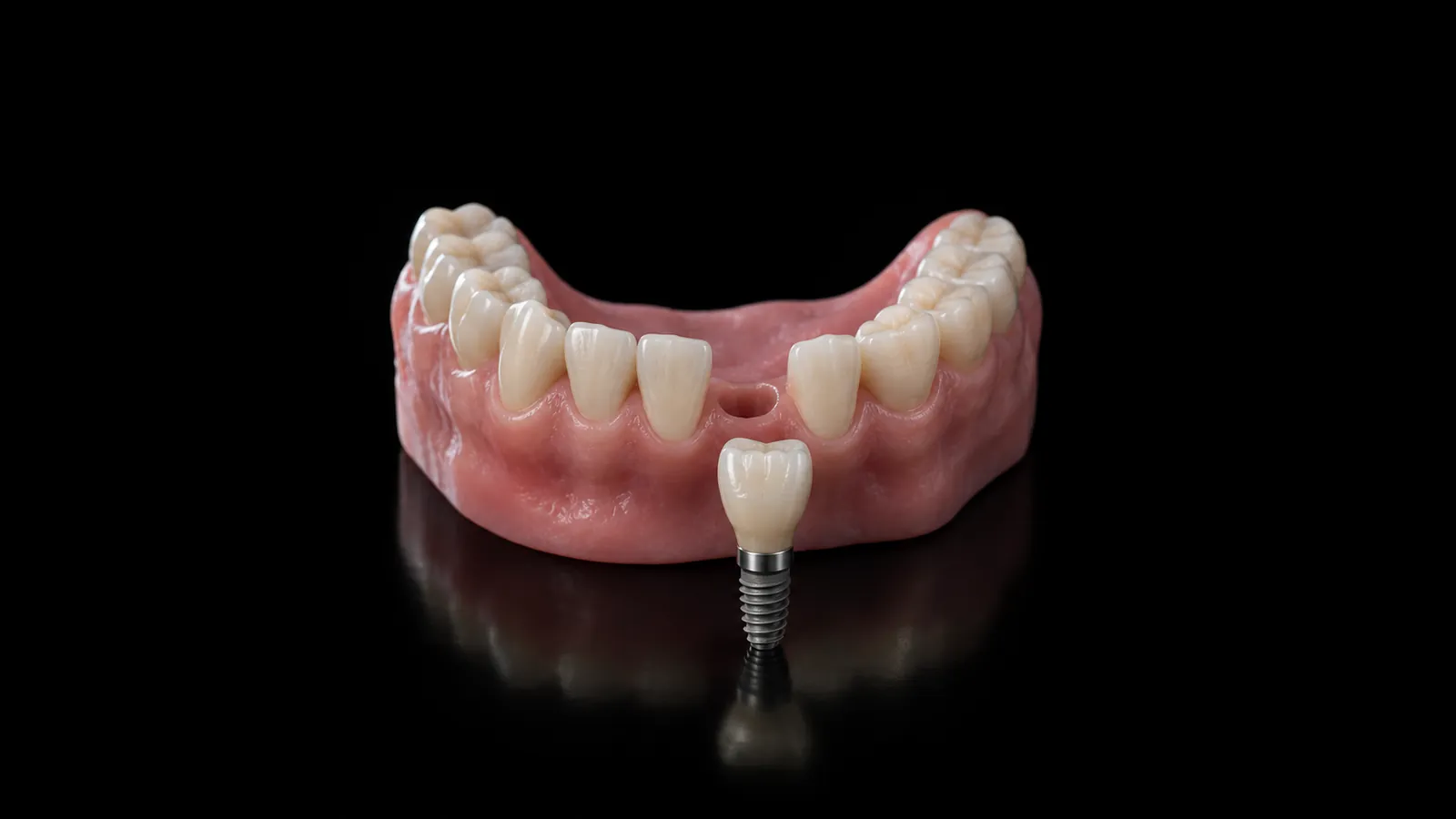
For a single tooth, three solutions are usually discussed. An implant carries a crown without touching the neighbouring teeth, but it needs surgery and several months to integrate with the bone. A bridge is fixed and needs no surgery, but it rests on the teeth on either side, which have to be filed down, so it is mostly considered when they already have crowns. A removable partial denture is the least invasive option; it comes out for cleaning and can serve as a temporary solution. The position of the tooth, the condition of its neighbours and the available bone guide the choice.
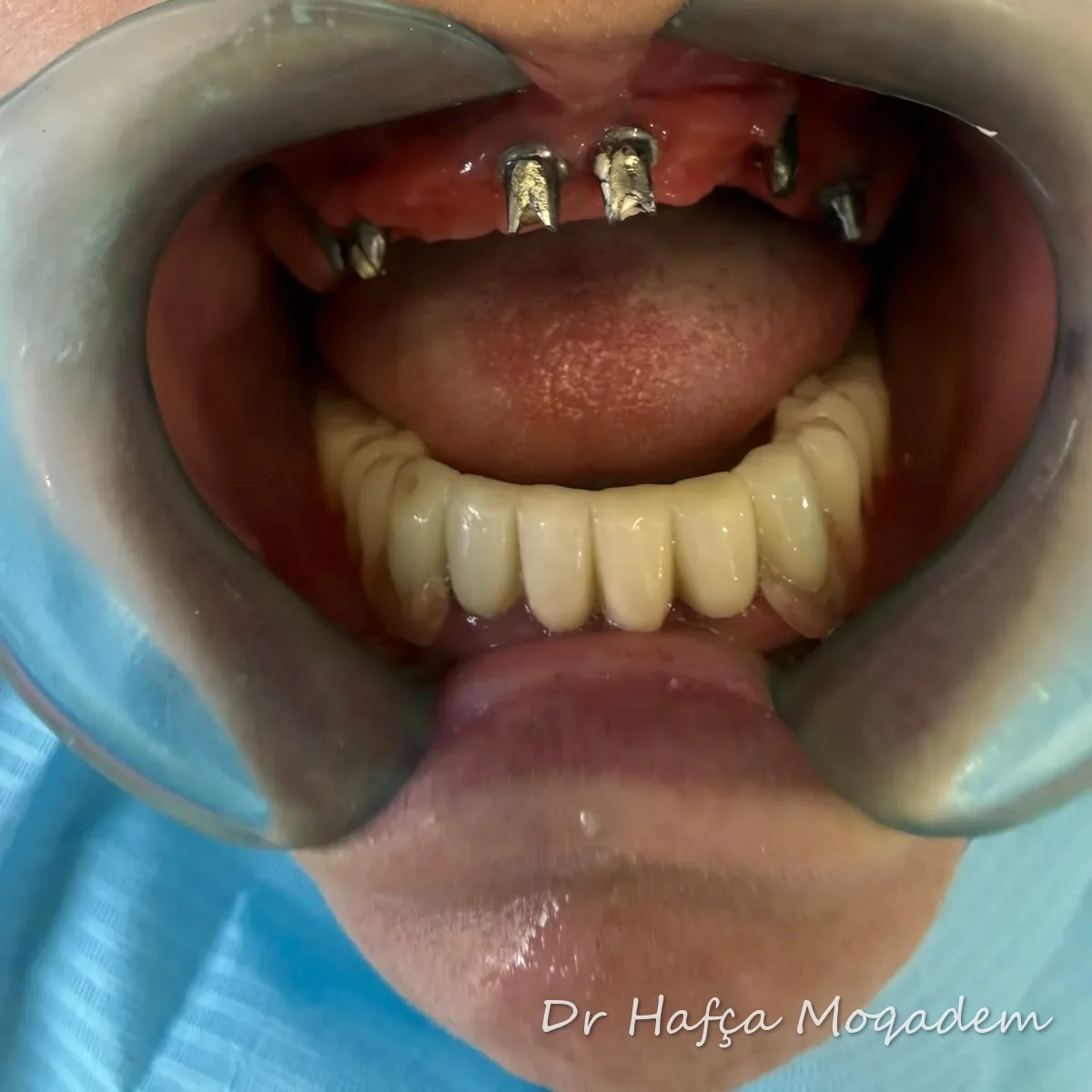 Before
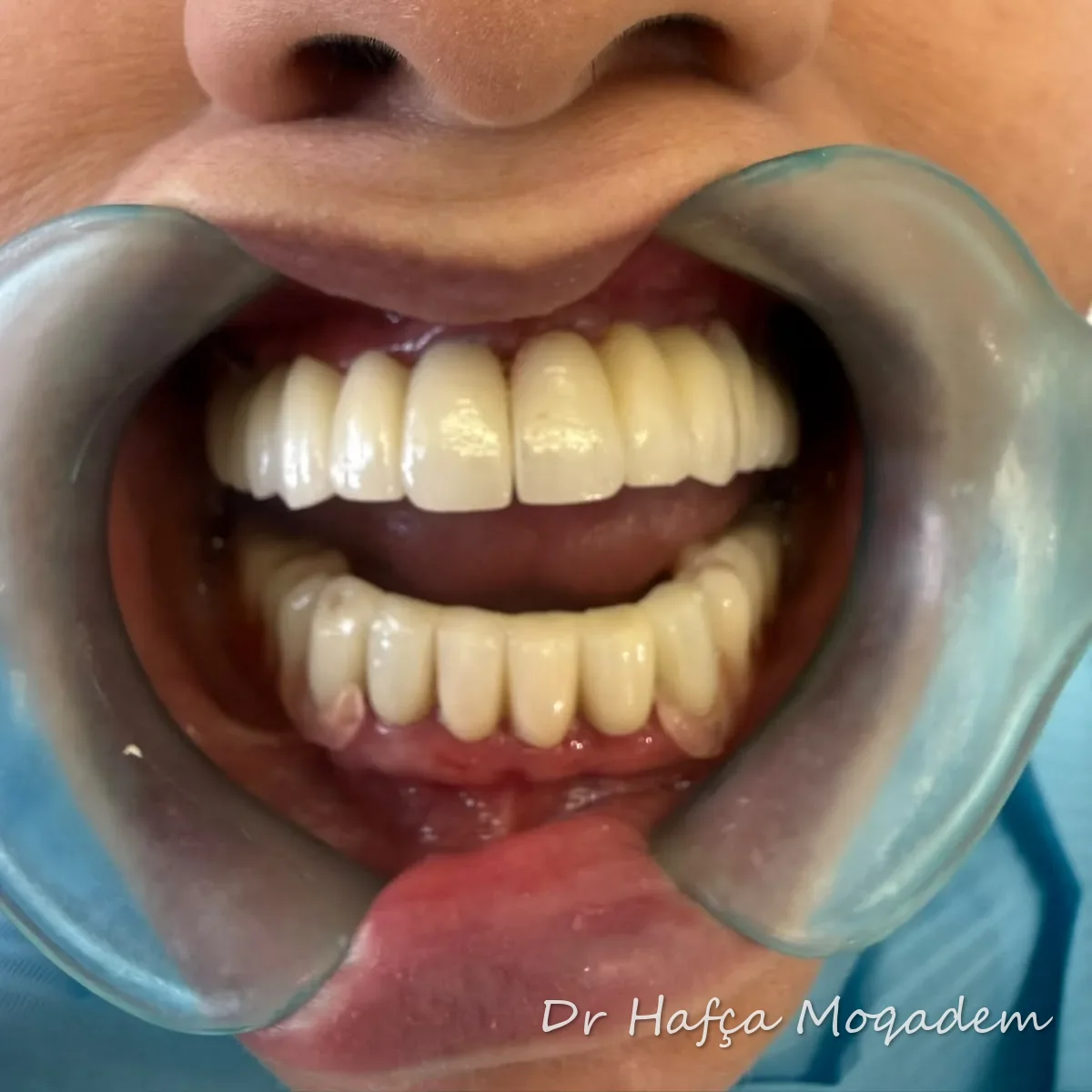 After
Real case from the clinic All-on-6, a patient of the clinic: the implants in place, then the fixed arch. See the cases: All-on-4 / All-on-6
When several teeth are missing, the number of implants does not have to match the number of missing teeth. A bridge on two implants can, for example, replace three teeth in a row, depending on the bone and chewing forces. A removable partial denture, with a metal or resin frame, remains an option without surgery. When few teeth remain, or they are fragile, the discussion may turn to replacing the whole arch. The clinical assessment, with imaging when it is useful, lets you compare these scenarios for your own case, with their stages, upkeep and limits.
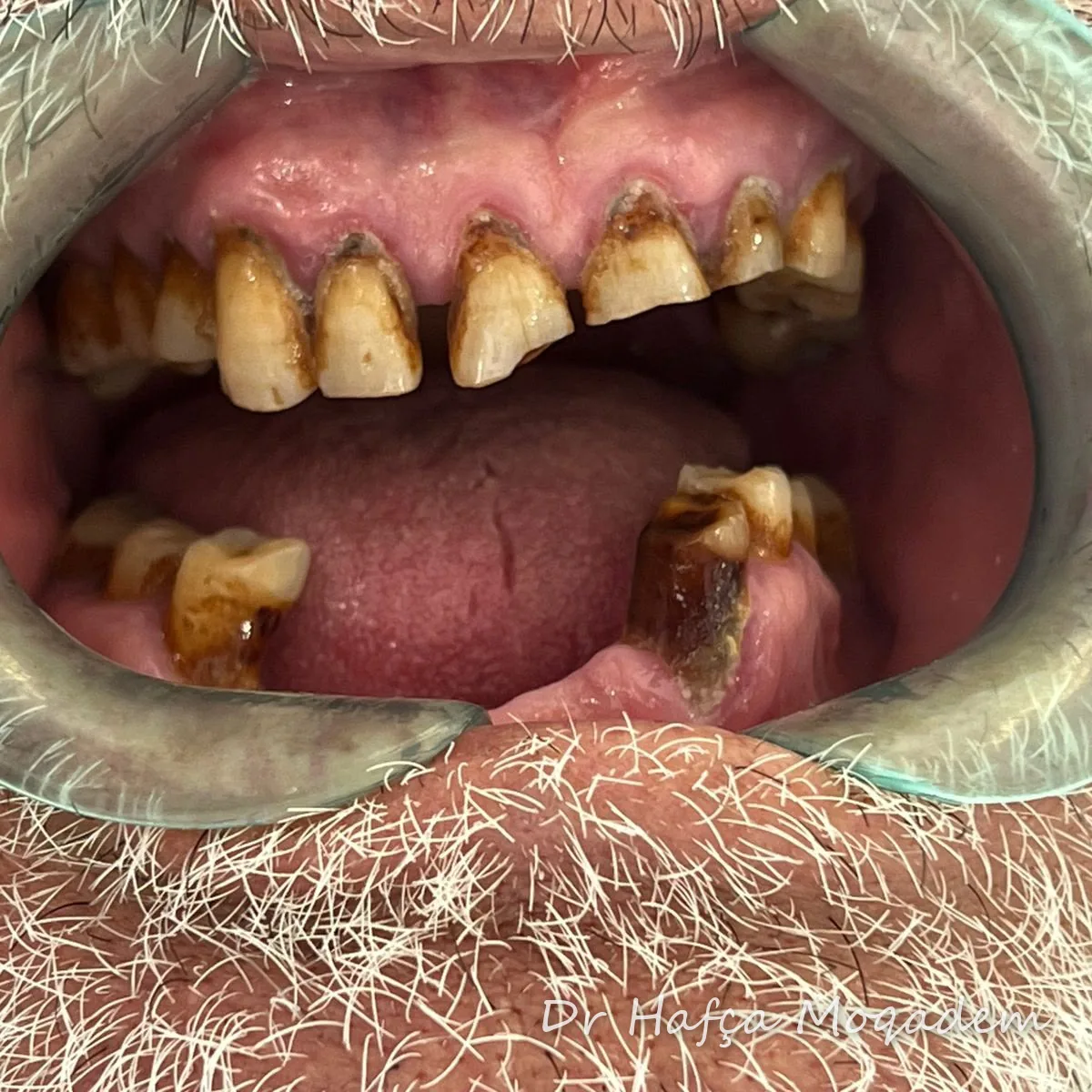 Before
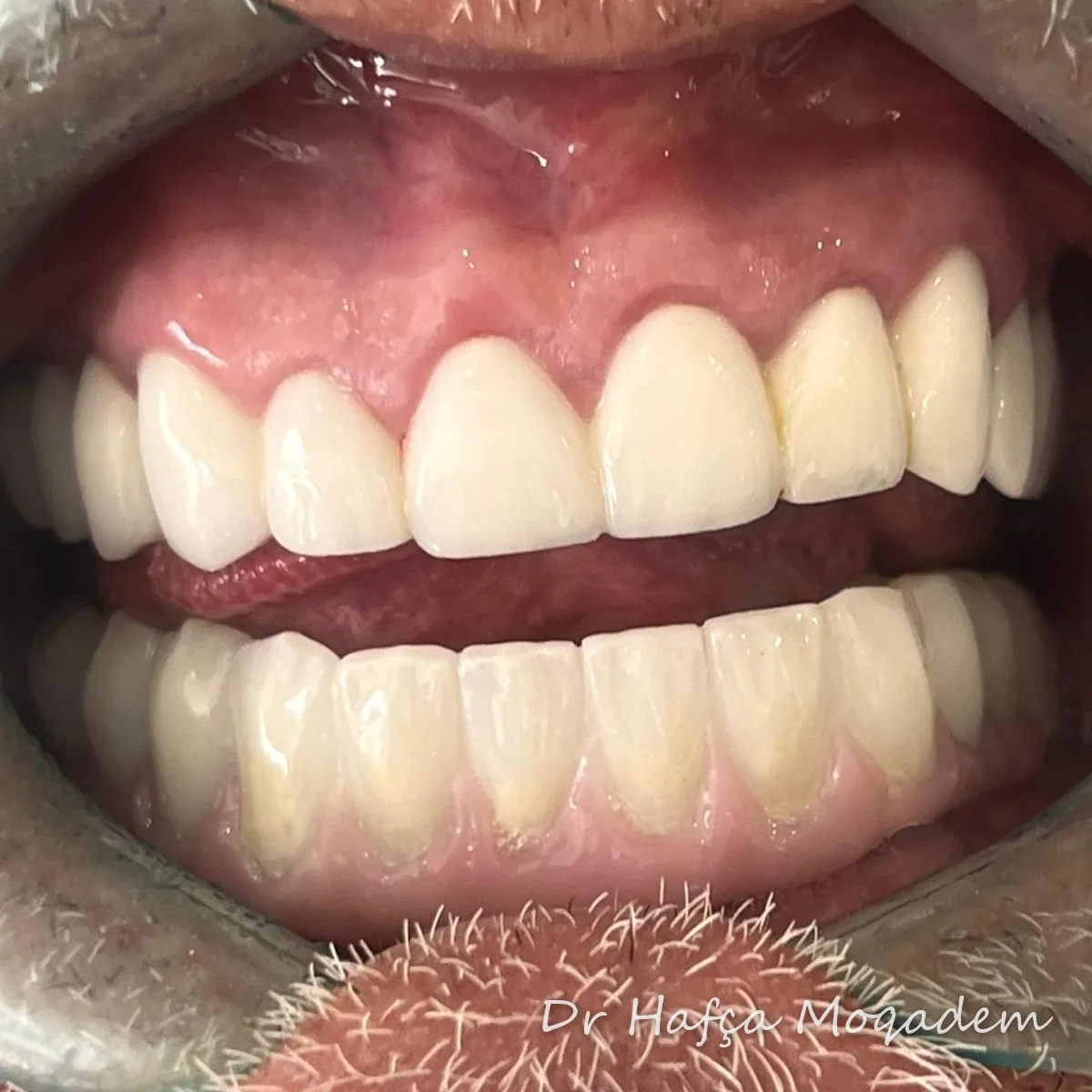 After
Real case from the clinic All-on-4, a patient of the clinic: before, then with his fixed arches on implants. See the cases: All-on-4 / All-on-6
An adult tooth knocked out by a blow is an emergency. The NHS says it should ideally be treated within 30 minutes to an hour. Without touching the root, and making sure it is clean, try to put it back in its socket, or keep it in milk or in your mouth against your cheek, then call a dentist. Do not put a baby tooth back. A broken tooth, even if it does not hurt, should also be checked quickly. If your face swells badly or breathing or swallowing becomes difficult, you need urgent medical help.

No restoration is permanent in the sense of lasting forever. Cleveland Clinic says crowns and bridges often last around 15 years and removable dentures at least seven, after which they may need redoing. An implant can stay in place for many years with good care, although its lifespan cannot be promised. To compare, also look at the number of appointments, how easy each option is to clean, the effect on the neighbouring teeth and the check-ups needed. A simpler solution today may suit you well, or serve as a step towards another one later.
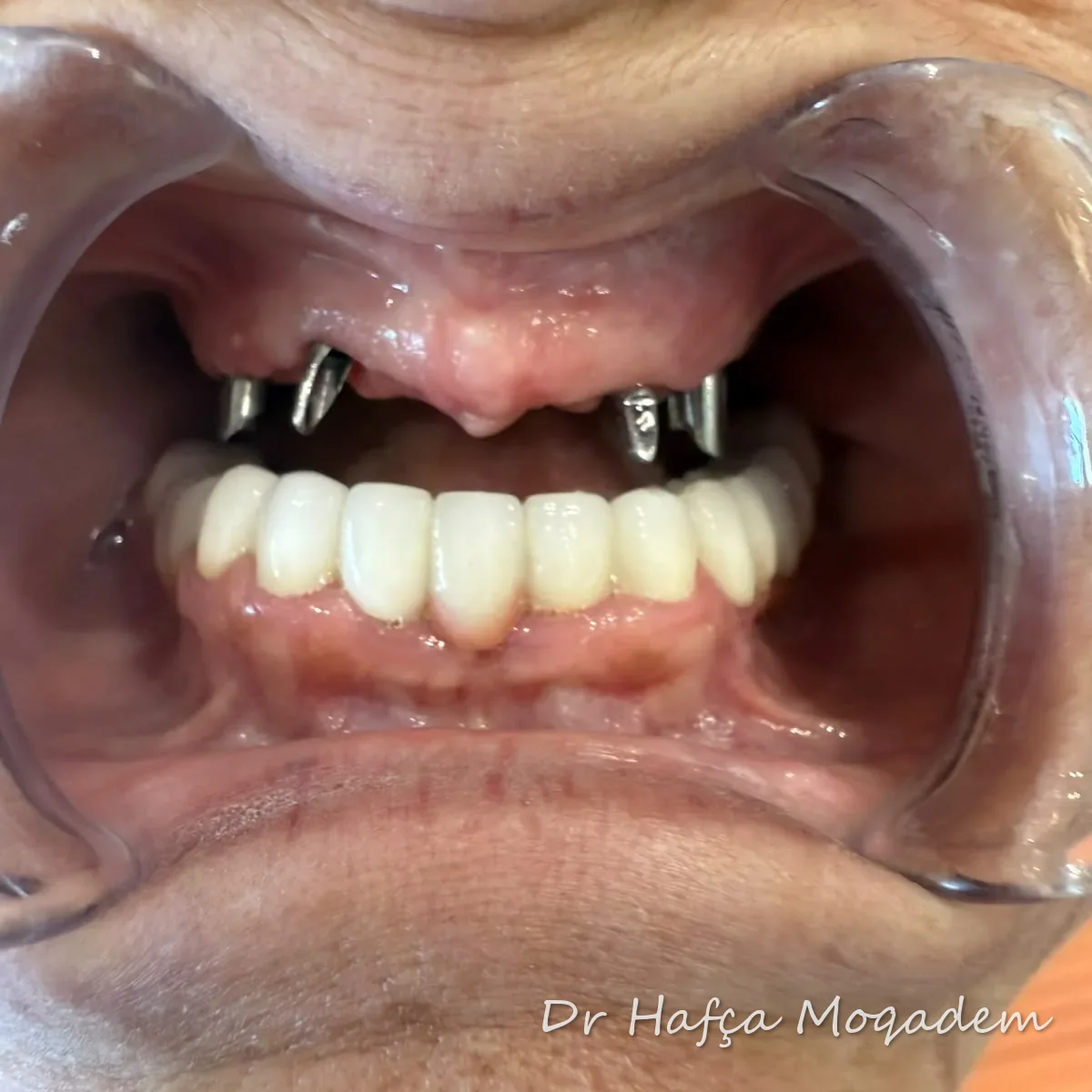 Before
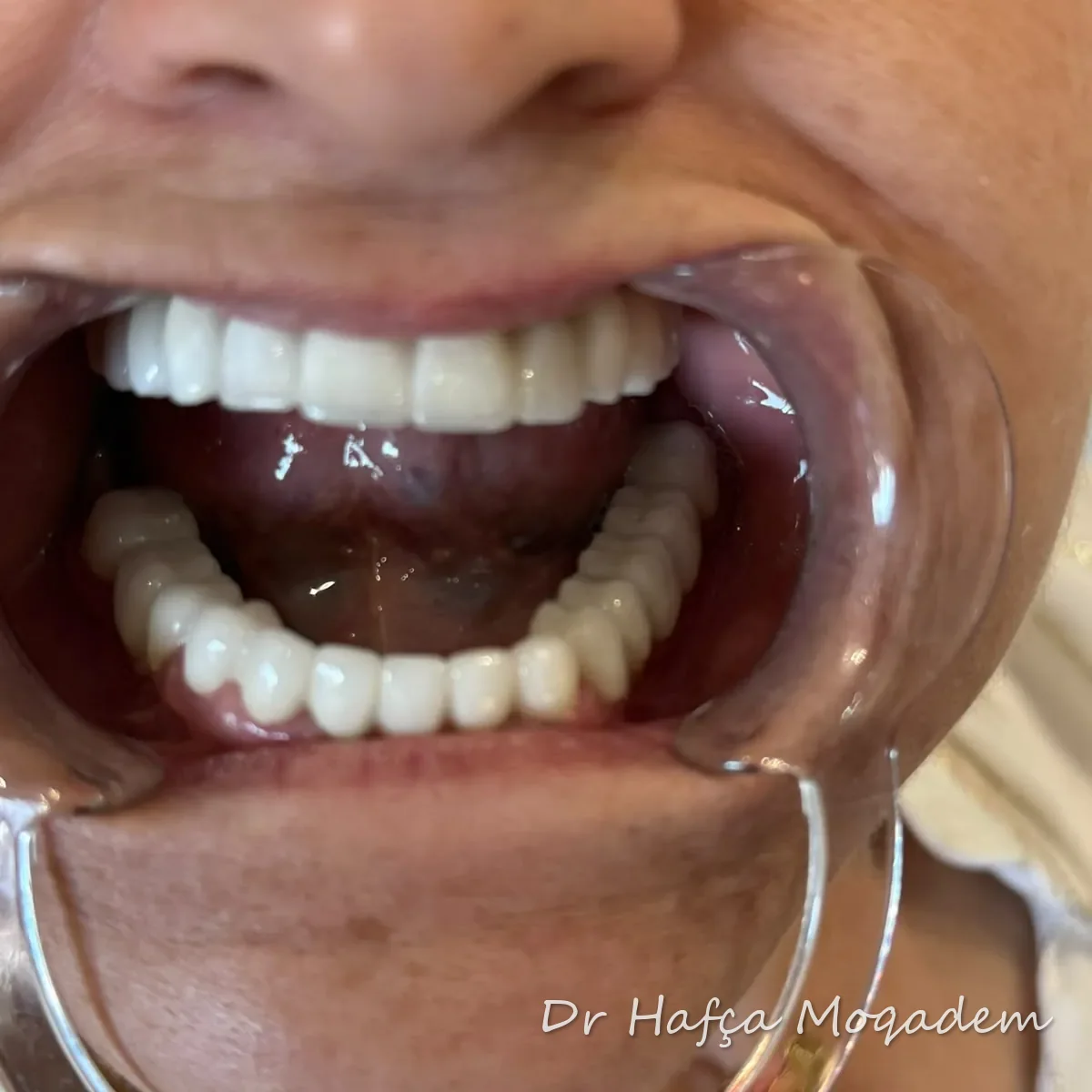 After
Real case from the clinic All-on-6, another patient of the clinic: the implants in place, then the fixed arch. See the cases: All-on-4 / All-on-6
Why did I lose this tooth, and are other teeth at risk? Do my gums or any cavities need treating before a replacement? Which options are possible for this specific gap, and what are their stages? Is my bone sufficient for an implant? How is each solution cleaned, and how often should I come back for check-ups? What will I wear in the meantime? Ask for a written treatment plan after the examination. And if a tooth moves, bleeds or hurts, do not wait to be seen: the earlier a problem is caught, the more options remain open.
The visual guide
Principles to help you prepare your questions. The assessment makes it possible to know what suits your situation.
| Item | Principle | To clarify at the clinic |
|---|---|---|
| Implant | A support fixed in the bone, carrying a crown or a prosthesis. | Bone volume, gum condition and general health to be assessed. |
| Bridge | A replacement resting on teeth or implants. | The supports and their preparation must be examined. |
| Removable denture | A device the patient takes out to clean it. | Stability, comfort and maintenance to be discussed depending on the situation. |
A daily guide
The NHS recommends about 2 minutes of brushing, twice a day, with a fluoride toothpaste.
Source: NHS, How to keep your teeth clean. A prevention guide, with no prediction of an individual result.
Your next appointment
Choose the questions you would like to ask. Your choices stay on this page and are neither saved nor sent.
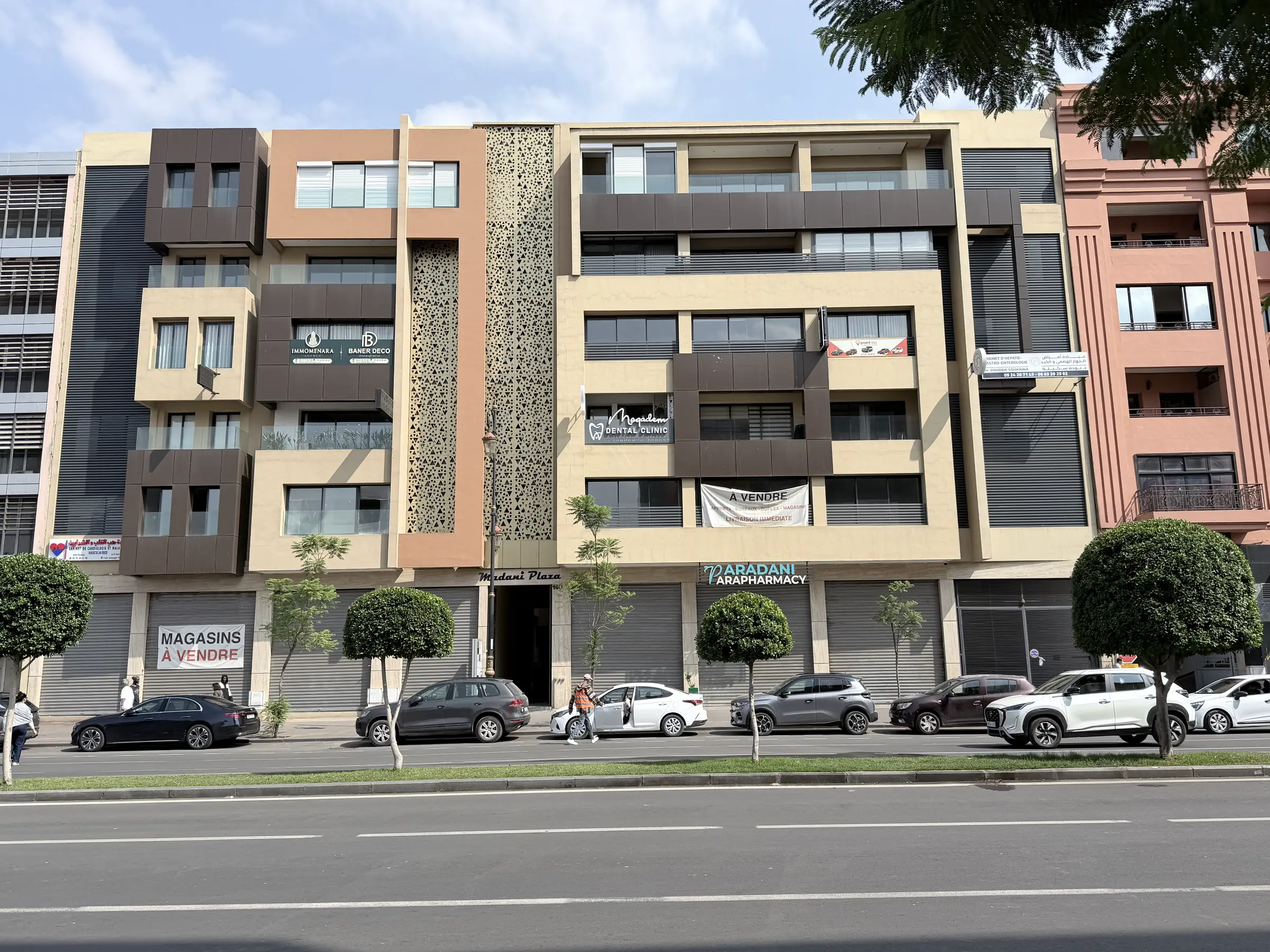
Guéliz clinic, Marrakech
An article does not replace an examination. At the clinic, Dr Hafça Moqadem examines you, explains the options and gives you a written plan before any treatment.
Call the clinic, write to us on WhatsApp, or choose a day and a time yourself: your request reaches the clinic's WhatsApp and they will confirm the appointment.
2nd floor, No. 180 Madani Plaza, Boulevard Abdelkrim Al Khattabi, Guéliz, Marrakech
Replacing all the teeth in a jaw can mean a removable denture, a denture held by implants or a fixed arch. Each option has its own steps and upkeep.
Read the articlePrice ranges observed in Morocco in 2026 for an implant with its crown, what makes a quote vary and the questions to ask before you start.
Read the articleWhat Moroccan health insurance schemes cover for an implant, what changed at CNOPS in 2026, and the documents to ask the clinic for.
Read the articleAn implant can replace the root of a missing tooth and carry a crown or a denture. It has real advantages, but it involves surgery, time and ongoing care.
Read the articleDental implants attract many common beliefs, both too negative and too positive. Here are seven frequent claims, checked against medical sources.
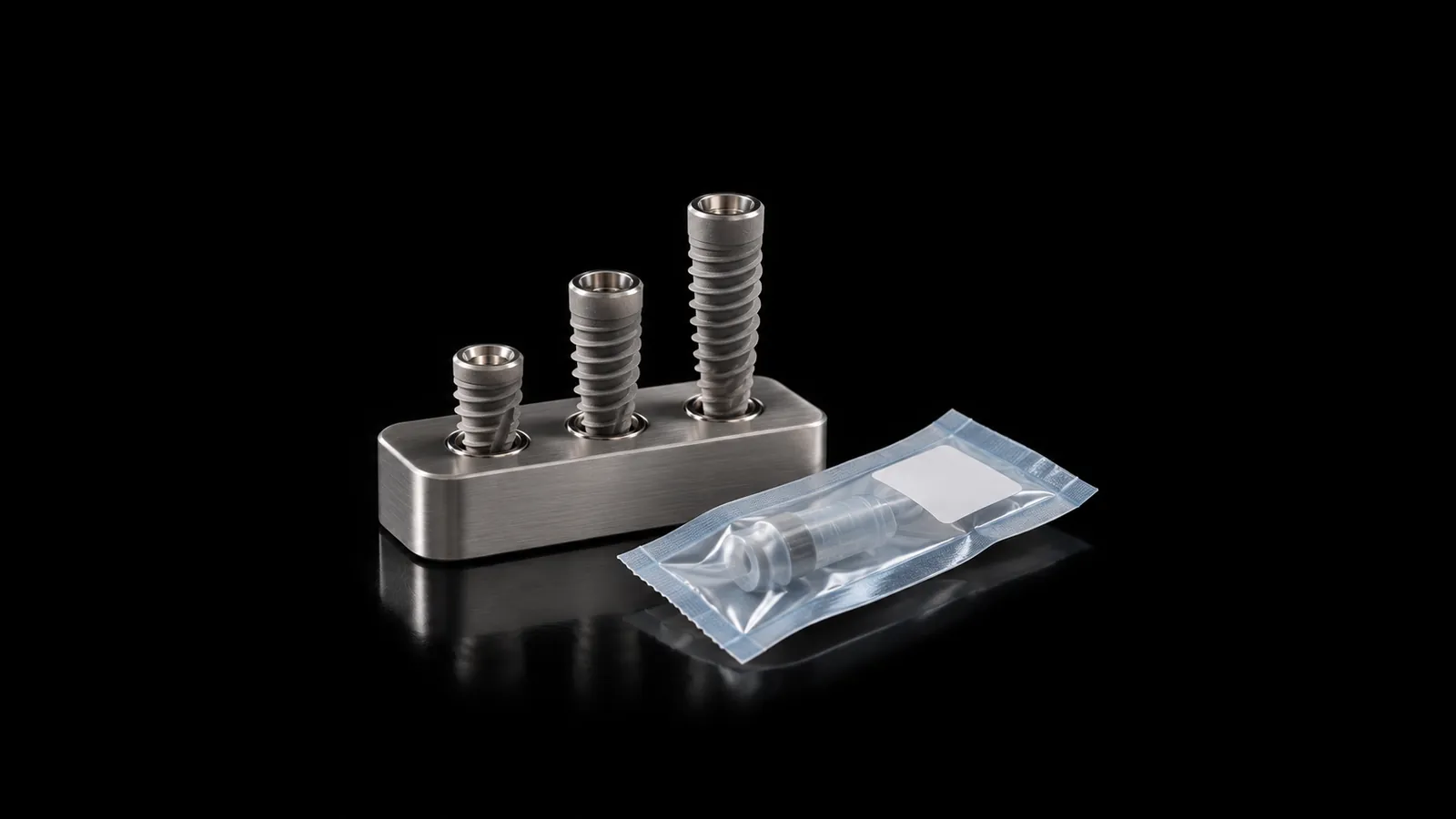
Read the articleA dental implant combines several parts, often in different materials. Knowing their roles helps you ask the right questions, without judging quality on one material alone.
Read the articleImplants are often described as long-lasting. In practice, the implant and the tooth it carries do not last the same time, and cleaning matters as much as placement.
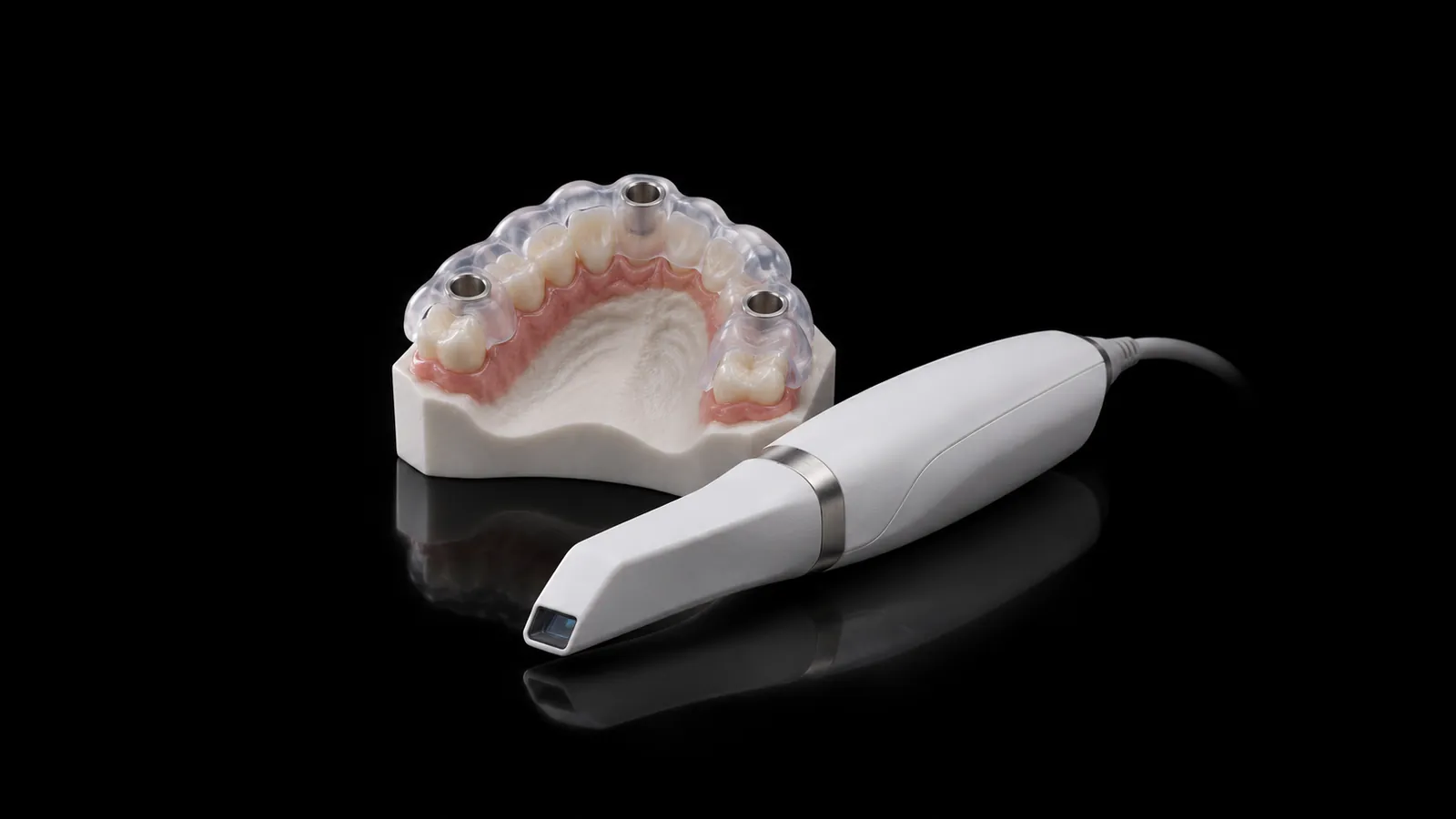
Read the articleDigital tools have changed how implants are prepared: 3D imaging, virtual planning, printed guides. They help the dentist, without replacing the examination or removing biological limits.
Read the articleTo find out more about the general information in this article:
Hello. Choose a question below and the answer will appear here.