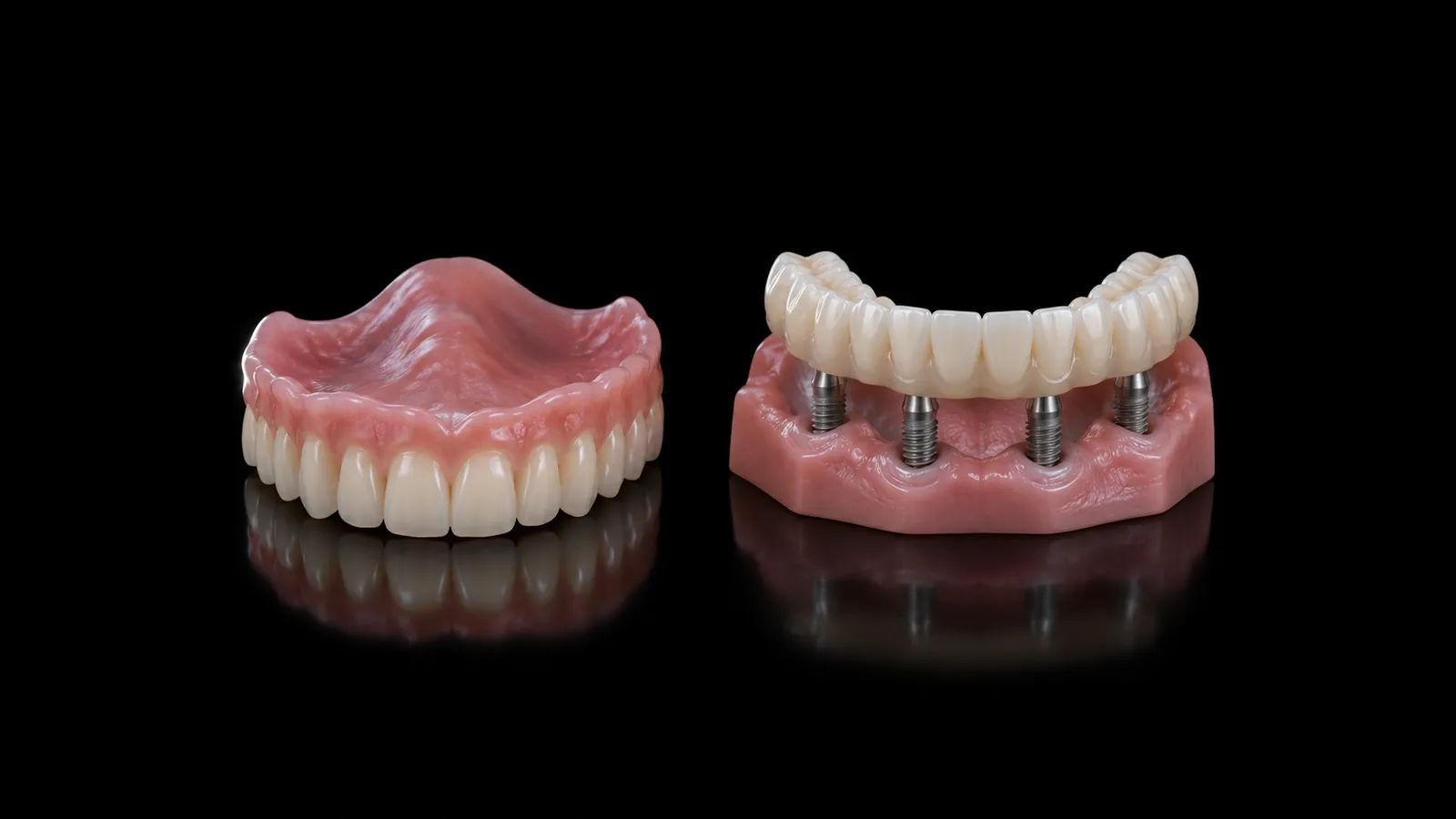
Replacing all your teeth: dentures, implant-retained dentures or a fixed arch
Replacing all the teeth in a jaw can mean a removable denture, a denture held by implants or a fixed arch. Each option has its own steps and upkeep.
Read the articleDental implants attract many common beliefs, both too negative and too positive. Here are seven frequent claims, checked against medical sources.
Published by Dr Hafça Moqadem, Dental surgeon in Marrakech4 min read
Holding the CFI diploma in oral implantology and periodontology (Paris V Faculty of Medicine), Dr Hafça Moqadem places implants and performs bone grafts at the clinic. The treatment plan is based on 3D imaging and explained to you step by step.
Looking for a dentist in Marrakech? Dr Hafça Moqadem welcomes you at Madani Plaza, Guéliz.
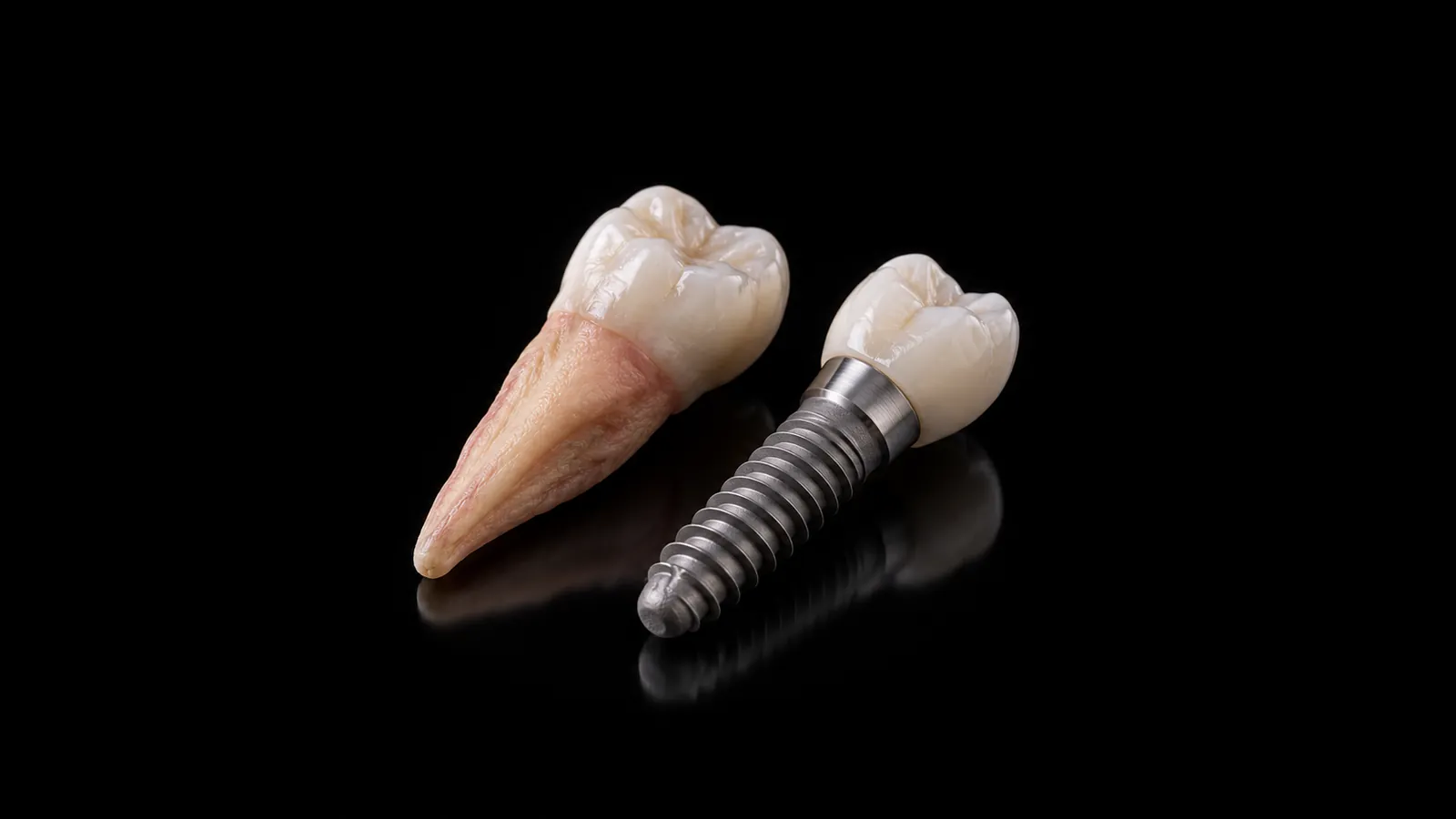
A dental implant is a component placed in the jawbone to replace the root of a lost tooth. It then carries a crown, a bridge or a denture. Because treatment involves surgery and takes time, it raises fears, but also exaggerated promises. Some beliefs put off patients who could benefit, while others suggest a quick result with no constraints. The seven claims below come up often in the dental chair. For each one, we set out what recognised medical sources say, and what can only be decided after an examination of your own mouth.
Mostly false, with nuances. Placement is usually done under local anaesthetic: you mainly feel pressure or vibration during the procedure. Afterwards, swelling, bruising or discomfort are common for a few days. Cleveland Clinic says the first round of healing takes about a week and that most people feel like themselves again within that time. How it feels varies with the number of implants, any graft and each person’s sensitivity. Ask beforehand which painkillers are planned, what to eat, and which signs should prompt you to call the clinic back.
False for older age, true for teenagers. Cleveland Clinic says implants are usually placed from the age of 18, once growth is complete, and that there is no upper age limit. The ADA stresses that health is more of a factor than age. On the other hand, some chronic illnesses, such as poorly controlled diabetes, can interfere with healing, and some medical treatments must be mentioned before any surgery. For a healthy older person, the question is therefore mainly about bone, gums, medicines and the ability to clean around the implants every day.
Not always. After a tooth is lost, the bone that held it gradually shrinks and may lack height or width. Cleveland Clinic explains that a bone graft can restore volume before placement, or sometimes during the same procedure. Depending on the situation, a shorter implant, a different position or an implant-retained removable denture may also be discussed. A graft does, however, add several months to the timeline and an extra surgical step. Imaging, sometimes in three dimensions, measures the available bone before any of these solutions is proposed.
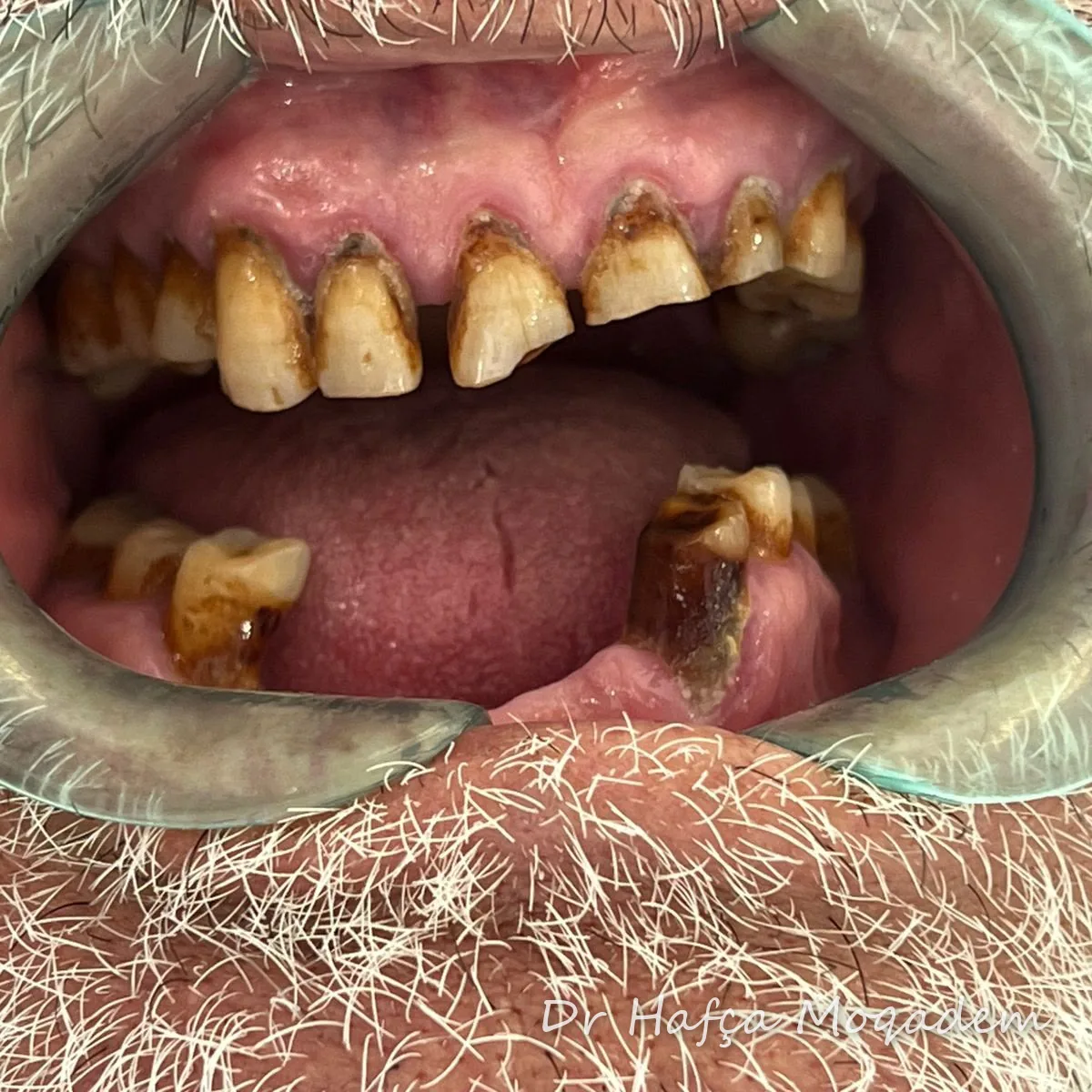 Before
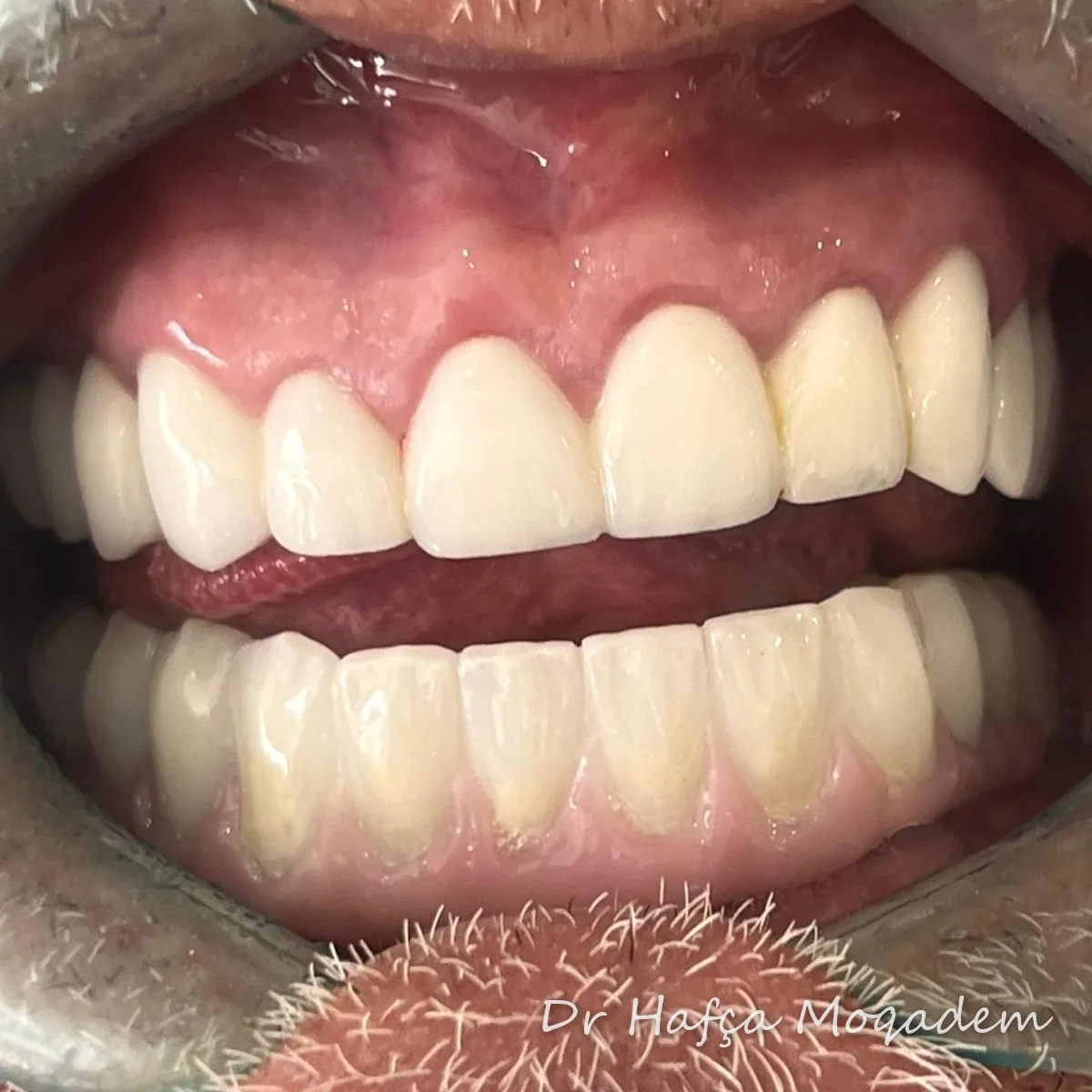 After
Real case from the clinic All-on-4, a patient of the clinic: before, then with his fixed arches on implants. See the cases: All-on-4 / All-on-6
A misleading way to put it. Implants are made of titanium or other materials compatible with the body, the ADA notes, and this is not immune rejection as with an organ transplant. An implant can, however, fail to integrate with the bone, or loosen later. The FDA lists possible causes such as infection, more likely with uncontrolled diabetes, or delayed healing, more likely in smokers. If an implant does not integrate, it is removed and a new placement can be discussed after healing. Ask what is planned in that case before you start.
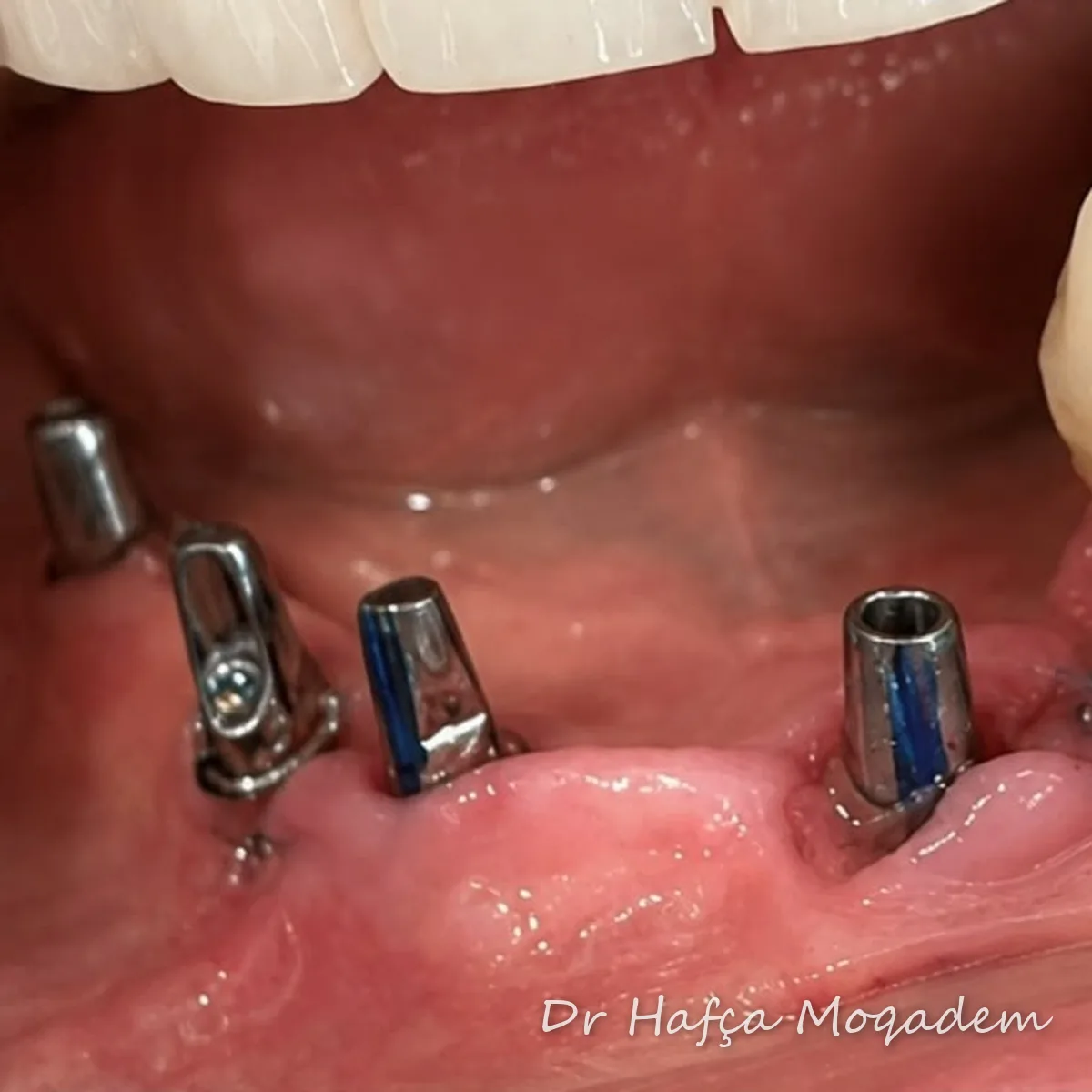 Before
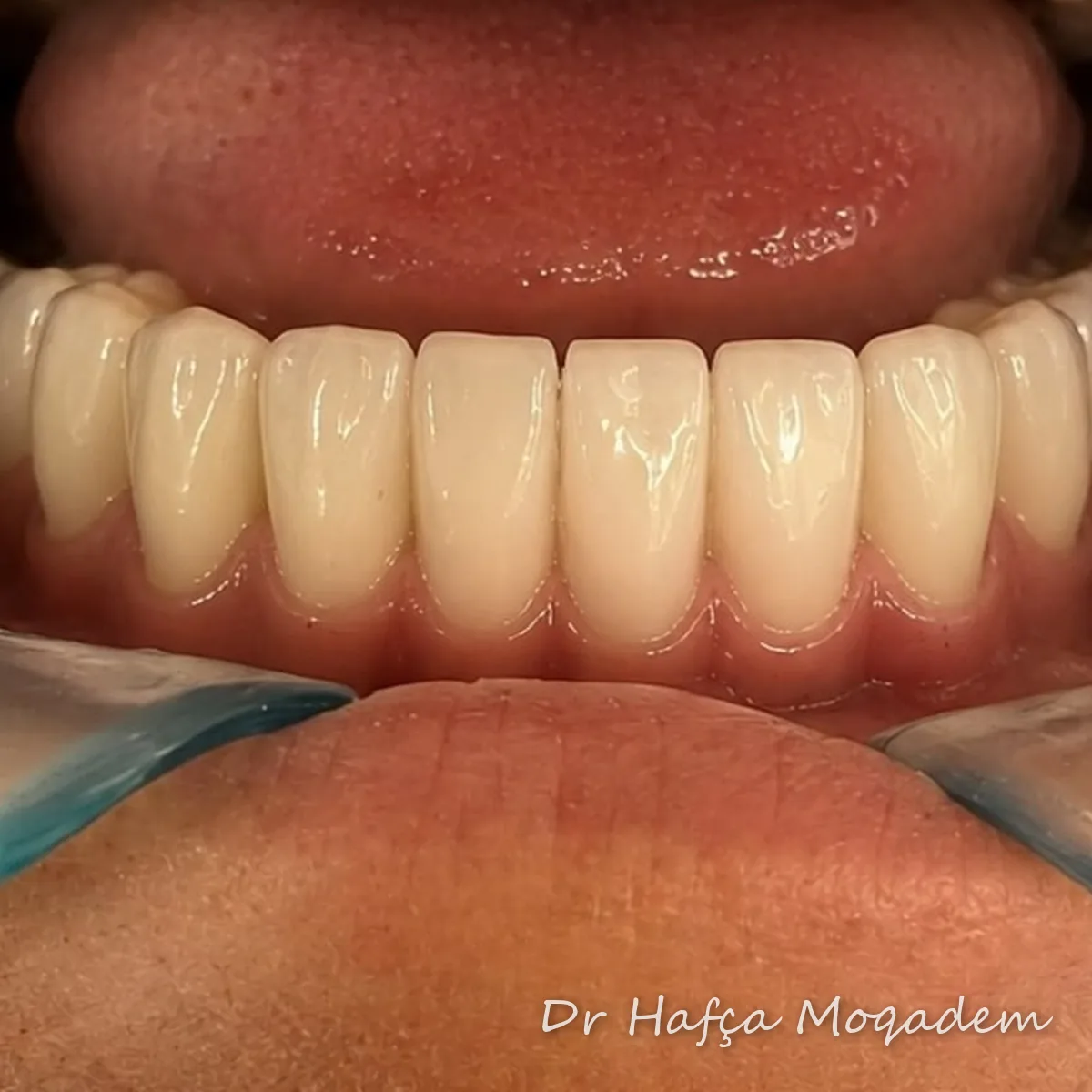 After
Real case from the clinic Several teeth replaced, a patient of the clinic: the abutments on implants, then the fixed bridge. See the cases: Replacing several teeth
False as a general rule. The ADA says some patients receive the implant and the tooth on the same day, but healing can also take several months before the final teeth are attached. A temporary tooth or arch fixed early is only possible if the stability achieved during surgery allows it; the final decision is often made at the time of placement. This temporary prosthesis is not for heavy chewing. The final tooth or arch comes after the implant has integrated with the bone, which takes three to nine months according to Cleveland Clinic. It is better to know this scenario before surgery.
False. An implant cannot decay, but plaque builds up on it just as on a tooth. The MSD Manual describes two conditions: mucositis, an inflammation of the gum around the implant with redness and bleeding, and peri-implantitis, where inflammation comes with progressive loss of the bone supporting the implant. Poor plaque control and a history of gum disease make these more likely. Brushing, cleaning between the teeth with suitable interdental brushes and check-ups at the clinic help detect them early. Bleeding, pain or movement should be reported without waiting for the next appointment.
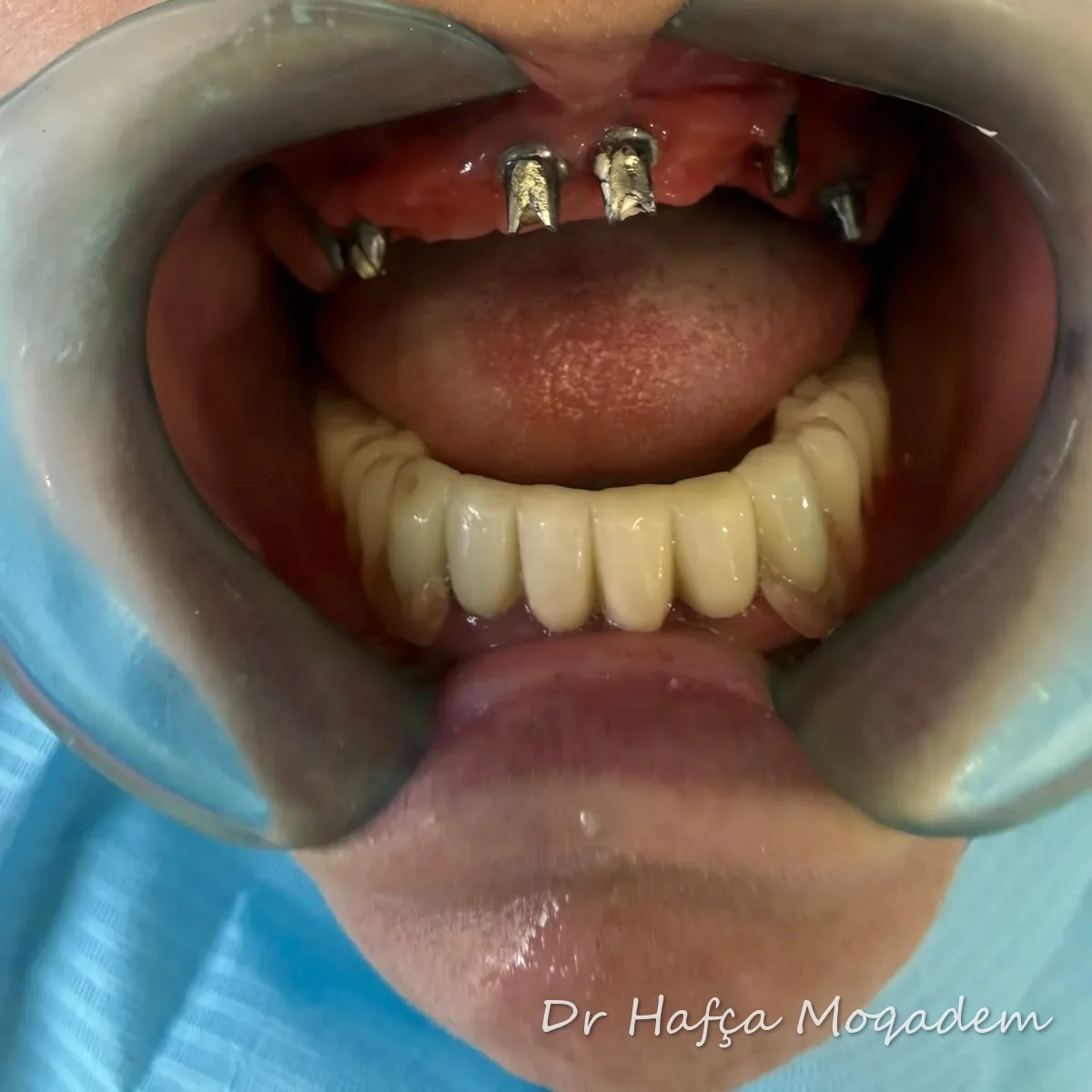 Before
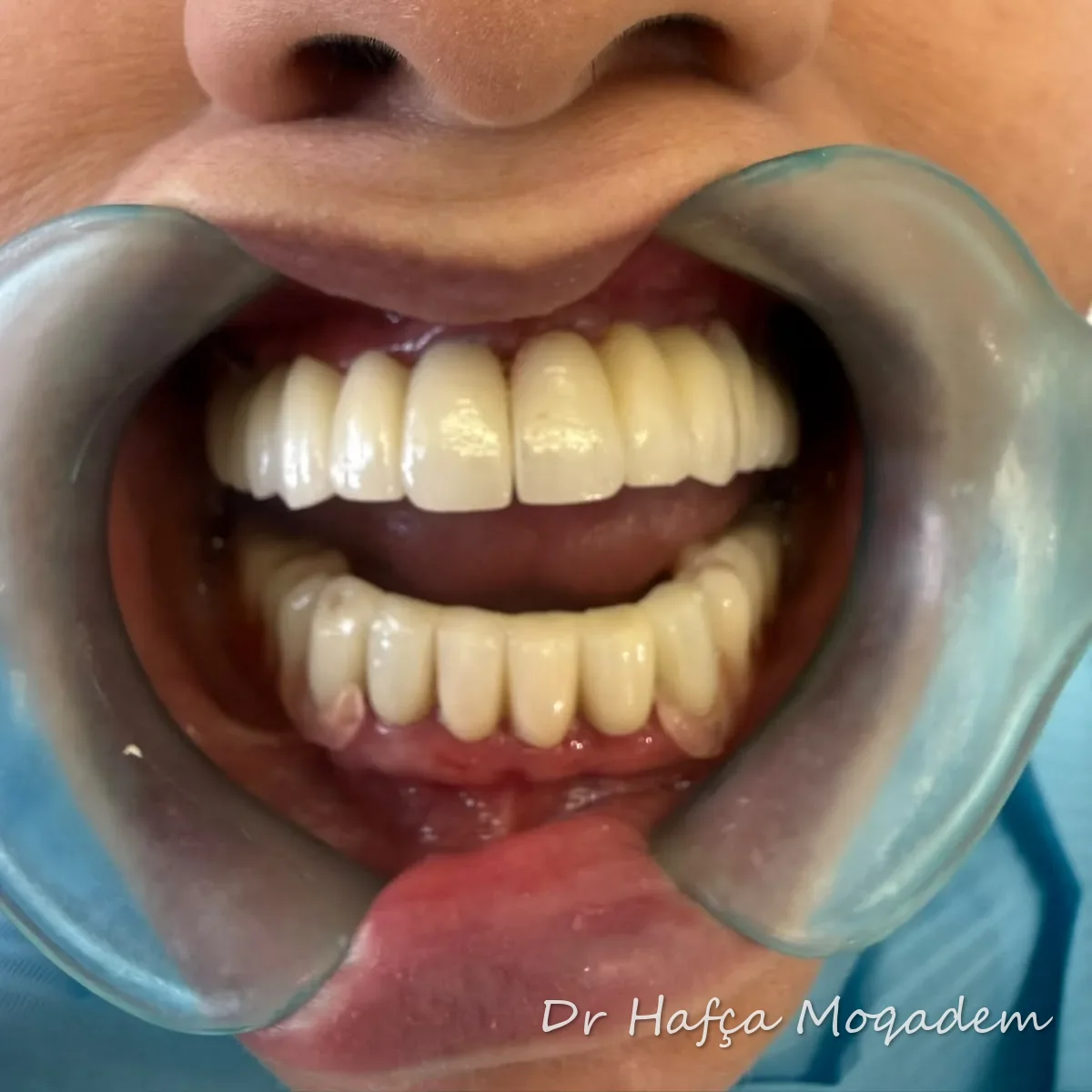 After
Real case from the clinic All-on-6, a patient of the clinic: the implants in place, then the fixed arch. See the cases: All-on-4 / All-on-6
Needs nuance. With good care, an implant can stay in place for many years, but no lifespan can be promised to any individual. The implant must also be distinguished from the tooth it carries: Cleveland Clinic says crowns and bridges often last around 15 years, so they may need redoing even when the implant stays stable. Smoking, clenching, gum disease or poorly controlled diabetes all affect how long things last. Rather than a promise, ask for a follow-up plan: how often to come for check-ups, how to clean, and whether a night guard is advisable if you clench.
The visual guide
Principles to help you prepare your questions. The assessment makes it possible to know what suits your situation.
| Item | Principle | To clarify at the clinic |
|---|---|---|
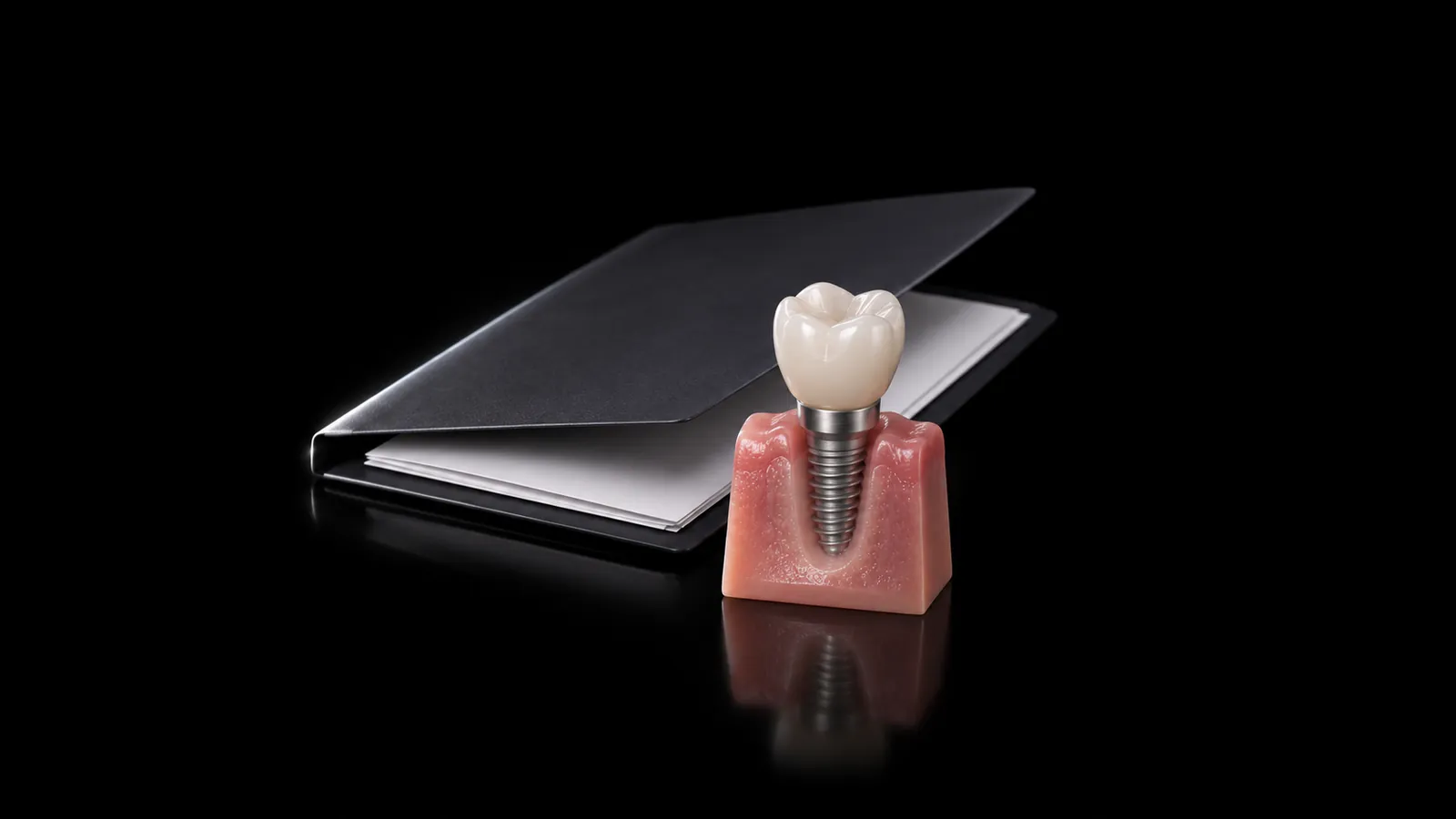
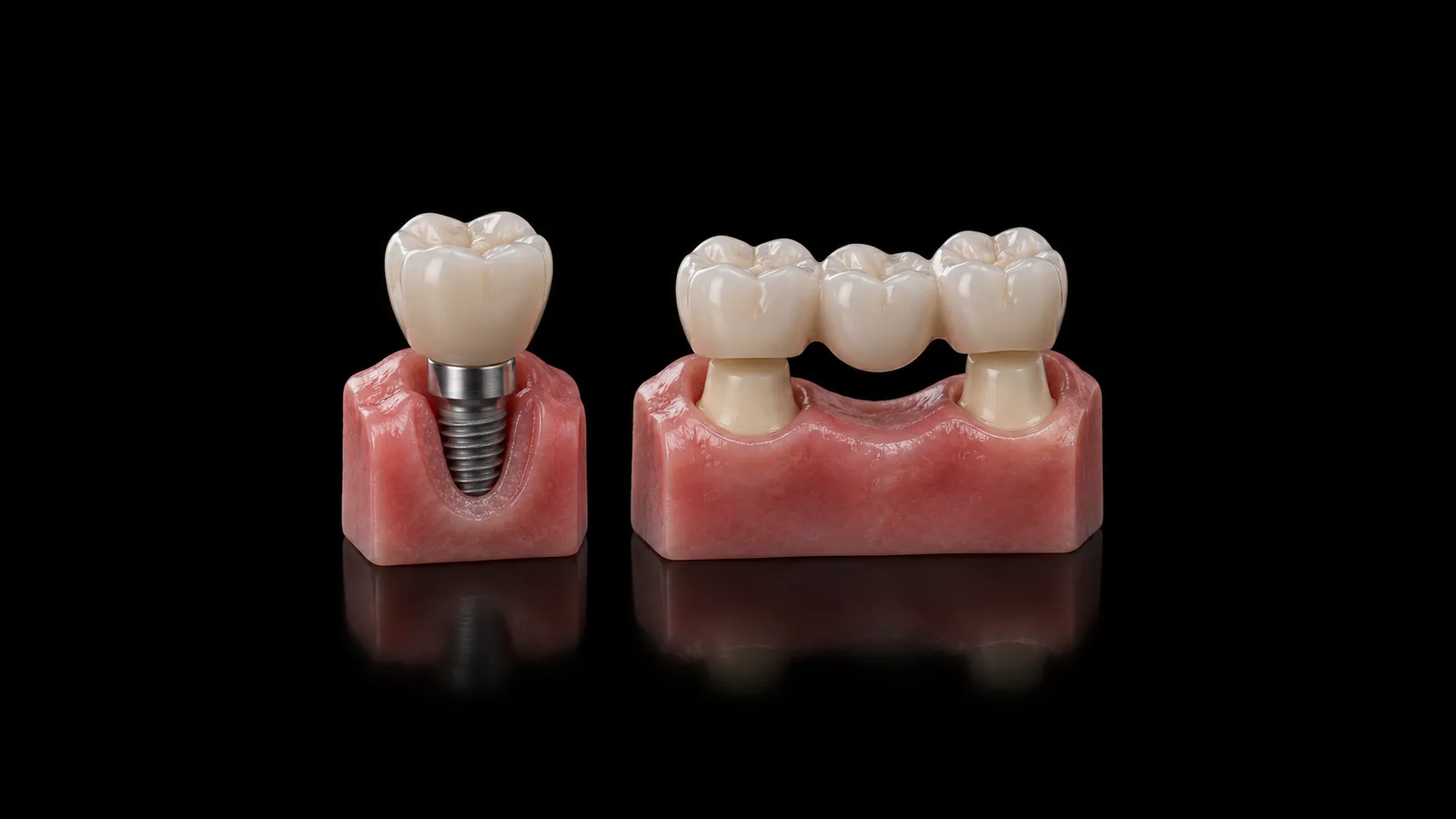
| Implant | A support fixed in the bone, carrying a crown or a prosthesis. | Bone volume, gum condition and general health to be assessed. |
| Bridge | A replacement resting on teeth or implants. | The supports and their preparation must be examined. |
| Removable denture | A device the patient takes out to clean it. | Stability, comfort and maintenance to be discussed depending on the situation. |
A daily guide
The NHS recommends about 2 minutes of brushing, twice a day, with a fluoride toothpaste.
Source: NHS, How to keep your teeth clean. A prevention guide, with no prediction of an individual result.
Your next appointment
Choose the questions you would like to ask. Your choices stay on this page and are neither saved nor sent.
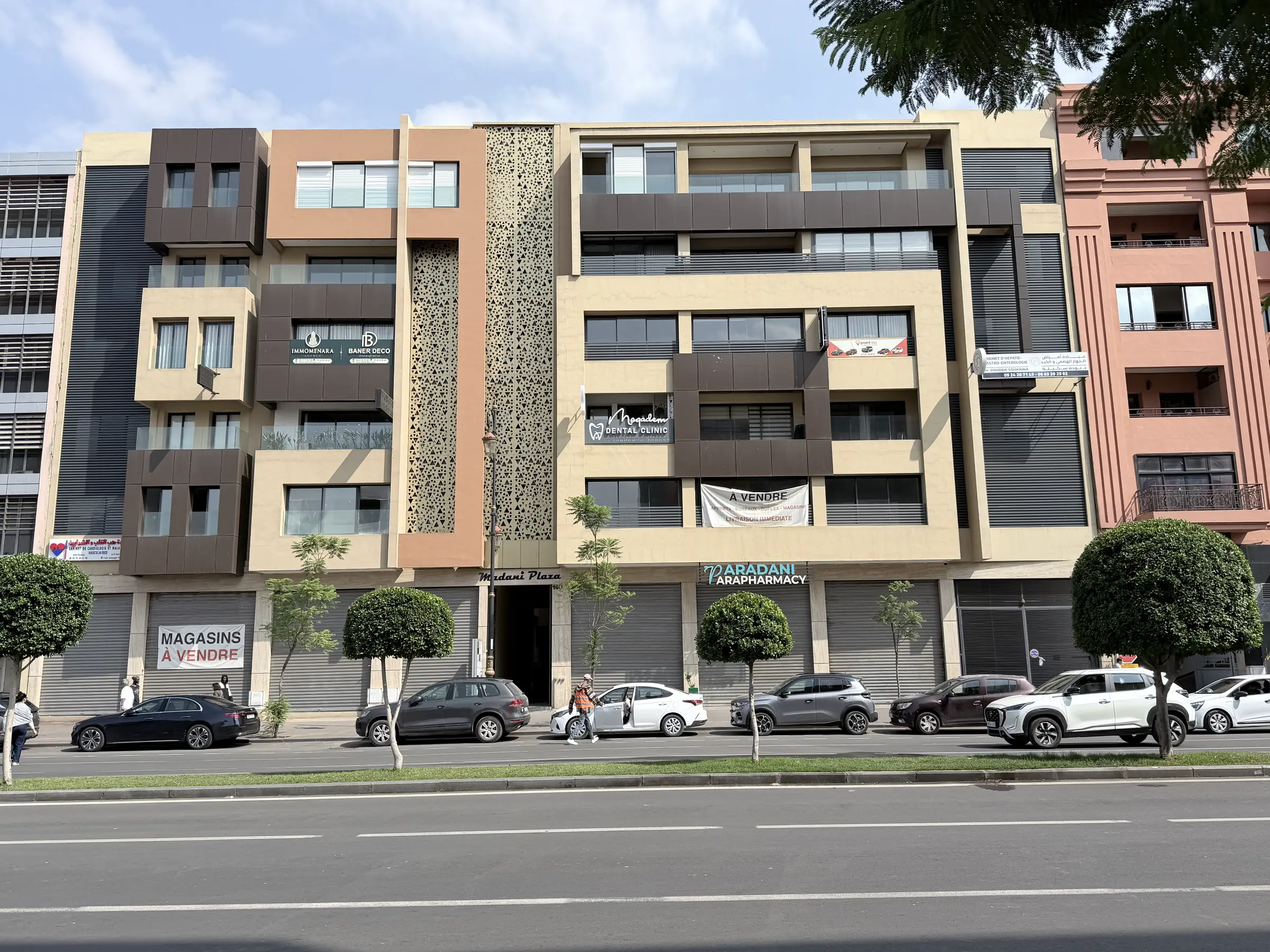
Guéliz clinic, Marrakech
An article does not replace an examination. At the clinic, Dr Hafça Moqadem examines you, explains the options and gives you a written plan before any treatment.
Call the clinic, write to us on WhatsApp, or choose a day and a time yourself: your request reaches the clinic's WhatsApp and they will confirm the appointment.
2nd floor, No. 180 Madani Plaza, Boulevard Abdelkrim Al Khattabi, Guéliz, Marrakech
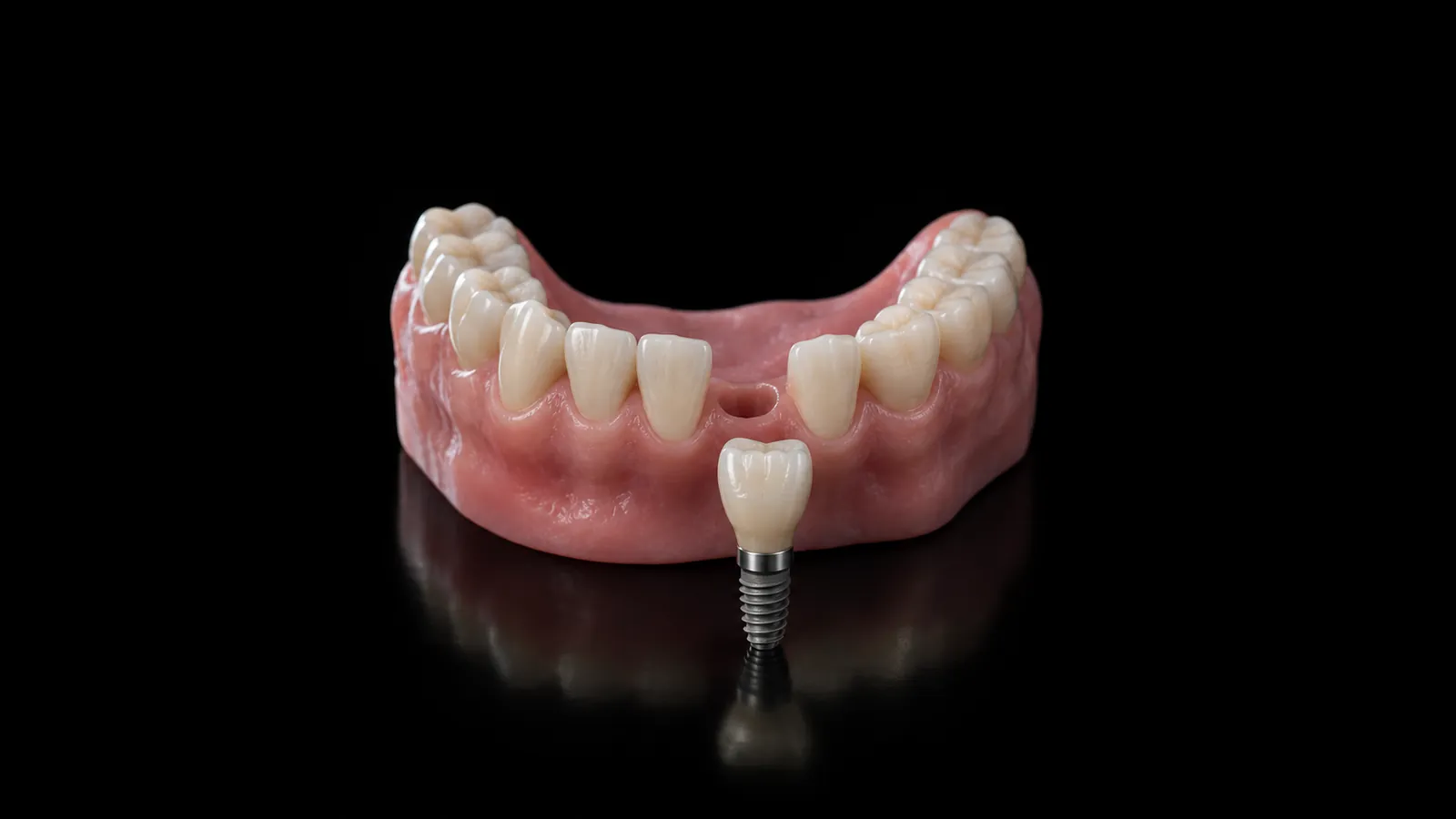
Replacing all the teeth in a jaw can mean a removable denture, a denture held by implants or a fixed arch. Each option has its own steps and upkeep.
Read the articlePrice ranges observed in Morocco in 2026 for an implant with its crown, what makes a quote vary and the questions to ask before you start.
Read the articleWhat Moroccan health insurance schemes cover for an implant, what changed at CNOPS in 2026, and the documents to ask the clinic for.
Read the articleAn implant can replace the root of a missing tooth and carry a crown or a denture. It has real advantages, but it involves surgery, time and ongoing care.
Read the articleBefore replacing a tooth, it helps to understand why it was lost. Treating the cause, then the number and position of missing teeth, guide the choice of solution.
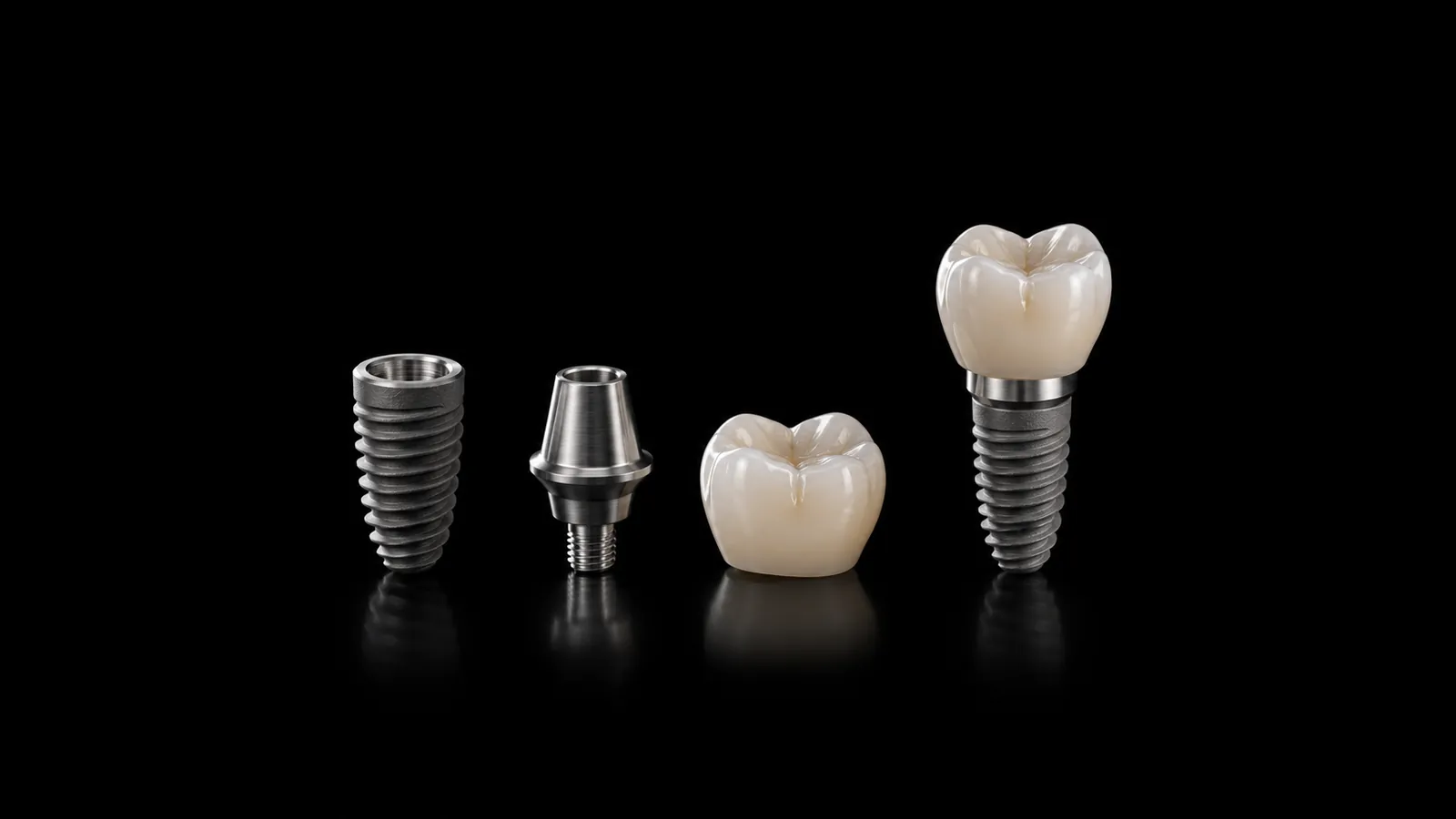
Read the articleA dental implant combines several parts, often in different materials. Knowing their roles helps you ask the right questions, without judging quality on one material alone.
Read the articleImplants are often described as long-lasting. In practice, the implant and the tooth it carries do not last the same time, and cleaning matters as much as placement.
Read the articleDigital tools have changed how implants are prepared: 3D imaging, virtual planning, printed guides. They help the dentist, without replacing the examination or removing biological limits.
Read the articleTo find out more about the general information in this article:
Hello. Choose a question below and the answer will appear here.