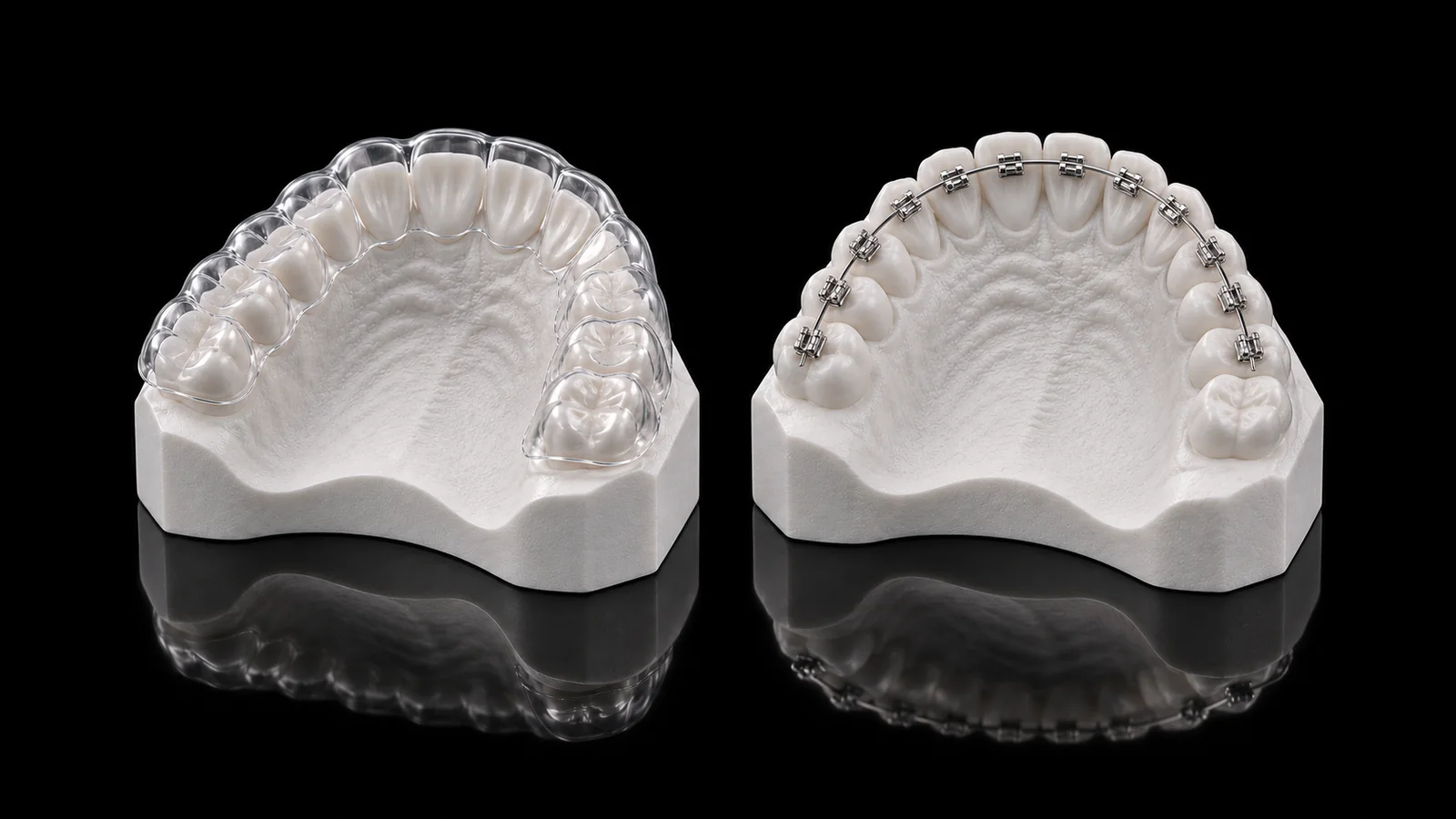
Aligners are clear, removable trays worn for most of the day; fixed braces stay attached to the teeth for the whole treatment.
Some situations are better treated with fixed braces: the examination guides the choice, not fashion.
In both cases a retainer completes the treatment to protect the result.
Two ways of moving teeth
Fixed braces consist of brackets, metal or ceramic, linked by a wire that is adjusted at check-ups. Aligners are a series of clear trays, changed at the pace indicated.
Both move the teeth gradually. What differs is the place they take in your daily life, the hygiene they require and the situations they can treat.
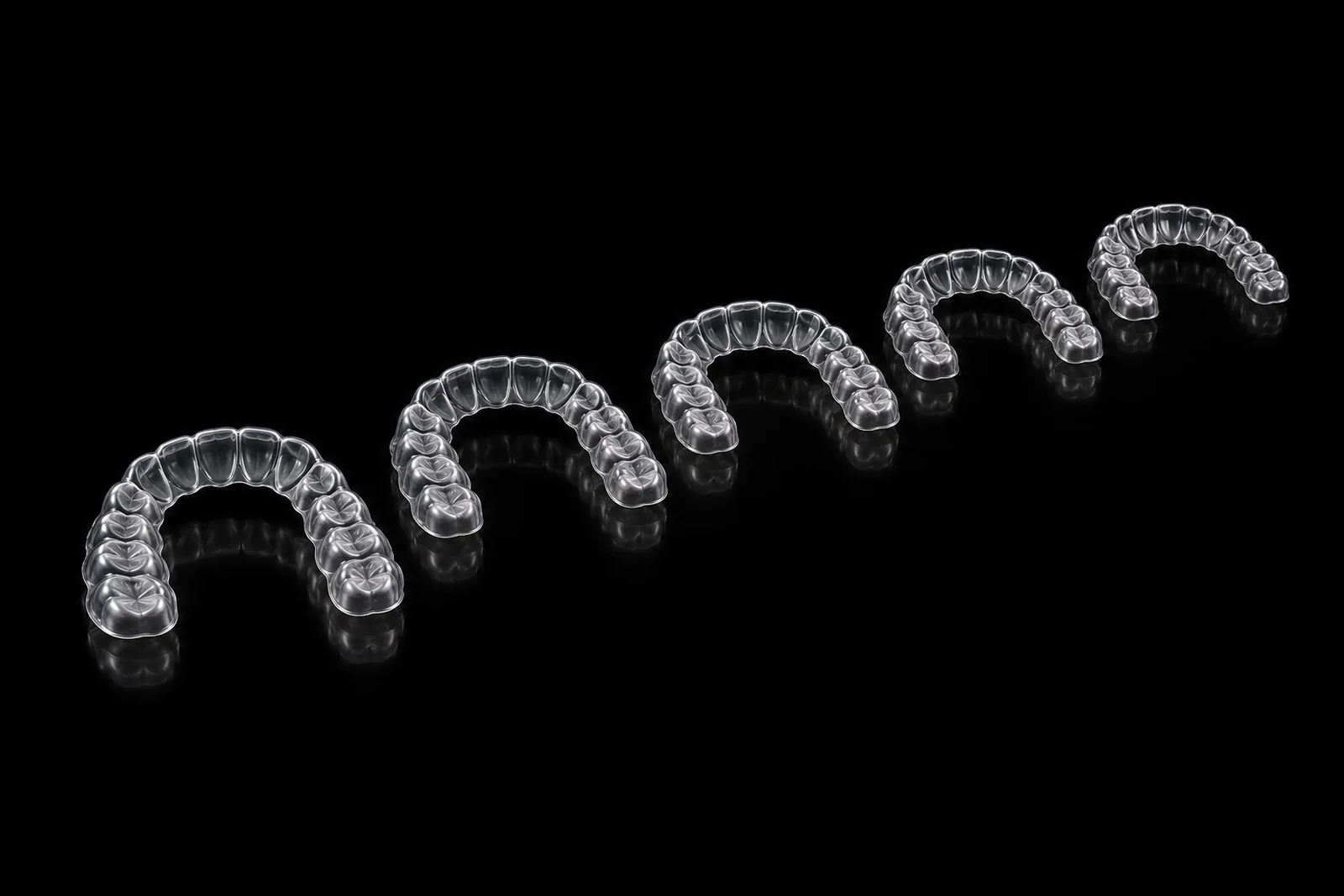
A series of trays, changed at the prescribed pace. Illustration, not a photo of the clinic.
A short guide
What matters most to you
Three questions to prepare the discussion with the orthodontist. Nothing is sent.
Answer the questions to see the points to discuss with the dentist.
Aligners are an option to discuss
They come out for eating and brushing, but they only work if worn for most of the day. The examination first checks that your situation is suitable.
They stay in place throughout the treatment and can treat situations that aligners do not cover. They call for extra care with hygiene and regular check-ups.
This guide helps you prepare the discussion. Only an examination can tell what suits your mouth.
Compare
Fixed braces, aligners, retainer
Three devices, three roles. Tick the ones you want to compare.
Item
Fixed braces
Clear aligners
Retainer
Principle
Brackets attached to the teeth and linked by a wire, adjusted at check-ups.
A series of clear, removable trays, changed at the pace indicated.
A device that holds the teeth in their new position.
Day to day
Stays in place all the time; the areas around the brackets need careful cleaning.
Taken out to eat and to brush the teeth, then put back; long daily wear is essential.
Worn as instructed by the orthodontist.
Situations
Including more complex situations.
Suitability is checked before starting; not right for every case.
At the end of any treatment, whichever appliance was used.
Check-ups
Regular appointments for adjustments.
Appointments to check that the teeth are following the plan.
Follow-up agreed with the practitioner.
The same comparison as a chart (general guides, to be confirmed at the examination)
To what extent does the result depend on what you do every day (wear, discipline)?
Fixed bracesModerate
Clear alignersVery high
RetainerHigh
Can you take the appliance out yourself?
Fixed bracesLow
Clear alignersVery high
RetainerHigh
How wide a range of situations can the appliance treat?
Fixed bracesVery high
Clear alignersModerate
RetainerN/A
Qualitative scale: Low · Moderate · High · Very high. These are not measurements: every clinical situation is different.
Step by step
What a course of treatment involves
The orthodontic assessmentAt the clinic
Photos, impressions and X-rays make it possible to assess your situation and check which appliance is suitable.
The treatment planAt the clinic
The tooth movements are planned. With aligners, the series of trays is then made; with fixed braces, the brackets are fitted.
Adjustments or wearAt home
Fixed braces: the wires are changed or adjusted at check-ups. Aligners: you change tray at the pace indicated.
Check-upsAt the clinic
The appointments check that the teeth are following the planned course.
The retainerAt the clinic
Once the appliance is removed, a retainer holds the teeth in their new position. The practitioner decides how long it is needed.
Common myths
Common beliefs
“Aligners suit everyone.”False
Some situations are better treated with fixed braces. The examination guides you.
“If I wear them little, it doesn’t matter.”False
The teeth do not follow the planned course, and the treatment is prolonged or has to be corrected.
“Orthodontics is for children.”False
Age is not an obstacle in itself: straightening teeth remains possible in adulthood when the gums and bone are healthy.
“After the braces, it’s over.”False
Without a retainer, teeth can move again. The retainer is part of the treatment.
To tick
Hygiene with fixed braces
General NHS guidance, to be adapted with your orthodontist. Your choices stay on this page: they are neither saved nor sent.
0 selected
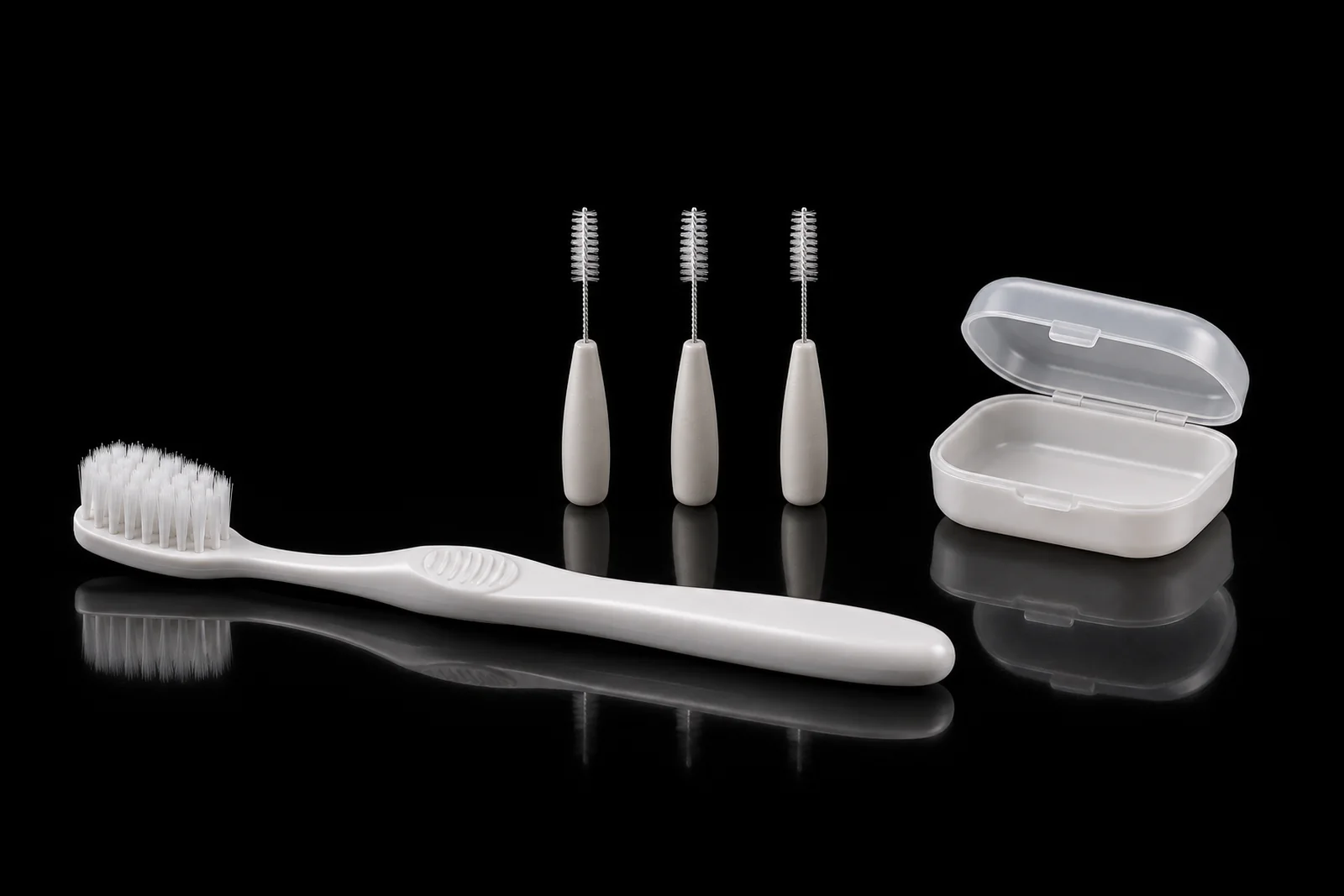
Interdental brushes and toothbrush: essential during treatment. Illustration, not a photo of the clinic.
To tick
Preparing my orthodontic consultation
0 selected
Your questions
Can you eat with aligners?
No. They are taken out to eat and to drink anything other than water, then you brush your teeth before putting them back.
Do fixed braces hurt?
Some discomfort is common for a few days after fitting and adjustments, then it fades. If the pain lasts, contact the clinic.
How long does treatment last?
The length depends on your situation and the plan set after the assessment. It is explained to you at the clinic; no length of time can be promised in advance.
What does it cost?
The clinic does not publish fees online. A written quote is given after the examination, before any decision.
Book an appointment
Let us talk about your orthodontic project.
Call the clinic, write to us on WhatsApp, or choose a day and a time yourself: your request reaches the clinic's WhatsApp and they will confirm the appointment.
A small tooth, a chipped edge, a small gap: composite bonding may be one of the options. Here is how it works, what it does not do and how to prepare your appointment.
A Hollywood smile is not a shade, it is an overall project. Understand what it changes, what it requires and how to decide calmly, with no promise of an identical smile for everyone.
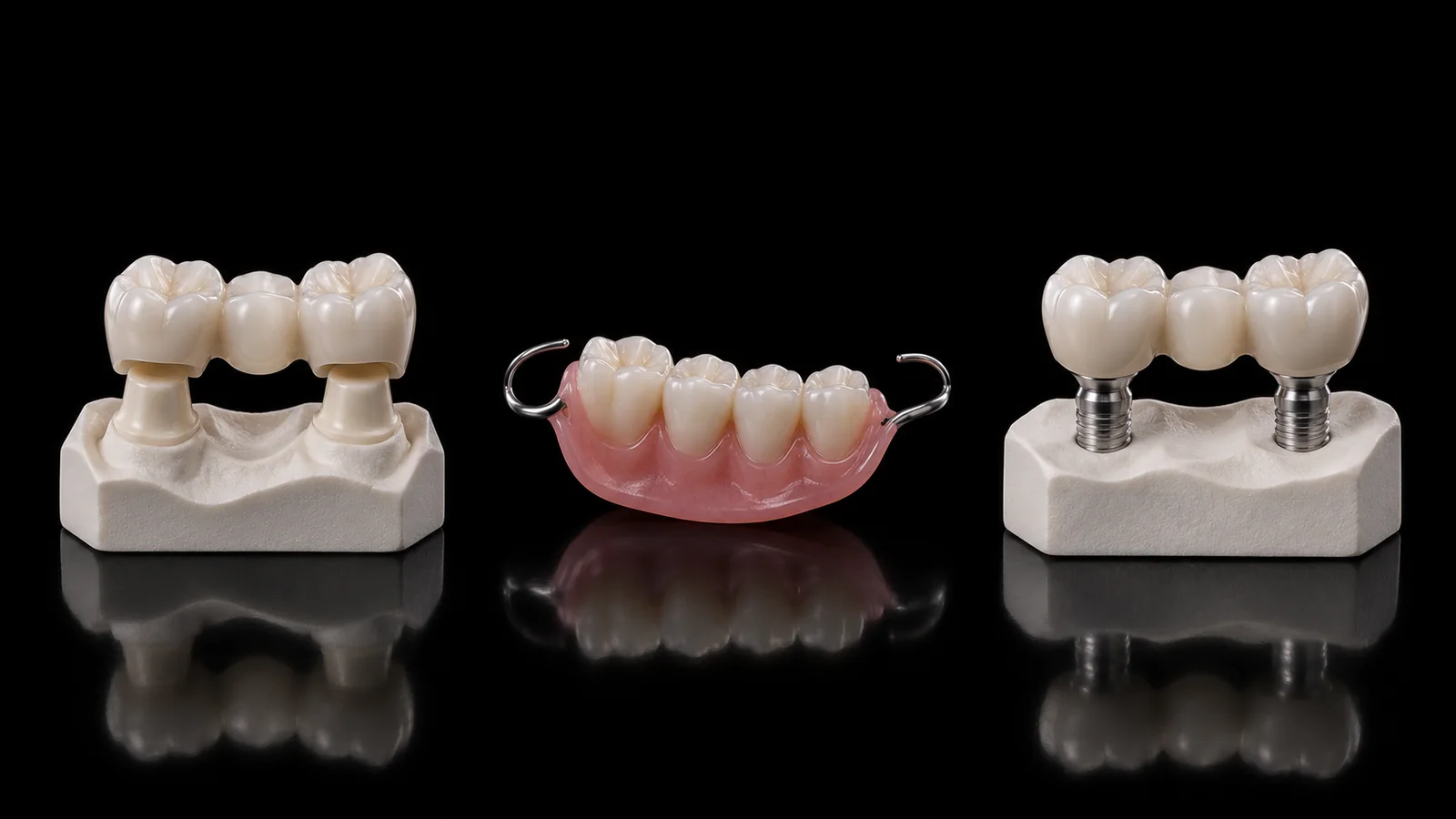
Replacing one or several teeth can be done in three very different ways. Understand what each one asks of you, day to day and at the clinic, before choosing.