Replacing all your teeth: dentures, implant-retained dentures or a fixed arch
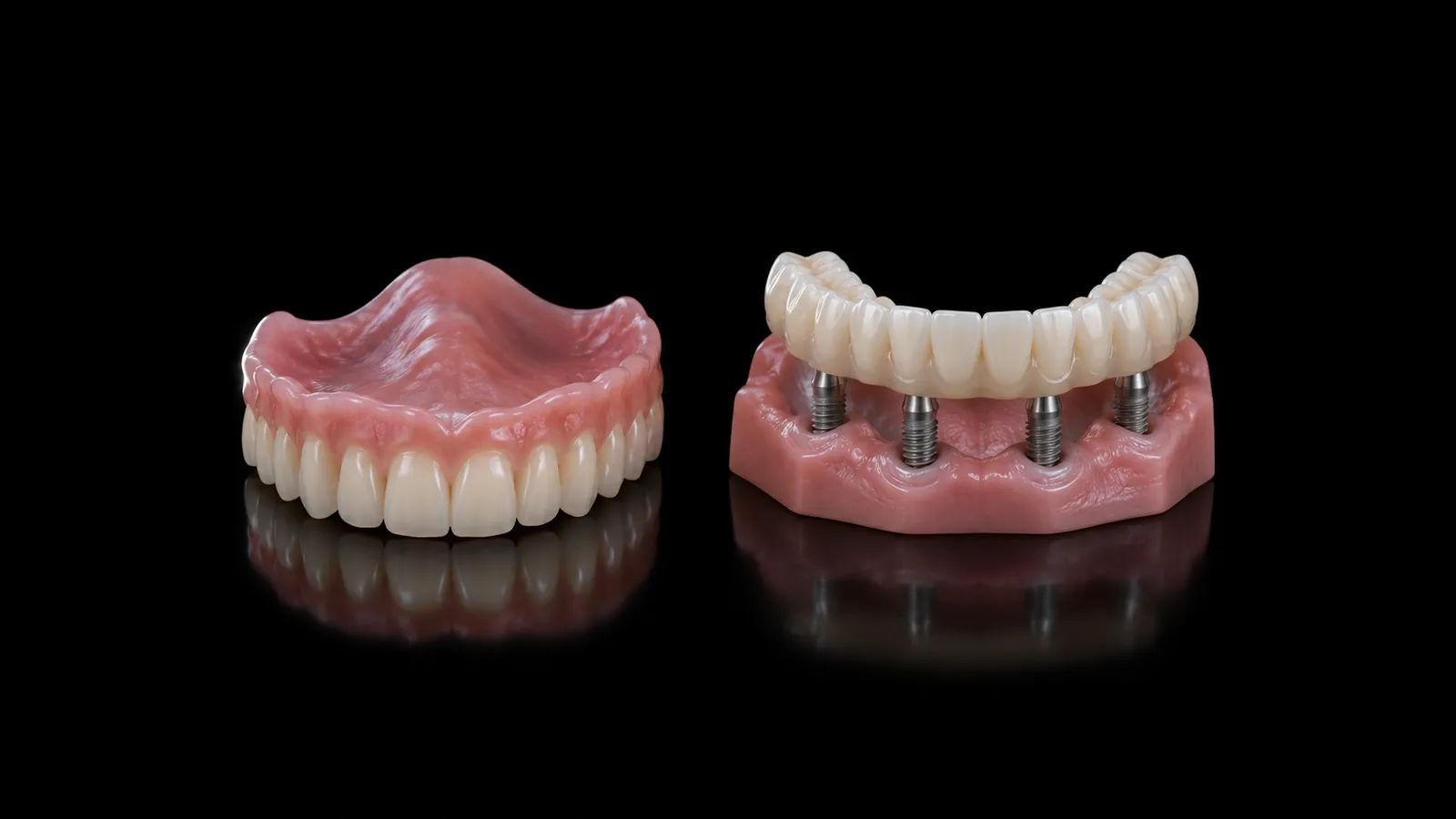
Replacing all the teeth in a jaw can mean a removable denture, a denture held by implants or a fixed arch. Each option has its own steps and upkeep.
Read the articleA dental implant combines several parts, often in different materials. Knowing their roles helps you ask the right questions, without judging quality on one material alone.
Published by Dr Hafça Moqadem, Dental surgeon in Marrakech4 min read
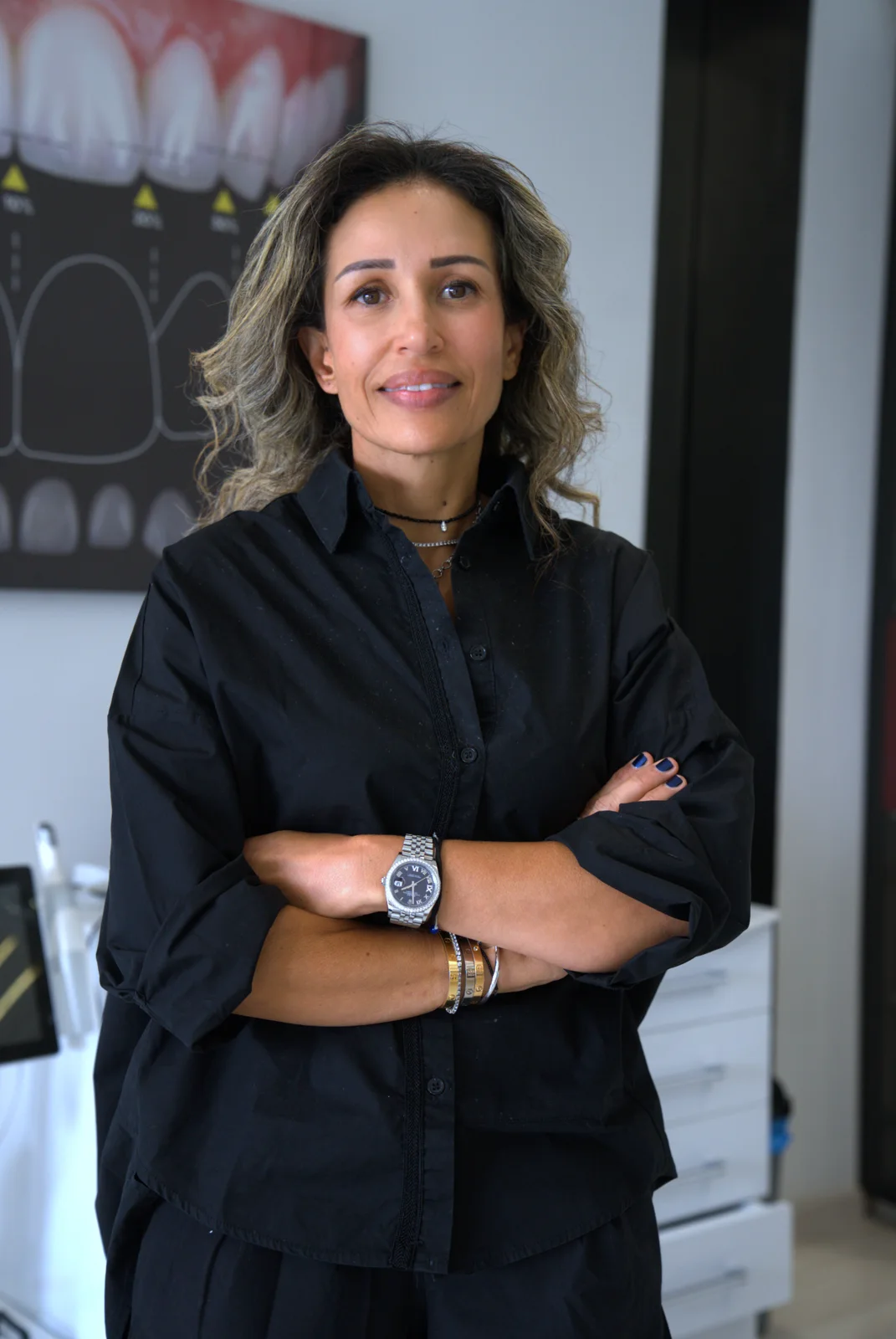
Holding the CFI diploma in oral implantology and periodontology (Paris V Faculty of Medicine), Dr Hafça Moqadem places implants and performs bone grafts at the clinic. The treatment plan is based on 3D imaging and explained to you step by step.
Looking for a dentist in Guéliz? Dr Hafça Moqadem welcomes you at Madani Plaza, Guéliz.
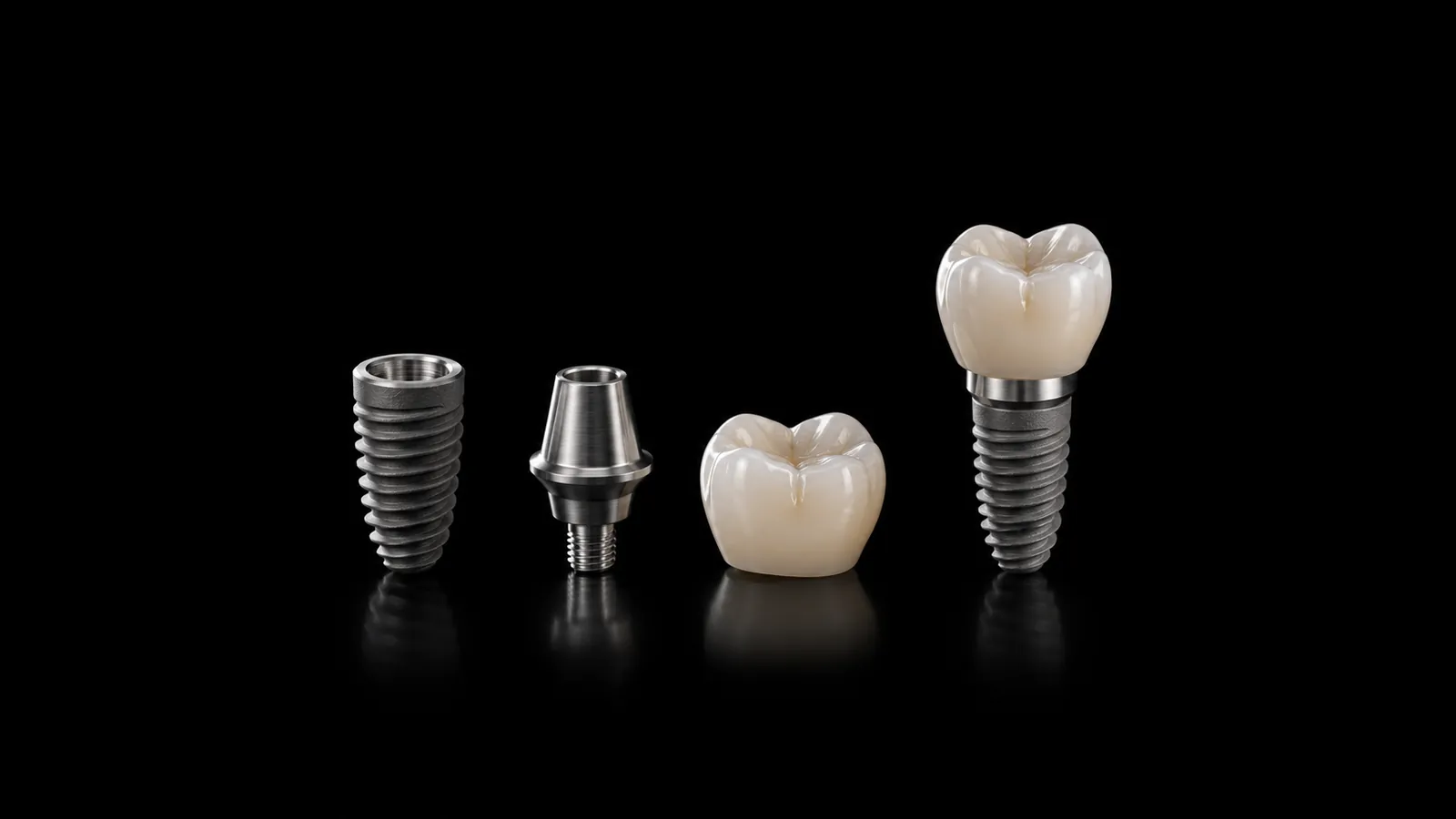
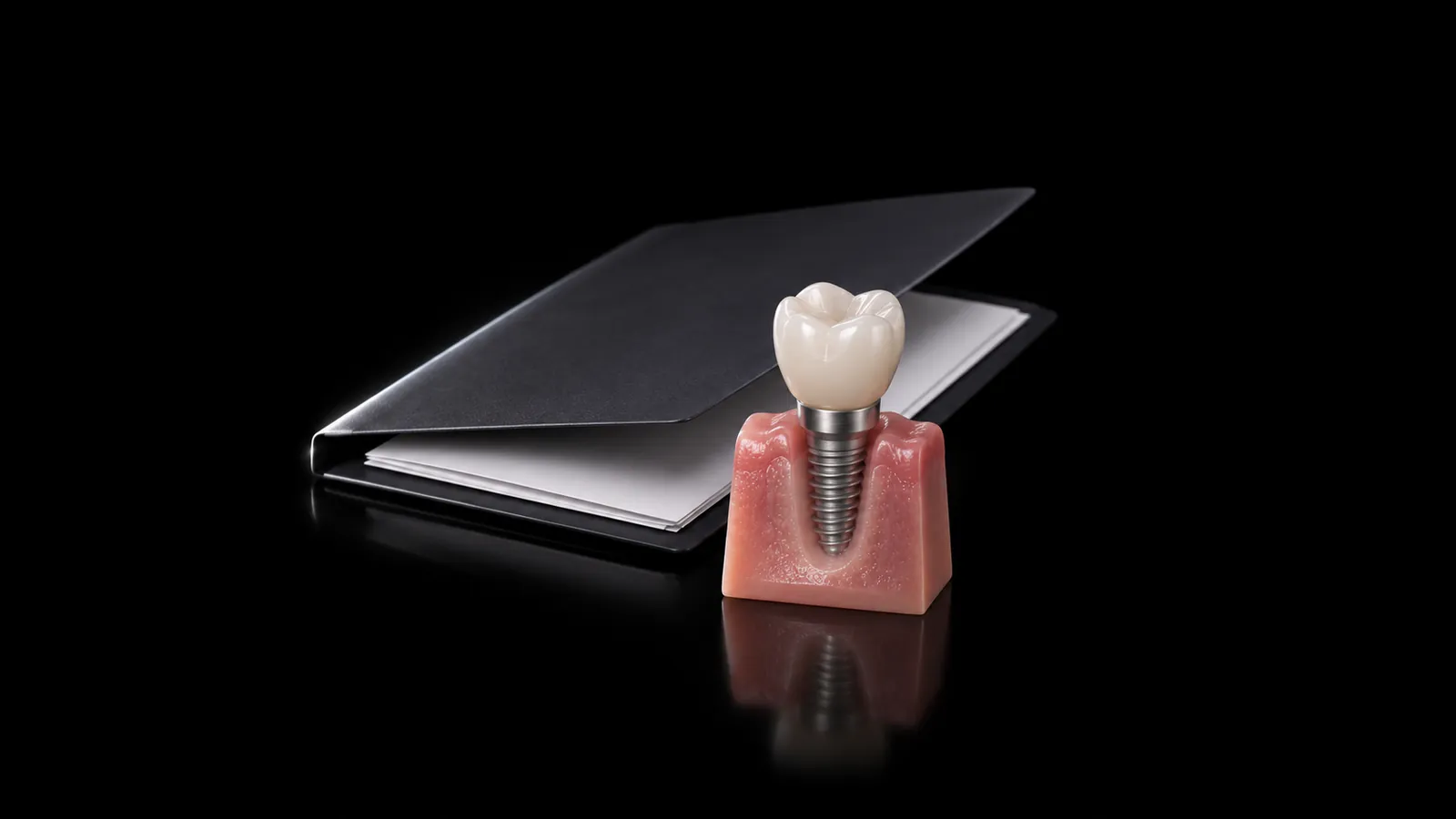
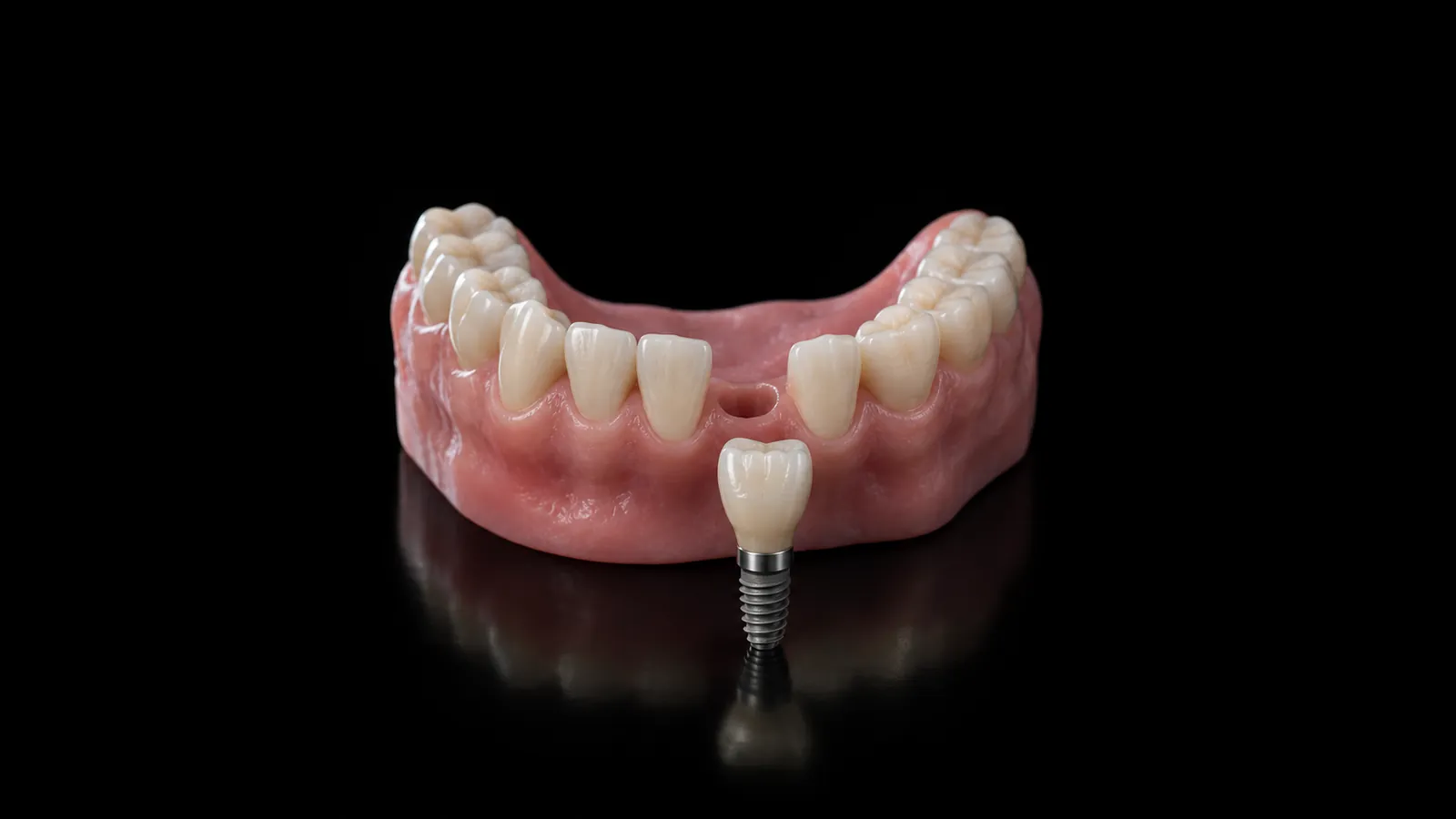
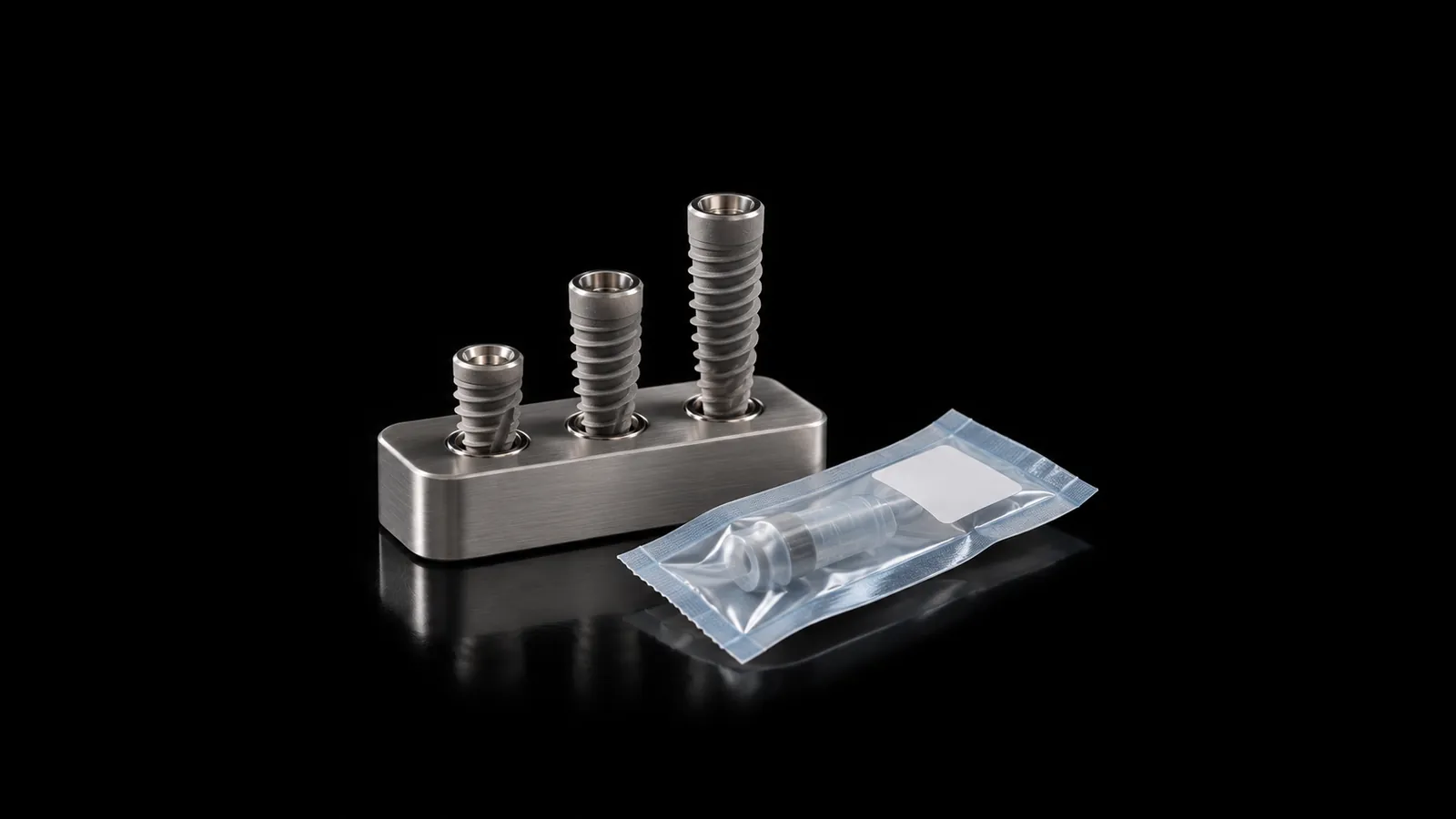
A dental implant is not a single block. The FDA, the US medical device regulator, describes the implant body placed in the jawbone, the abutment that connects it to the tooth, sometimes held by a screw, and then the crown, bridge or denture you see in the mouth. Each part faces different demands: the body must integrate with the bone, the abutment passes through the gum, and the crown takes the chewing load and has to match your teeth. Talking about the quality of an implant therefore means talking about several materials, and how they fit together in your mouth.
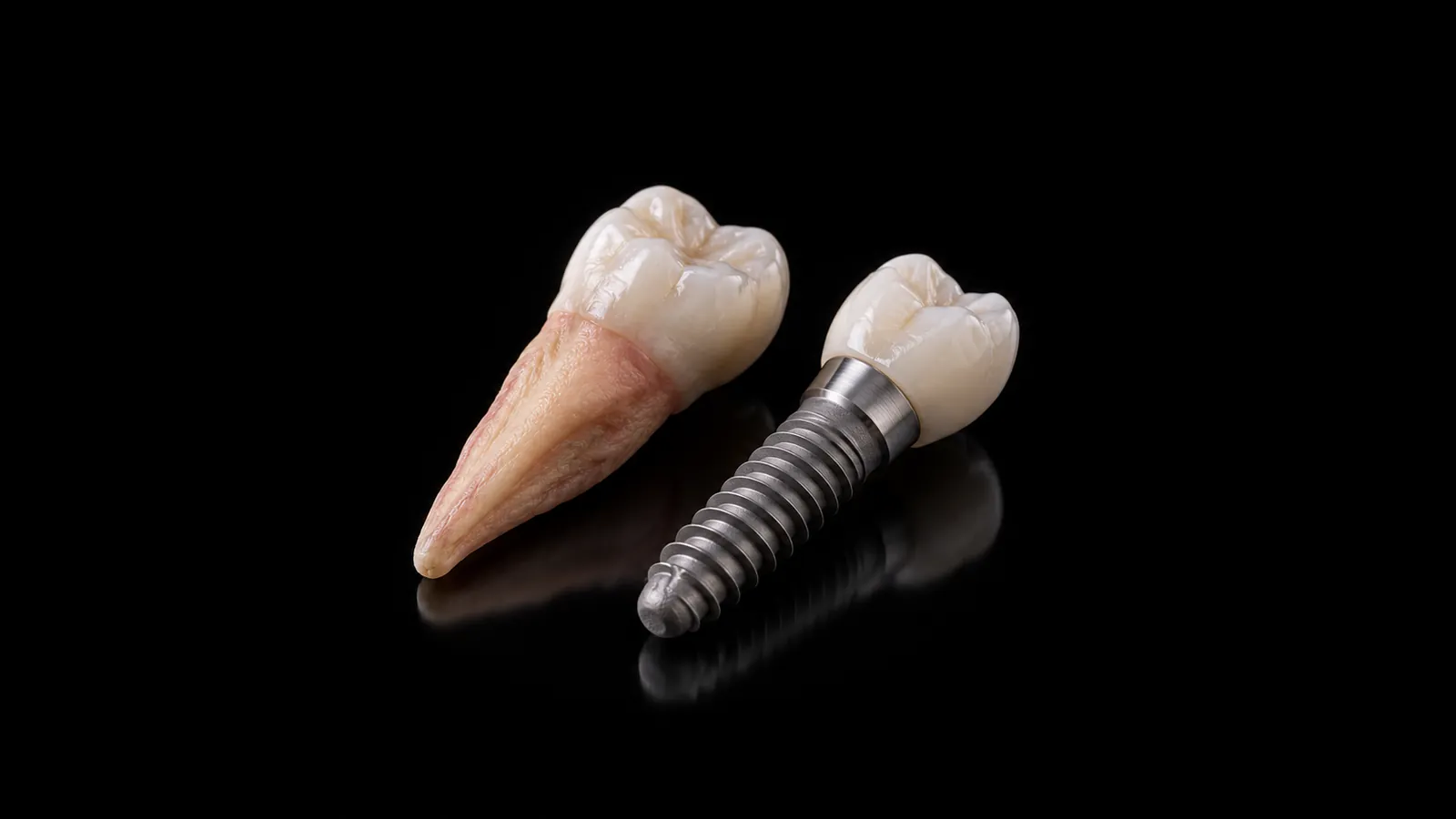
According to the FDA, most implant systems are made of titanium or zirconium oxide, and titanium alloys and, more rarely, other alloys or ceramics are also used. Cleveland Clinic says most implants are titanium and some are ceramic. The ADA notes that these materials are chosen because they are compatible with the body. Titanium has long been used in implant dentistry and bonds to bone through direct contact, called osseointegration. Beyond the metal itself, the shape of the implant, its surface and its connection with the abutment are all part of each system’s design.
Zirconia is a white ceramic. Some patients ask for it for aesthetic reasons, for example when the gum is thin at the front of the mouth, or because they prefer to avoid metal. This choice is made case by case: zirconia systems do not always offer the same shapes, sizes and prosthetic options as titanium systems, and the available track record varies between brands. If this option interests you, ask why it is or is not suggested in your situation, what data exist for the system being considered, and how any later repair would be handled.
The abutment can be titanium, zirconia or a combination of both. Its shape affects how the gum sits around the future tooth and how easy it is to clean. The crown can be ceramic, such as zirconia or lithium disilicate, or ceramic on a metal framework. Temporary prostheses are often made of resin. The choice depends on the position of the tooth, the appearance you want, your chewing force and any clenching. Ask whether the crown will be screwed or cemented, because this changes how it is maintained or removed.
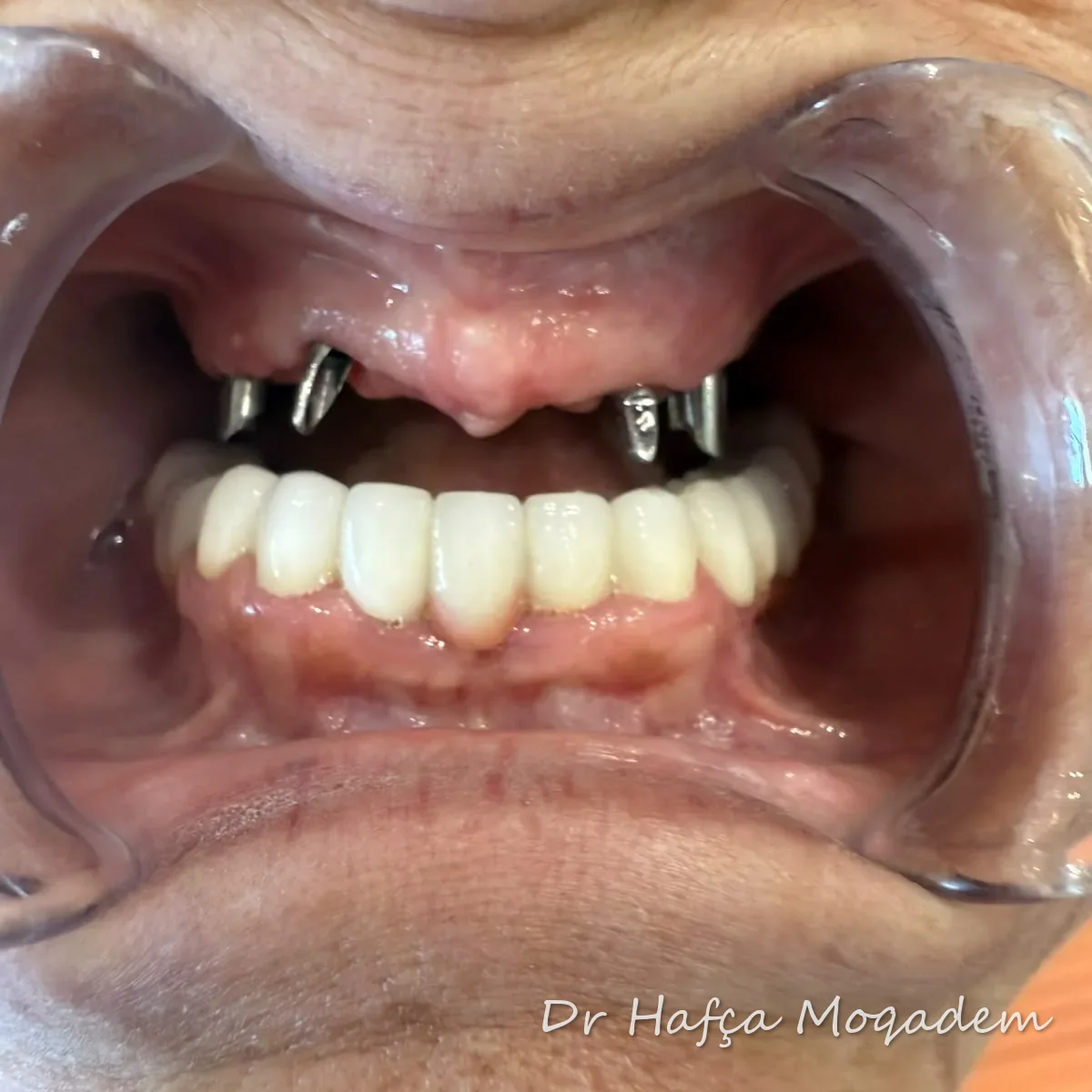 Before
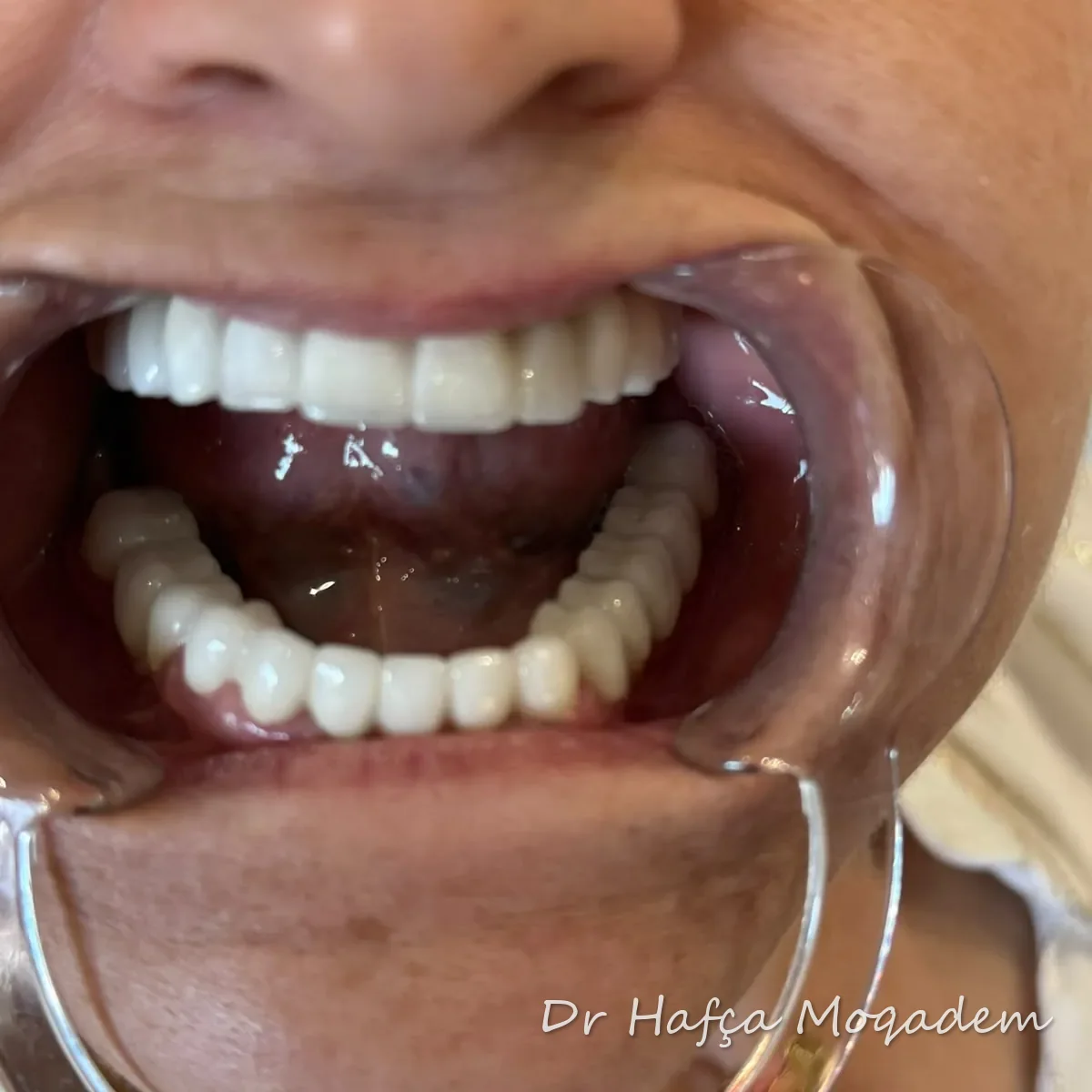 After
Real case from the clinic All-on-6, another patient of the clinic: the implants in place, then the fixed arch. See the cases: All-on-4 / All-on-6
A material that is compatible with the body is not enough on its own for an implant to integrate. The FDA explains that an implant can loosen after an infection, more likely with uncontrolled diabetes, or after delayed healing, more likely in smokers. It also lists untreated gum disease among the risk factors. At the assessment, mention any known allergy, particularly to metals, the medicines you take and your medical history. This information can guide the choice of material, but it matters most for deciding on the right timing and the precautions to take.
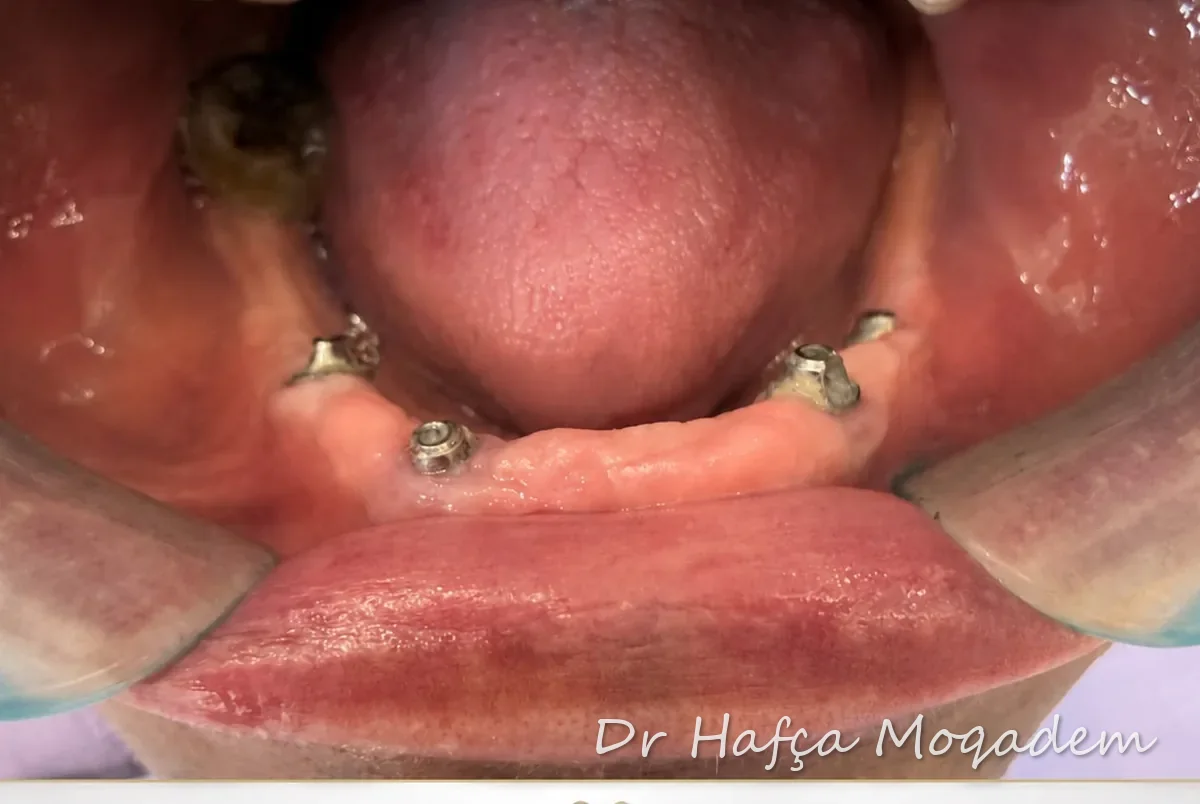 Before
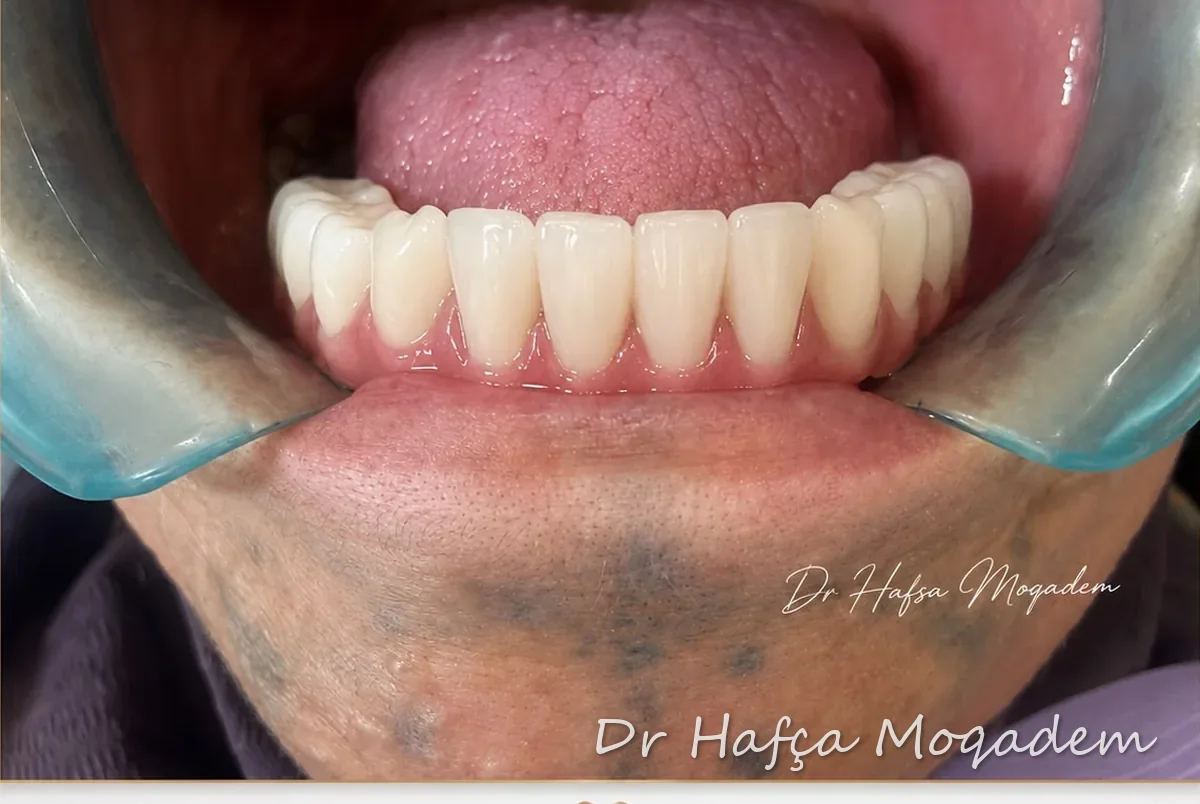 After
Real case from the clinic All-on-4, a patient of the clinic: the implants in place, then the fixed arch. See the cases: All-on-4 / All-on-6
The FDA advises asking your dentist for the brand and model of the implant system used, and keeping this information. These references are useful if you move, see another dentist later or need a part replaced: each system has its own components and tools. Ask for a document stating the brand, model, diameter and length of the implant, the date it was placed and the type of abutment. A photo of the material or a trade name on a quote is not enough to judge its quality; what counts is traceability and a coherent plan.
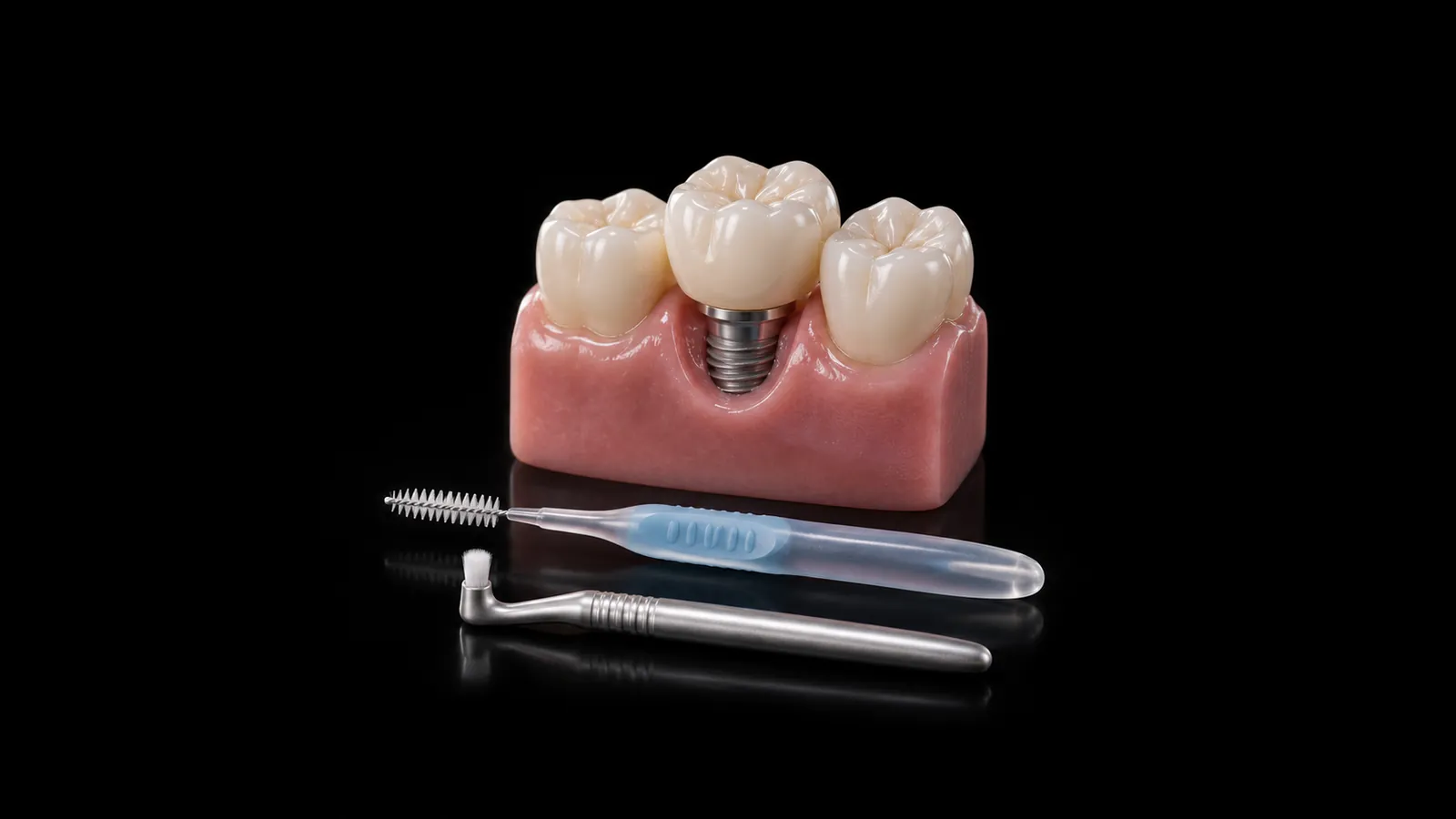
A material that looks ideal on paper cannot make up for insufficient bone, a poorly suited position or cleaning that is hard to manage. Bone volume, the position of the implant relative to the future tooth, the balance of the jaw and gum health weigh just as much on the outcome. The MSD Manual notes that inflammation can affect the gum and then the bone around an implant, especially with poor plaque control and a history of gum disease. Suitable brushing, cleaning between the teeth and regular check-ups are therefore part of treatment, whatever material is chosen.
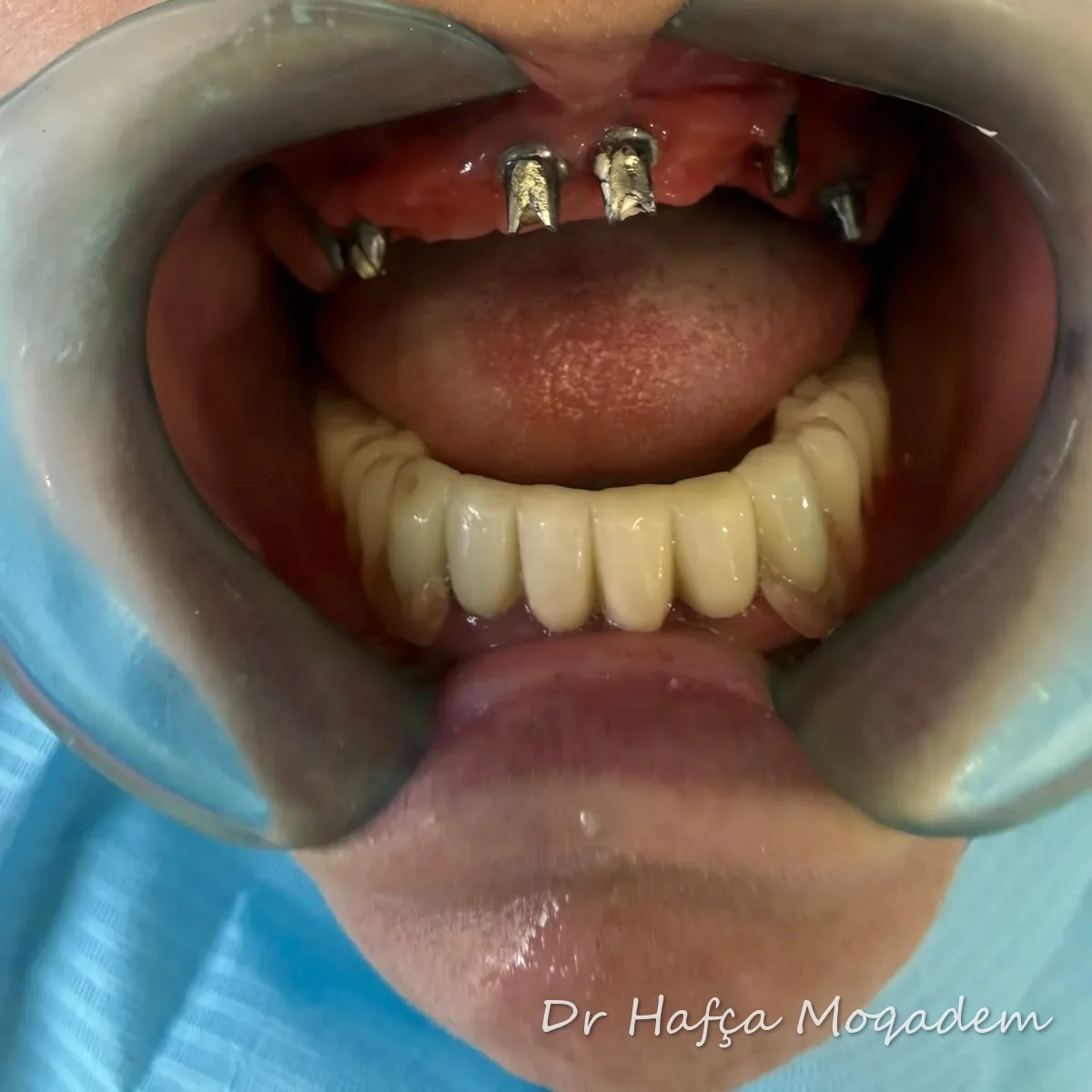 Before
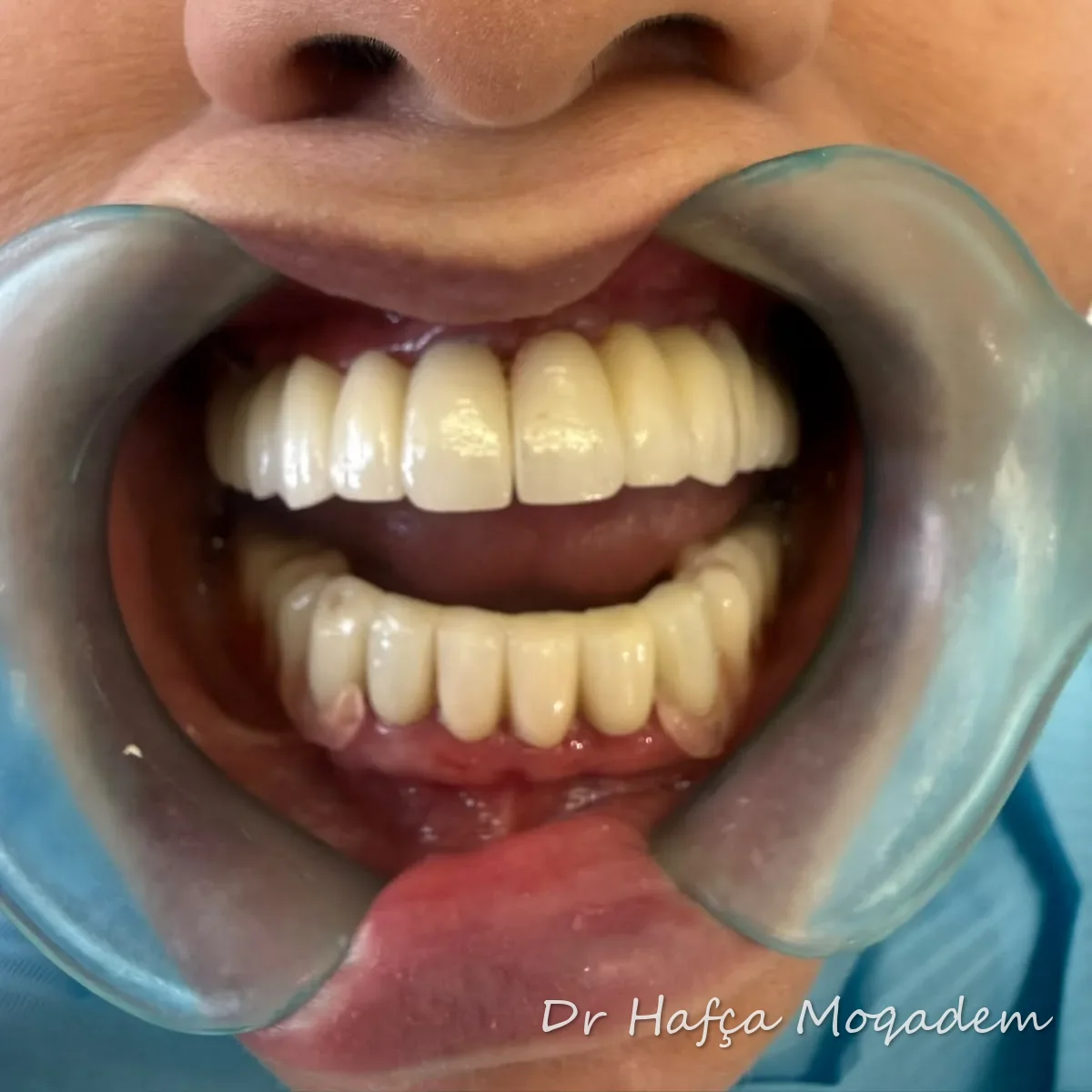 After
Real case from the clinic All-on-6, a patient of the clinic: the implants in place, then the fixed arch. See the cases: All-on-4 / All-on-6
Which implant system is proposed, and what are its brand and model? Why this material in my case, and what alternatives exist? What will the abutment and crown be made of, and will the crown be screwed or cemented? Which document will I receive after placement? Does my allergy or my medication change anything? How do I clean around the implant, and how often should I come back? To compare several proposals, ask for a written treatment plan and quote after the examination, naming each part precisely rather than simply saying implant.
The visual guide
Principles to help you prepare your questions. The assessment makes it possible to know what suits your situation.
| Item | Principle | To clarify at the clinic |
|---|---|---|
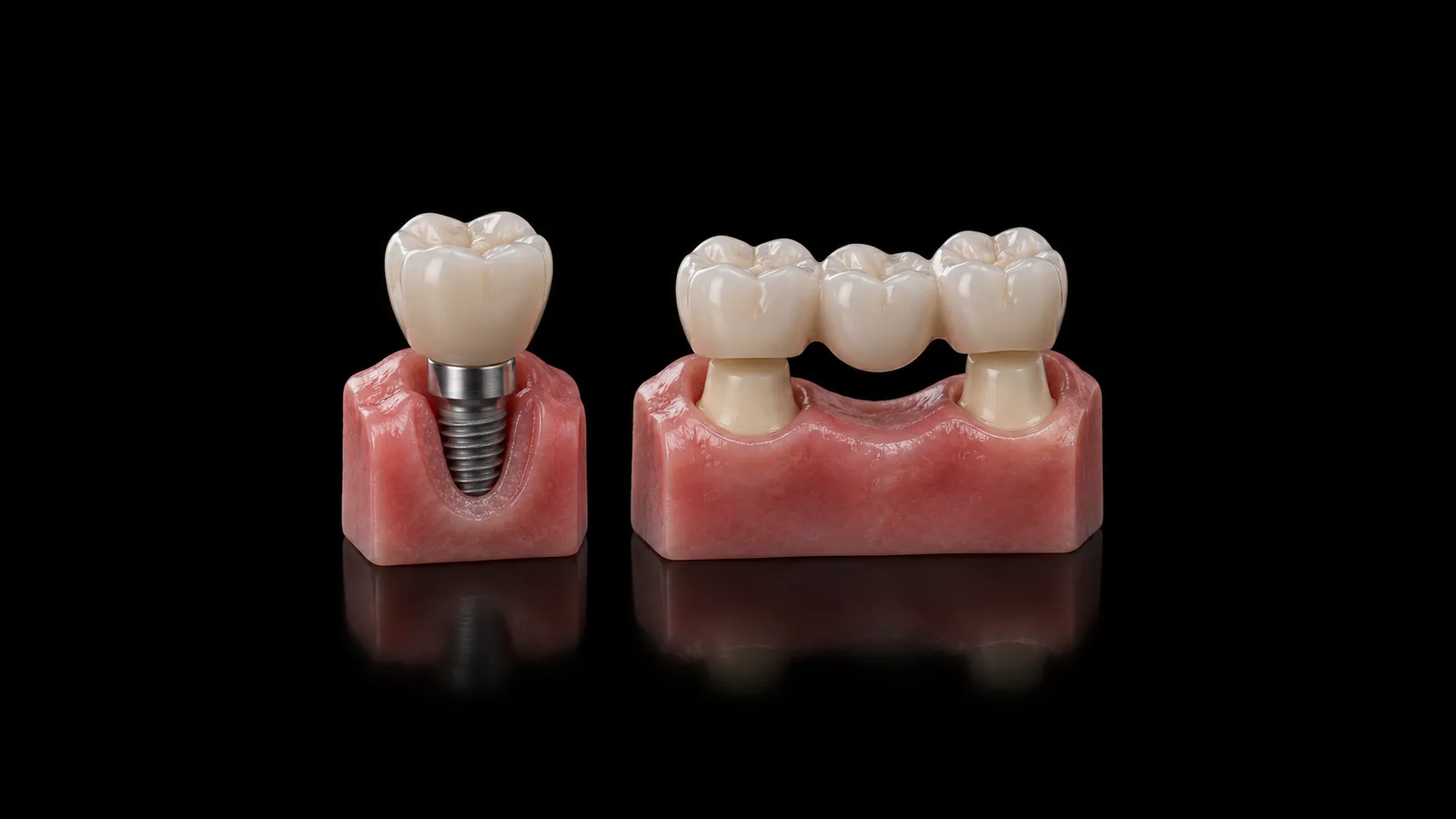
| Implant | A support fixed in the bone, carrying a crown or a prosthesis. | Bone volume, gum condition and general health to be assessed. |
| Bridge | A replacement resting on teeth or implants. | The supports and their preparation must be examined. |
| Removable denture | A device the patient takes out to clean it. | Stability, comfort and maintenance to be discussed depending on the situation. |
A daily guide
The NHS recommends about 2 minutes of brushing, twice a day, with a fluoride toothpaste.
Source: NHS, How to keep your teeth clean. A prevention guide, with no prediction of an individual result.
Your next appointment
Choose the questions you would like to ask. Your choices stay on this page and are neither saved nor sent.

Guéliz clinic, Marrakech
An article does not replace an examination. At the clinic, Dr Hafça Moqadem examines you, explains the options and gives you a written plan before any treatment.
Call the clinic, write to us on WhatsApp, or choose a day and a time yourself: your request reaches the clinic's WhatsApp and they will confirm the appointment.
2nd floor, No. 180 Madani Plaza, Boulevard Abdelkrim Al Khattabi, Guéliz, Marrakech
Replacing all the teeth in a jaw can mean a removable denture, a denture held by implants or a fixed arch. Each option has its own steps and upkeep.
Read the articlePrice ranges observed in Morocco in 2026 for an implant with its crown, what makes a quote vary and the questions to ask before you start.
Read the articleWhat Moroccan health insurance schemes cover for an implant, what changed at CNOPS in 2026, and the documents to ask the clinic for.
Read the articleAn implant can replace the root of a missing tooth and carry a crown or a denture. It has real advantages, but it involves surgery, time and ongoing care.
Read the articleDental implants attract many common beliefs, both too negative and too positive. Here are seven frequent claims, checked against medical sources.
Read the articleBefore replacing a tooth, it helps to understand why it was lost. Treating the cause, then the number and position of missing teeth, guide the choice of solution.
Read the articleImplants are often described as long-lasting. In practice, the implant and the tooth it carries do not last the same time, and cleaning matters as much as placement.
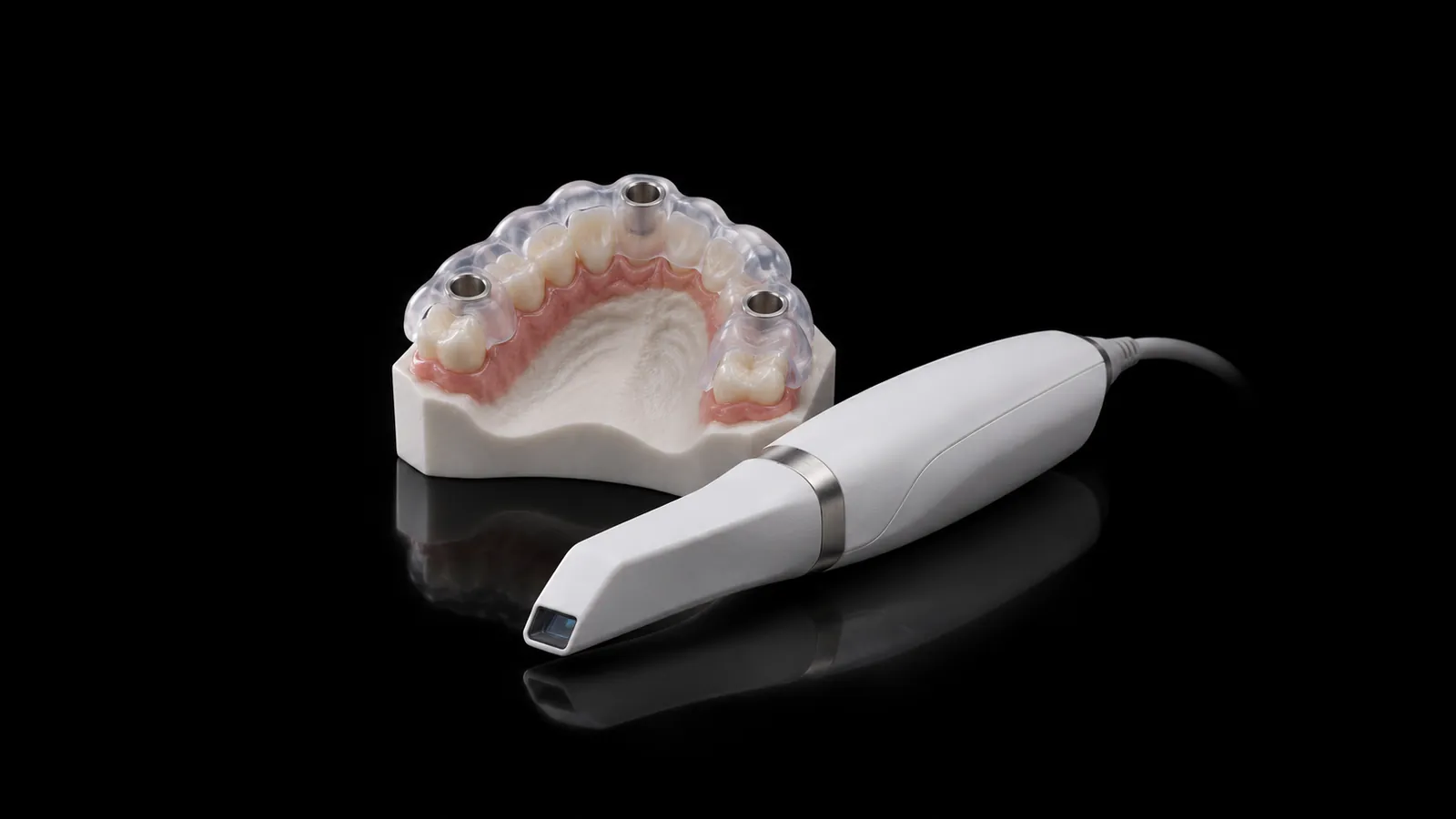
Read the articleDigital tools have changed how implants are prepared: 3D imaging, virtual planning, printed guides. They help the dentist, without replacing the examination or removing biological limits.
Read the articleTo find out more about the general information in this article:
Hello. Choose a question below and the answer will appear here.