Replacing all your teeth: dentures, implant-retained dentures or a fixed arch
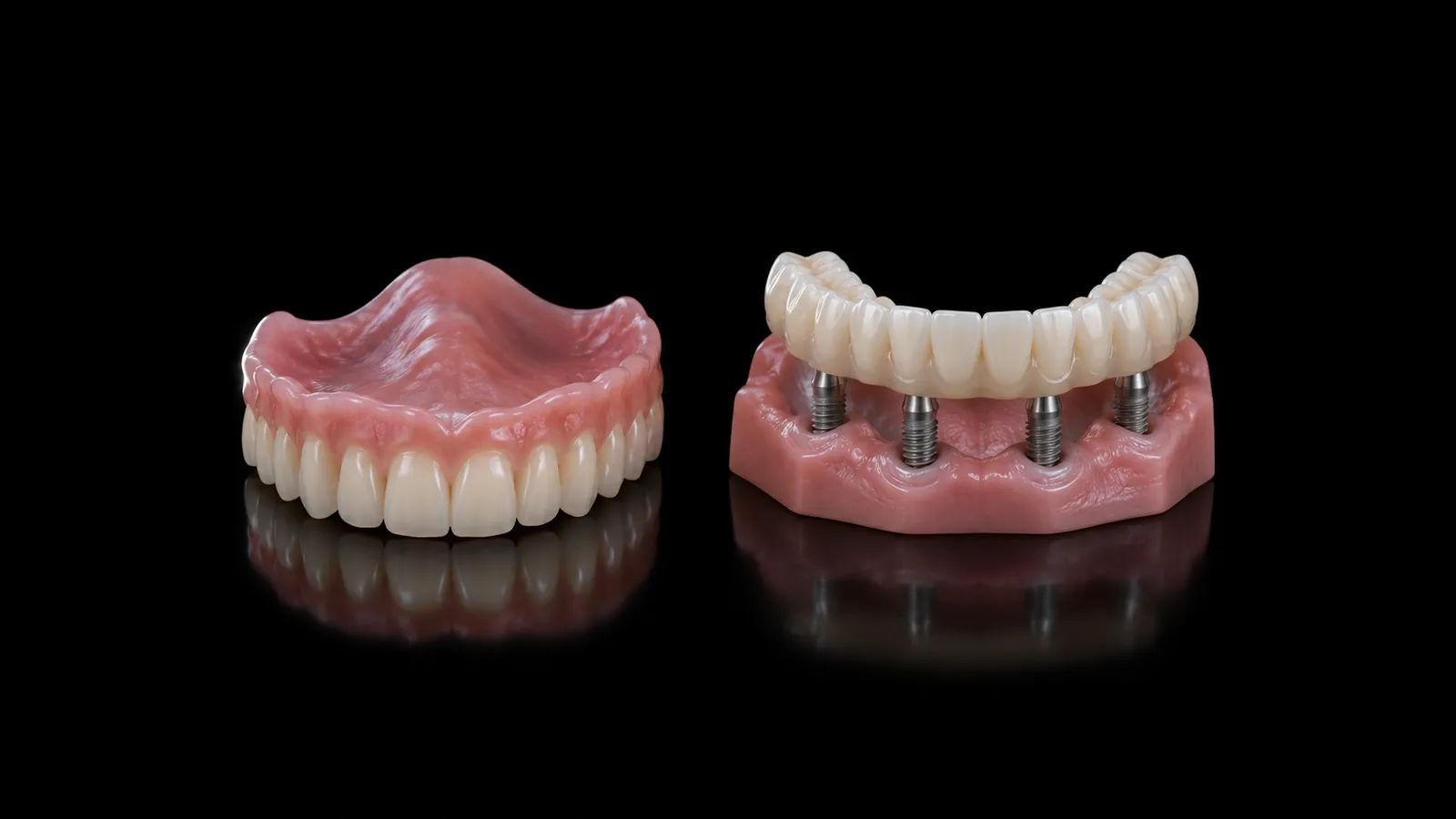
Replacing all the teeth in a jaw can mean a removable denture, a denture held by implants or a fixed arch. Each option has its own steps and upkeep.
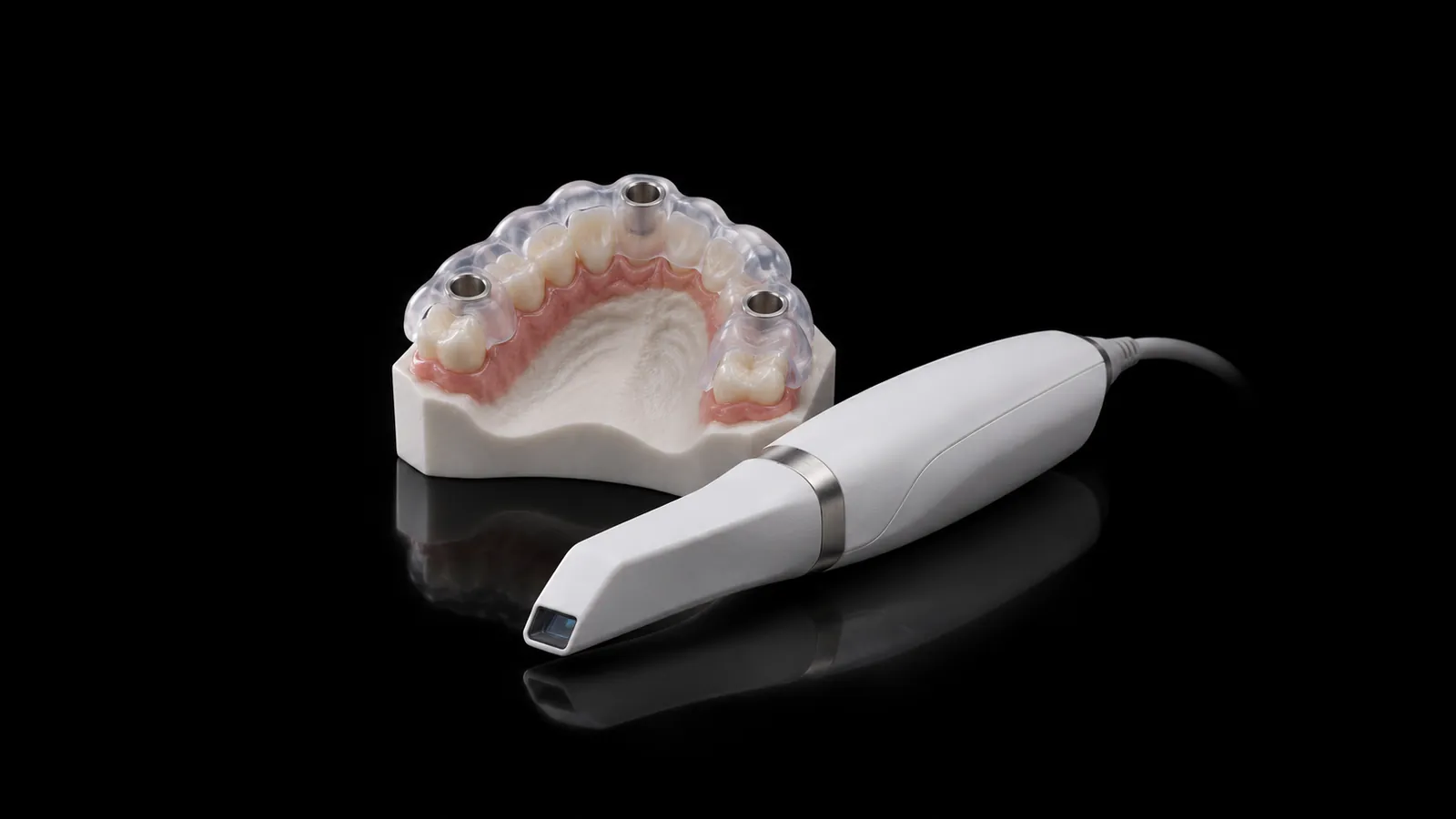
Read the articleDigital tools have changed how implants are prepared: 3D imaging, virtual planning, printed guides. They help the dentist, without replacing the examination or removing biological limits.
Published by Dr Hafça Moqadem, Dental surgeon in Marrakech4 min read
Holding the CFI diploma in oral implantology and periodontology (Paris V Faculty of Medicine), Dr Hafça Moqadem places implants and performs bone grafts at the clinic. The treatment plan is based on 3D imaging and explained to you step by step.
Looking for a dentist in Marrakech? Dr Hafça Moqadem welcomes you at Madani Plaza, Guéliz.
The word digital groups together several separate tools, used alone or in combination. Three-dimensional imaging shows the bone and nearby structures. Software lets the dentist place the implant virtually on these images, taking the future tooth into account. A surgical guide, often 3D printed, can transfer this plan to the mouth. A digital impression, taken with an intraoral camera, replaces impression paste in some cases, and computer-aided design is used to make the abutment, crown or temporary tooth. None of these tools is required for everyone: their value depends on the situation and the clinical question being asked.
Cone beam computed tomography, or CBCT, is a form of CT scanning adapted to dentistry. The FDA, the US medical device regulator, lists implant planning among its uses, along with evaluating the jaws and abnormal teeth. It shows the height and width of the bone and the position of the lower jaw nerve and the sinus. The FDA notes that its dose is generally lower than other CT exams but higher than a conventional dental X-ray. It advises asking whether the exam is necessary and whether there is an alternative with less radiation. It is therefore prescribed when a 2D image is not enough.
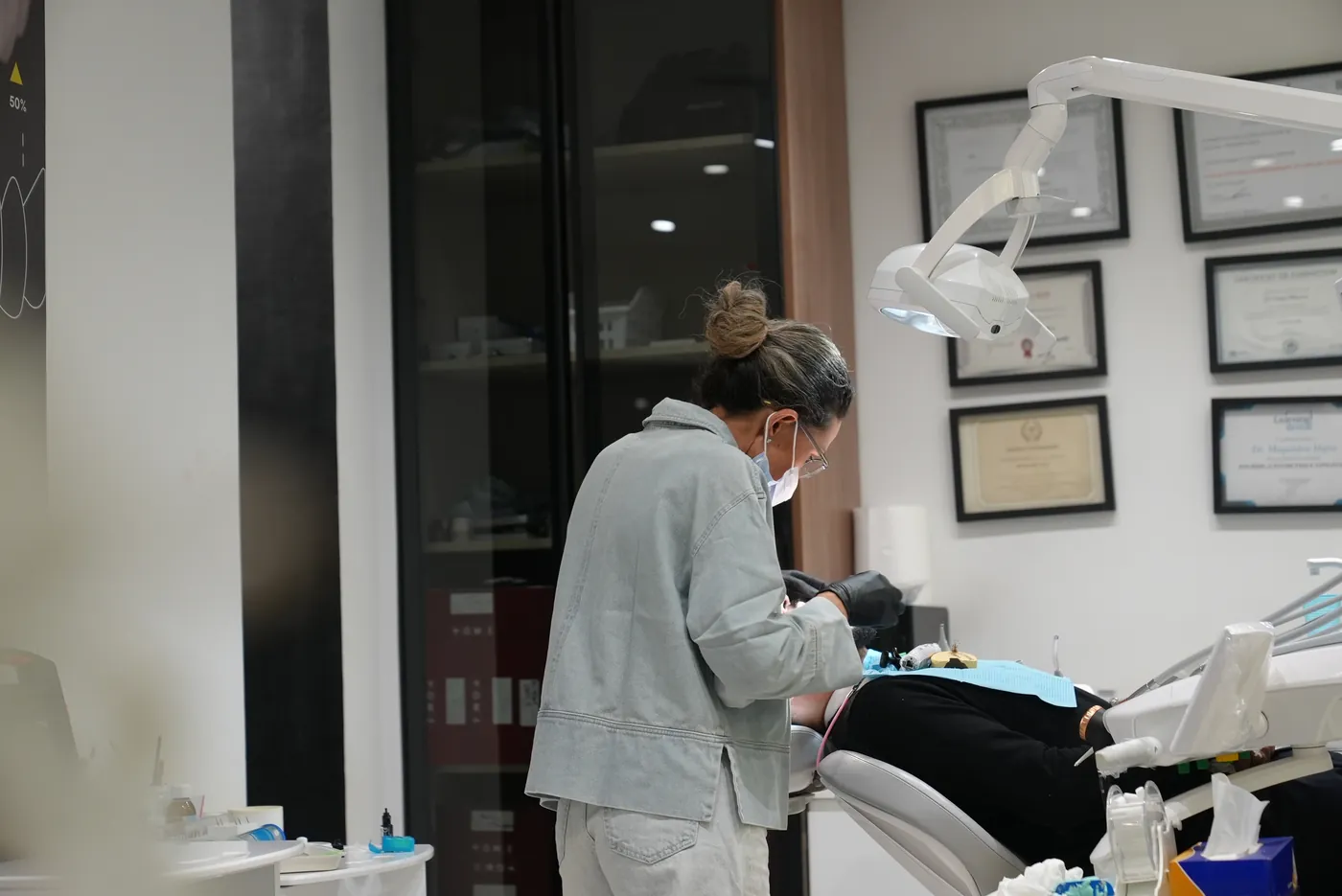
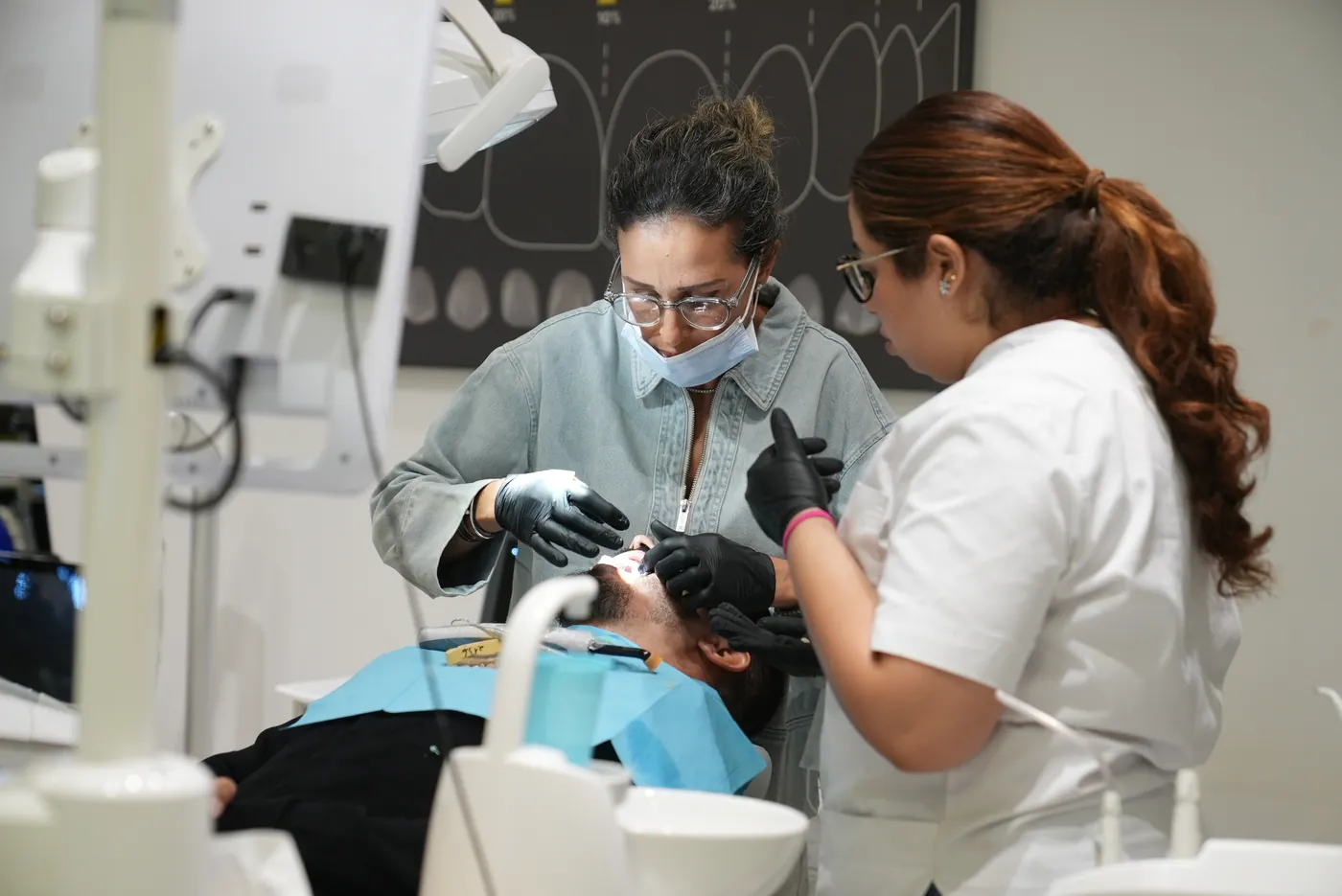
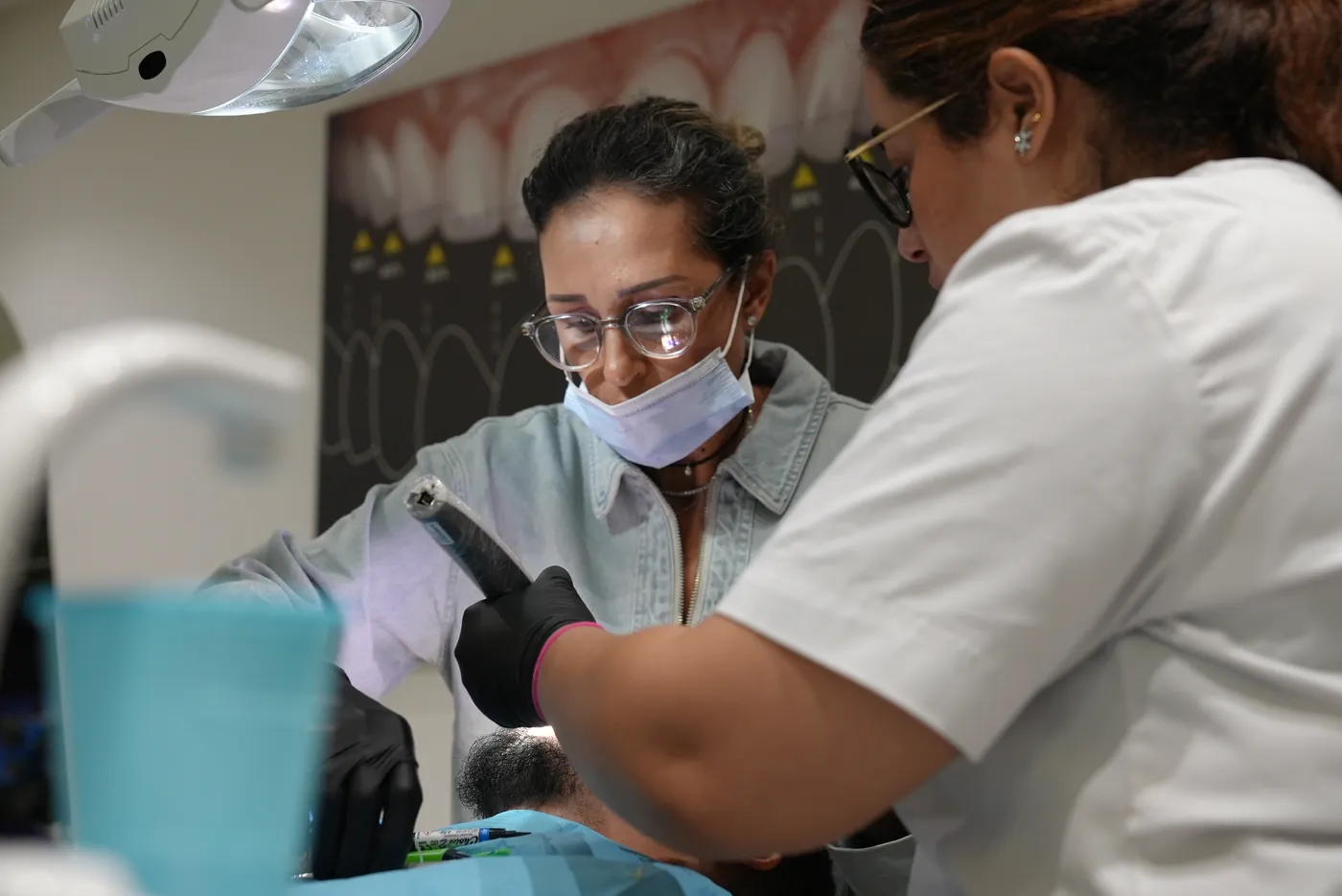
On the 3D images, the dentist can simulate the position, angle, length and diameter of the implant, starting from the tooth to be rebuilt rather than from the bone alone. This step helps identify in advance a lack of bone or the proximity of a nerve or neighbouring root, and to discuss a possible graft. It also makes it possible to show you the plan and explain the choices made. Planning remains a working hypothesis: the actual bone quality, the gum and the stability achieved during surgery can lead to changes. Ask to have explained what the image shows and what it does not.
A guide is a tray, made from the plan, that directs the drilling during placement. A systematic review published in 2018 in Clinical Oral Implants Research pooled twenty clinical studies of these guides. It found an average deviation of about 1.2 mm at the entry point, 1.4 mm at the tip of the implant and 3.5 degrees of angle between the planned and the actual position. The authors consider this accuracy clinically acceptable in most situations, but recommend respecting a safety margin of at least 2 mm. They also found lower accuracy in patients with no teeth at all.
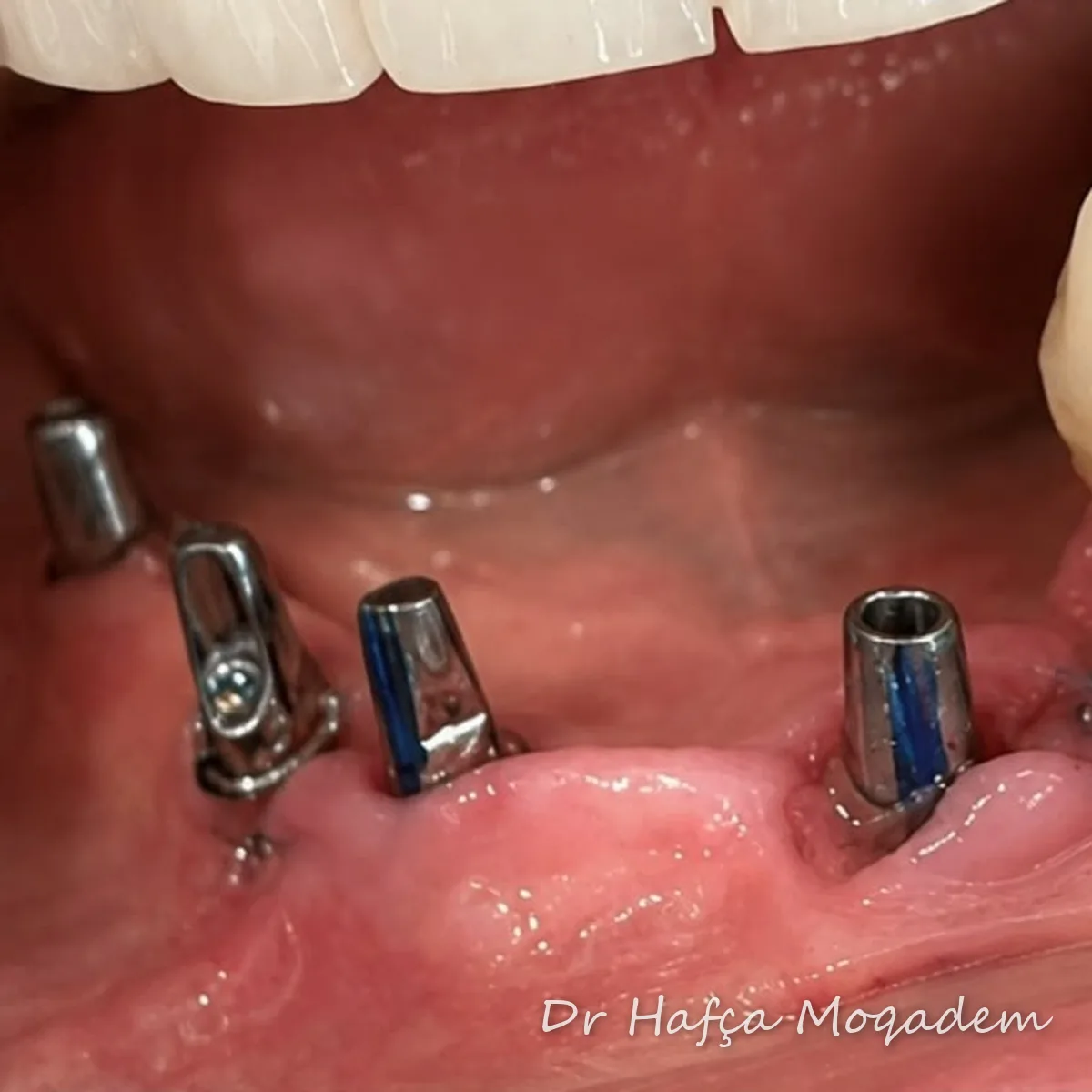 Before
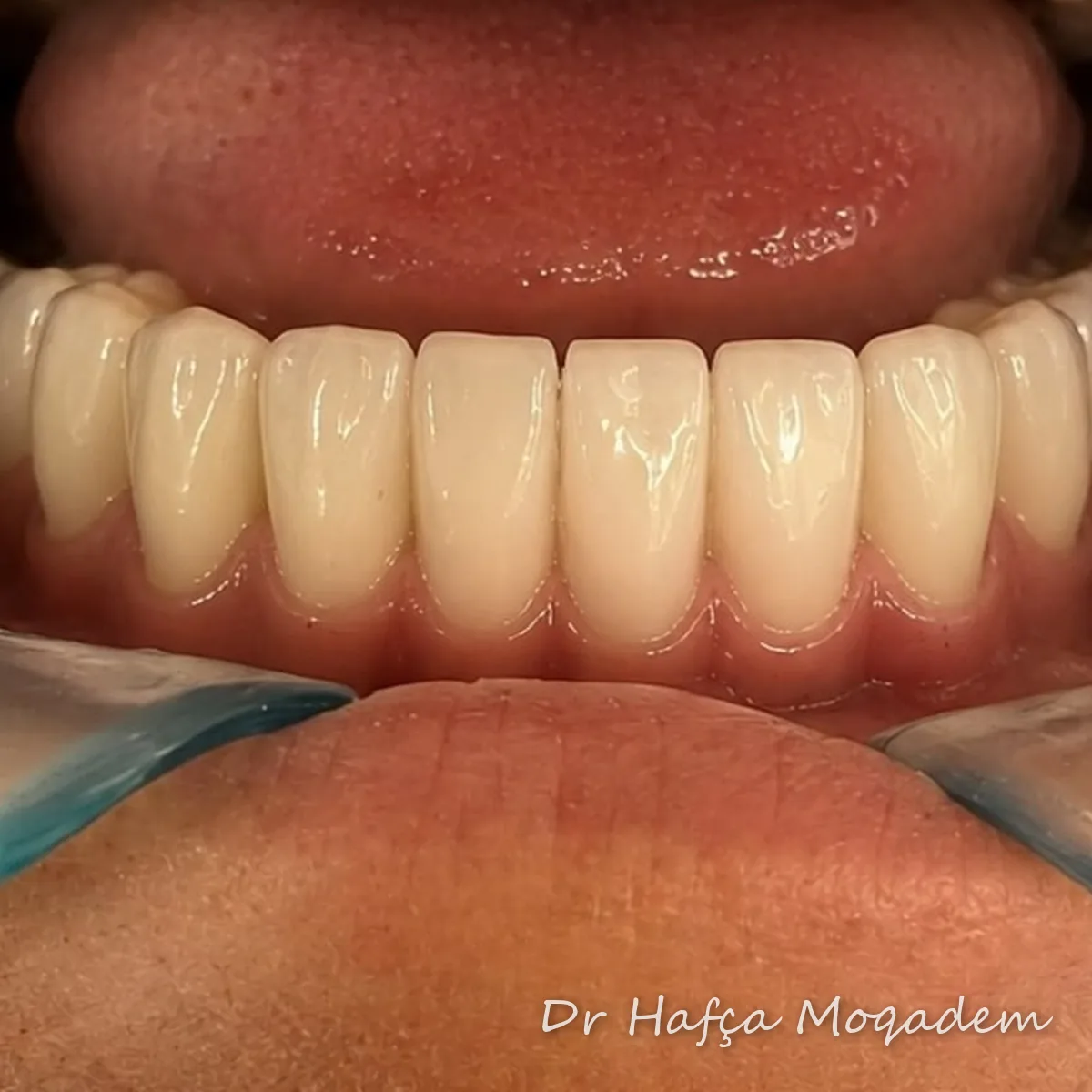 After
Real case from the clinic Several teeth replaced, a patient of the clinic: the abutments on implants, then the fixed bridge. See the cases: Replacing several teeth
An intraoral camera can record the shape of the teeth, the gum and the position of the implant without impression paste, which some patients find more comfortable. The resulting file is used to design the abutment and crown on a computer, then mill or print them. These steps make communication with the laboratory easier and keep the data on record. They do not remove the need for try-ins in the mouth: shade, shape, contact with neighbouring teeth and the bite are checked and adjusted before final fitting. For a full arch, a conventional impression is sometimes still preferable depending on the situation.
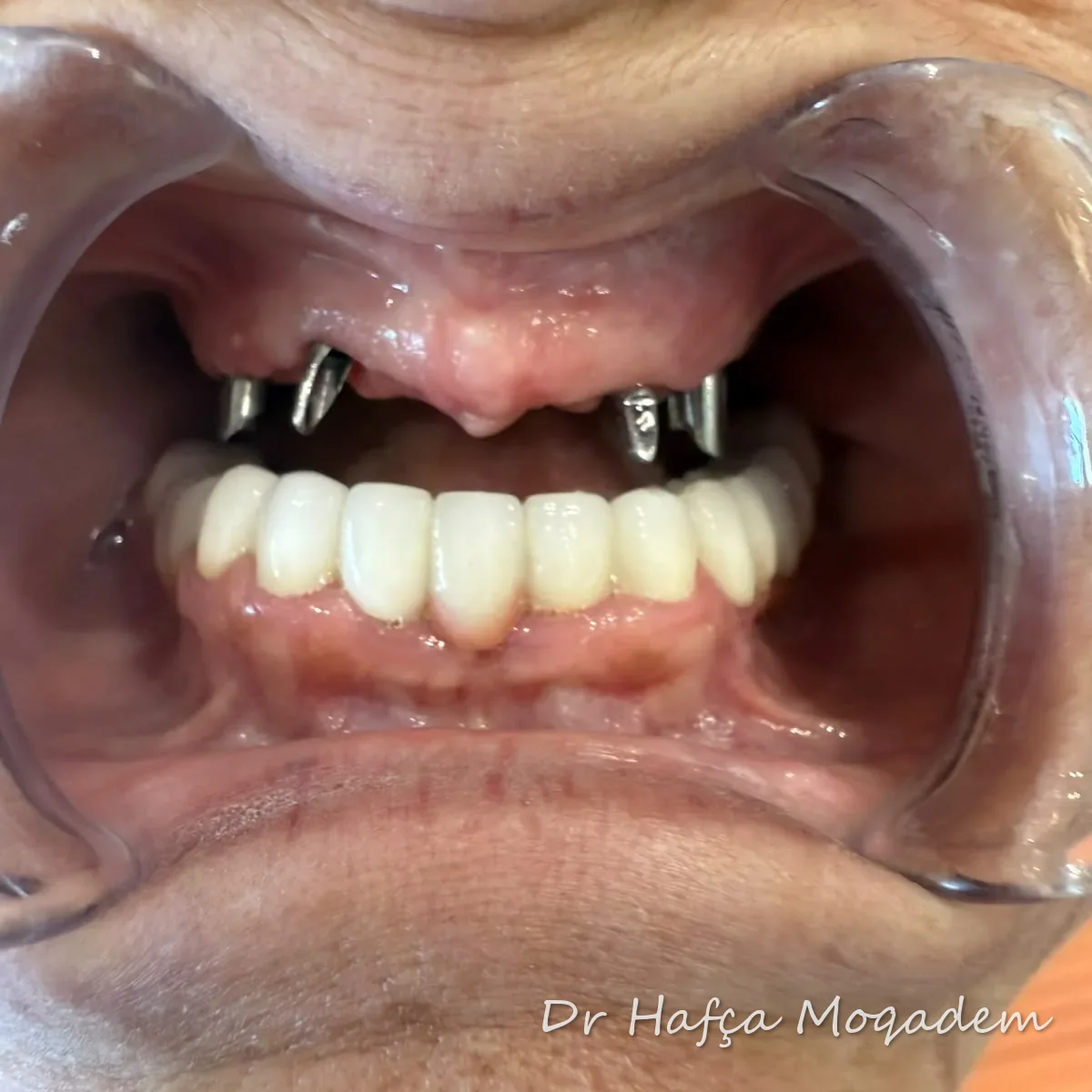 Before
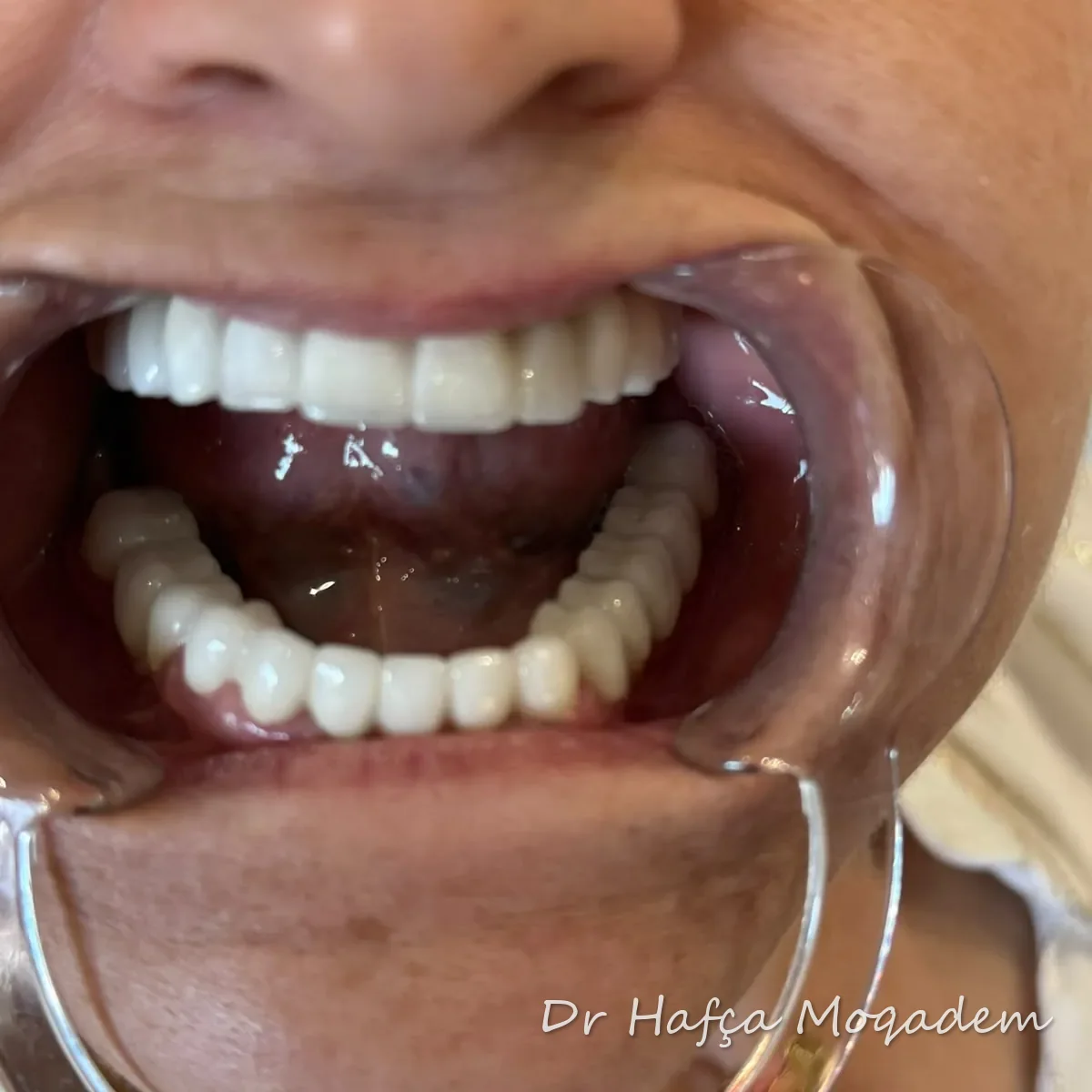 After
Real case from the clinic All-on-6, another patient of the clinic: the implants in place, then the fixed arch. See the cases: All-on-4 / All-on-6
3D imaging and planning are mainly discussed when the bone looks limited, when the implant has to go close to the lower jaw nerve or the sinus, when several implants must be lined up to carry a bridge, or for a full arch. They are also useful when a temporary tooth is being considered soon after placement, because the position then has to be planned carefully. For a simple case, with wide and clearly visible bone, lighter imaging may be enough. It is up to the dentist to explain why a scan or a guide is, or is not, being suggested in your particular situation.

A precise tool does not remove biological limits. The implant still has to integrate with the bone, which takes three to nine months according to Cleveland Clinic, and the risks of any implant surgery remain: the FDA lists damage to a neighbouring tooth, a nerve or the sinus, infection and difficulty cleaning around the implant. Smoking, unmanaged diabetes and untreated gum disease matter as much as before. Finally, daily cleaning and check-ups remain the basis of how long an implant lasts. A technology should be judged by the question it helps answer, not by how new it is.
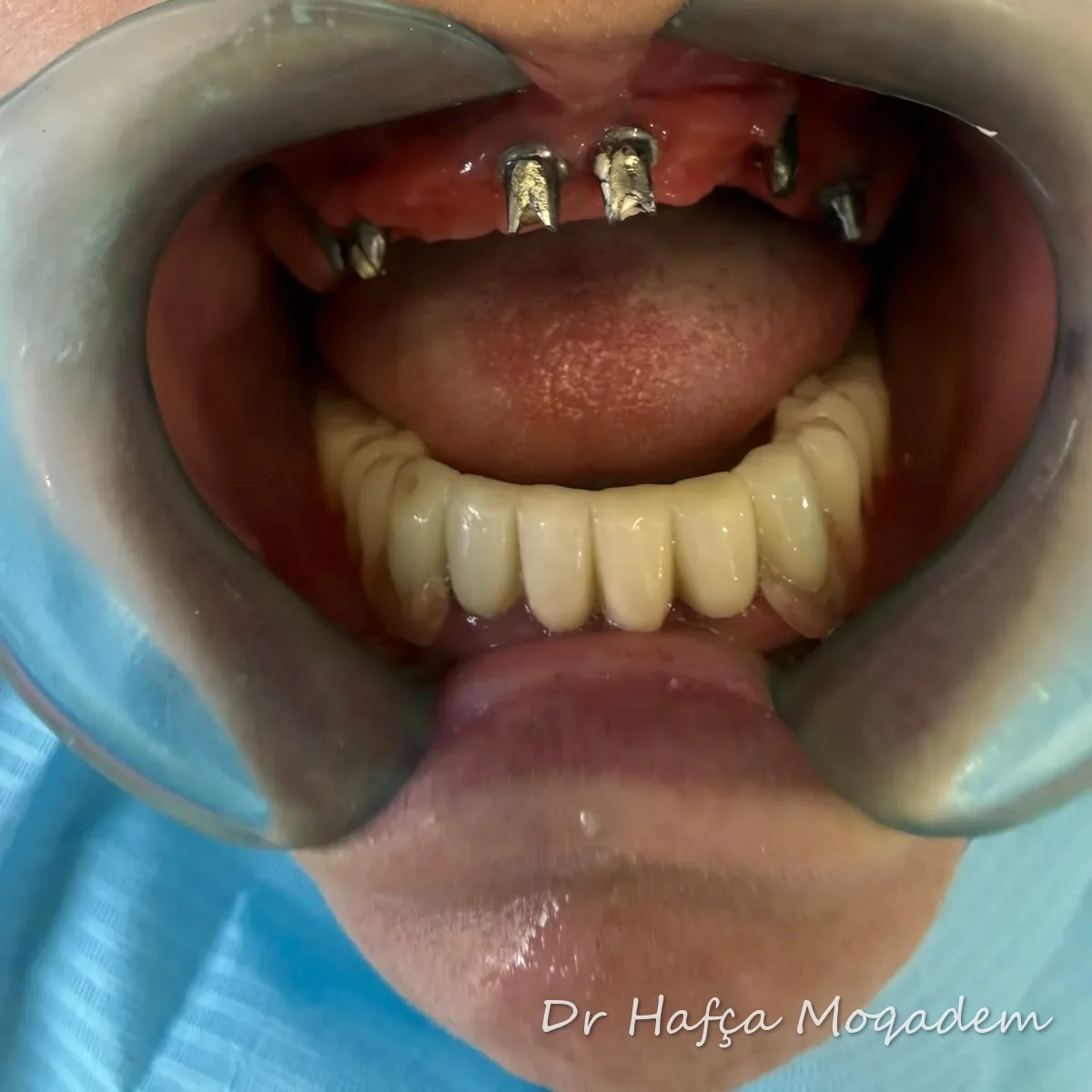 Before
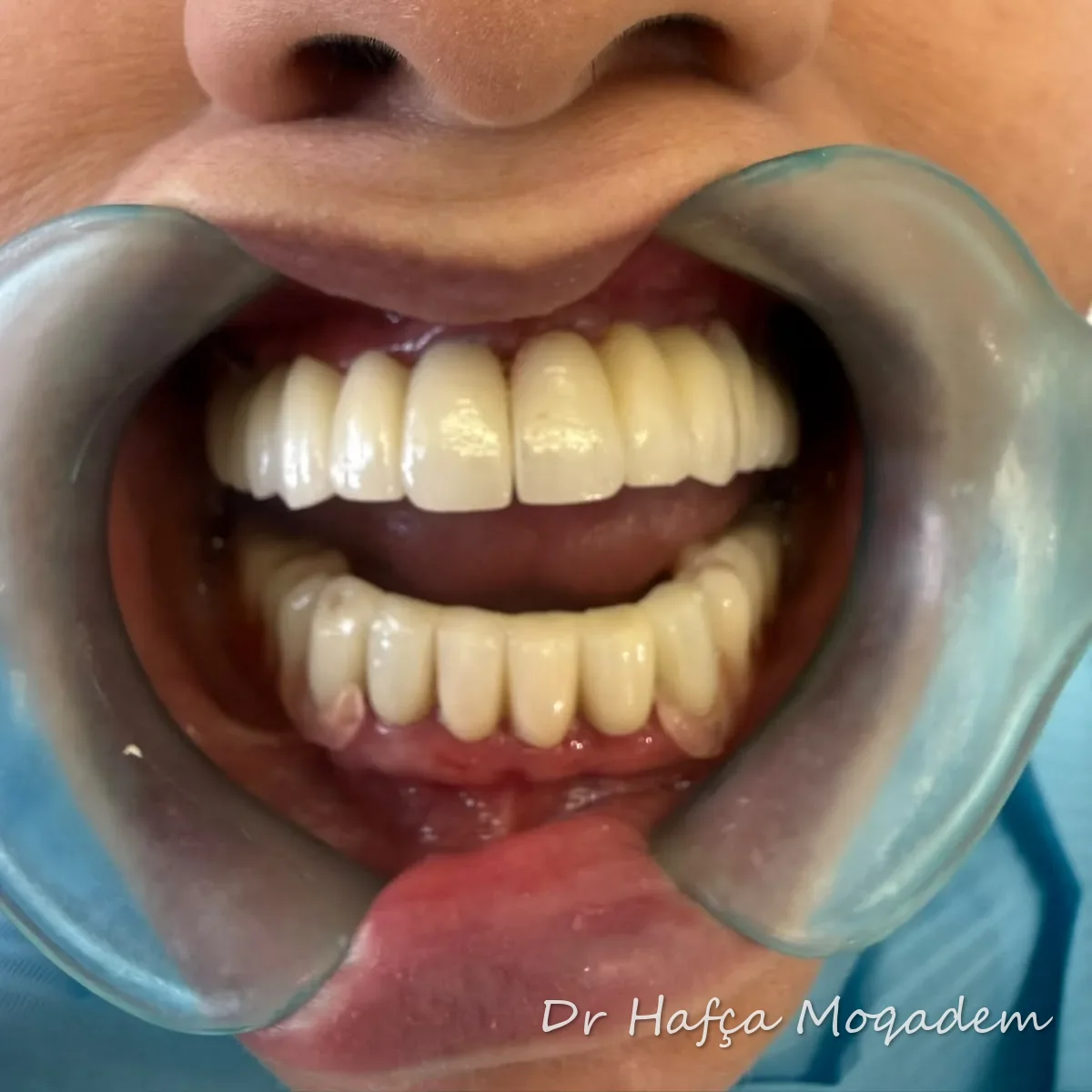 After
Real case from the clinic All-on-6, a patient of the clinic: the implants in place, then the fixed arch. See the cases: All-on-4 / All-on-6
Which imaging is needed in my case, and why is a 2D X-ray not enough? Can I see the plan for my implant and understand its choices? Is a surgical guide planned, and what safety margin is kept from the nerve or the sinus? Will the impression be digital or conventional? What happens if the actual bone differs from what the image showed? Which stages and follow-up are planned after placement? Ask for a written treatment plan after the examination that sets out the planned tests and stages, rather than a simple list of equipment.
The visual guide
Principles to help you prepare your questions. The assessment makes it possible to know what suits your situation.
| Item | Principle | To clarify at the clinic |
|---|---|---|
| Implant | A support fixed in the bone, carrying a crown or a prosthesis. | Bone volume, gum condition and general health to be assessed. |
| Bridge | A replacement resting on teeth or implants. | The supports and their preparation must be examined. |
| Removable denture | A device the patient takes out to clean it. | Stability, comfort and maintenance to be discussed depending on the situation. |
A daily guide
The NHS recommends about 2 minutes of brushing, twice a day, with a fluoride toothpaste.
Source: NHS, How to keep your teeth clean. A prevention guide, with no prediction of an individual result.
Your next appointment
Choose the questions you would like to ask. Your choices stay on this page and are neither saved nor sent.
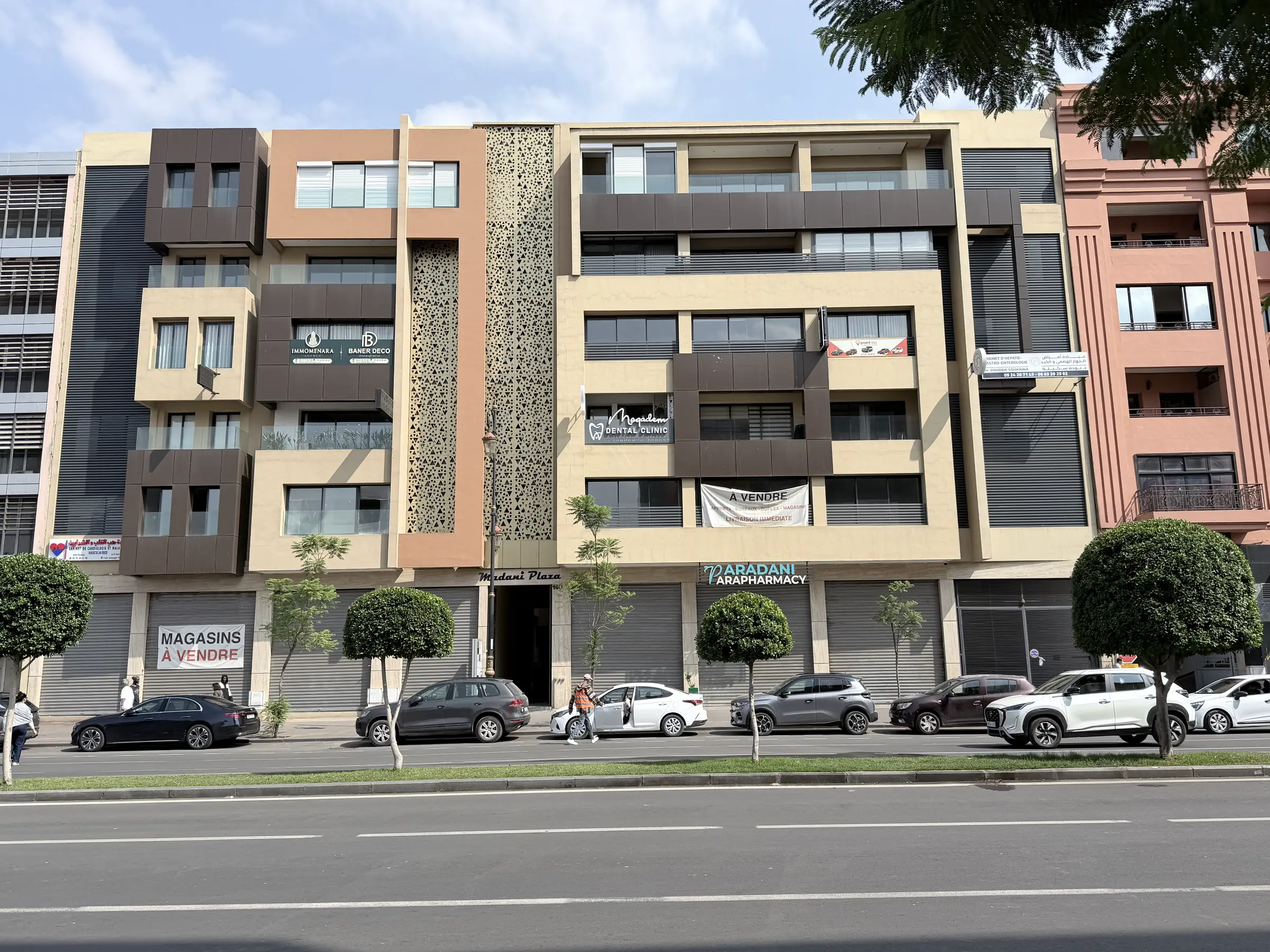
Guéliz clinic, Marrakech
An article does not replace an examination. At the clinic, Dr Hafça Moqadem examines you, explains the options and gives you a written plan before any treatment.
Call the clinic, write to us on WhatsApp, or choose a day and a time yourself: your request reaches the clinic's WhatsApp and they will confirm the appointment.
2nd floor, No. 180 Madani Plaza, Boulevard Abdelkrim Al Khattabi, Guéliz, Marrakech
Replacing all the teeth in a jaw can mean a removable denture, a denture held by implants or a fixed arch. Each option has its own steps and upkeep.
Read the articlePrice ranges observed in Morocco in 2026 for an implant with its crown, what makes a quote vary and the questions to ask before you start.
Read the articleWhat Moroccan health insurance schemes cover for an implant, what changed at CNOPS in 2026, and the documents to ask the clinic for.
Read the articleAn implant can replace the root of a missing tooth and carry a crown or a denture. It has real advantages, but it involves surgery, time and ongoing care.
Read the articleDental implants attract many common beliefs, both too negative and too positive. Here are seven frequent claims, checked against medical sources.
Read the articleBefore replacing a tooth, it helps to understand why it was lost. Treating the cause, then the number and position of missing teeth, guide the choice of solution.
Read the articleA dental implant combines several parts, often in different materials. Knowing their roles helps you ask the right questions, without judging quality on one material alone.
Read the articleImplants are often described as long-lasting. In practice, the implant and the tooth it carries do not last the same time, and cleaning matters as much as placement.
Read the articleTo find out more about the general information in this article:
Hello. Choose a question below and the answer will appear here.