Sensitivity, sore gums, gums turning white: when whitening is supervised, side effects are usually mild and short-lived. What raises the risks and when to get advice.
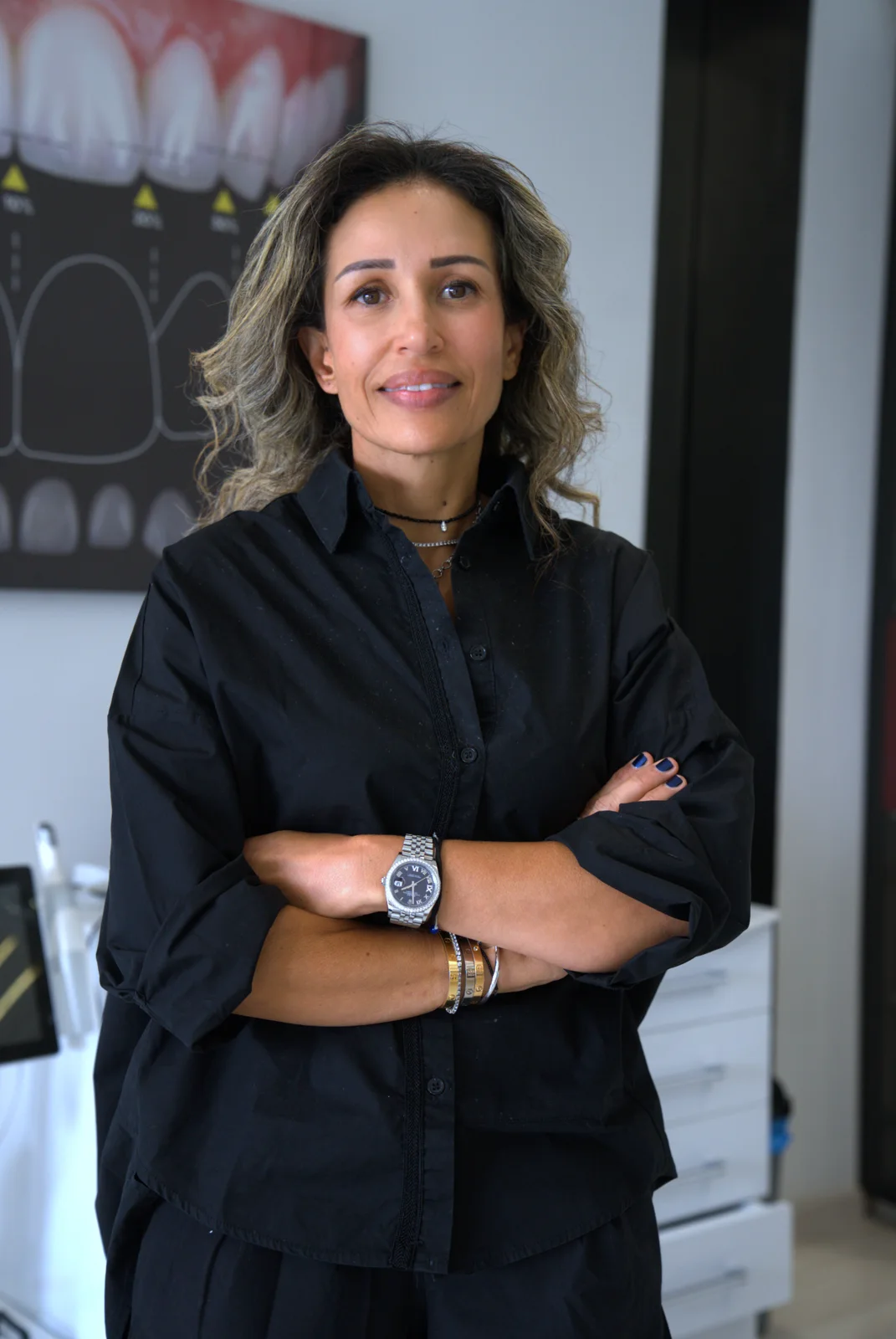
Published by Dr Hafça Moqadem, Dental surgeon in Marrakech4 min read
Trained in aesthetic veneers at the Institut de la Facette in Marseille, Dr Moqadem carries out veneers, whitening and smile design. Each plan starts from your face and your smile, and you approve it before any treatment.
Certificate in aesthetic veneers from the Institut de la Facette, Marseille.
Doctor of dental surgery (state diploma).
Former attaché at Beth Israel Hospital, stomatology department, New York.
CFI graduate in implantology and oral periodontology, Paris V Faculty of Medicine.
Certificate in advanced surgery from the Collège Américain de Paris.
Certificate in clear aligner orthodontics from the Centre de Sourire de Paris.
Certificate in dental and medical emergencies, Paris V.
Certificate in botulinum toxin and hyaluronic acid injections, Paris.
Sensitivity and gum irritation are the most common effects, usually temporary.
Risks rise with strong products used without supervision or overused.
Severe or persistent pain is a reason to stop and see the dentist.
Is teeth whitening dangerous?
Supervised by a dentist, whitening is a treatment with well-known and usually moderate side effects. The 2018 Cochrane review of home whitening reports that tooth sensitivity and mouth irritation are the most common effects, usually mild and short-lived, and more frequent with higher concentrations. The ADA does warn that overusing whitening products can damage enamel or gums. The real danger therefore comes mainly from strong products used incorrectly, repeated applications without advice, and mouths that were not examined before treatment began.
Tooth sensitivity
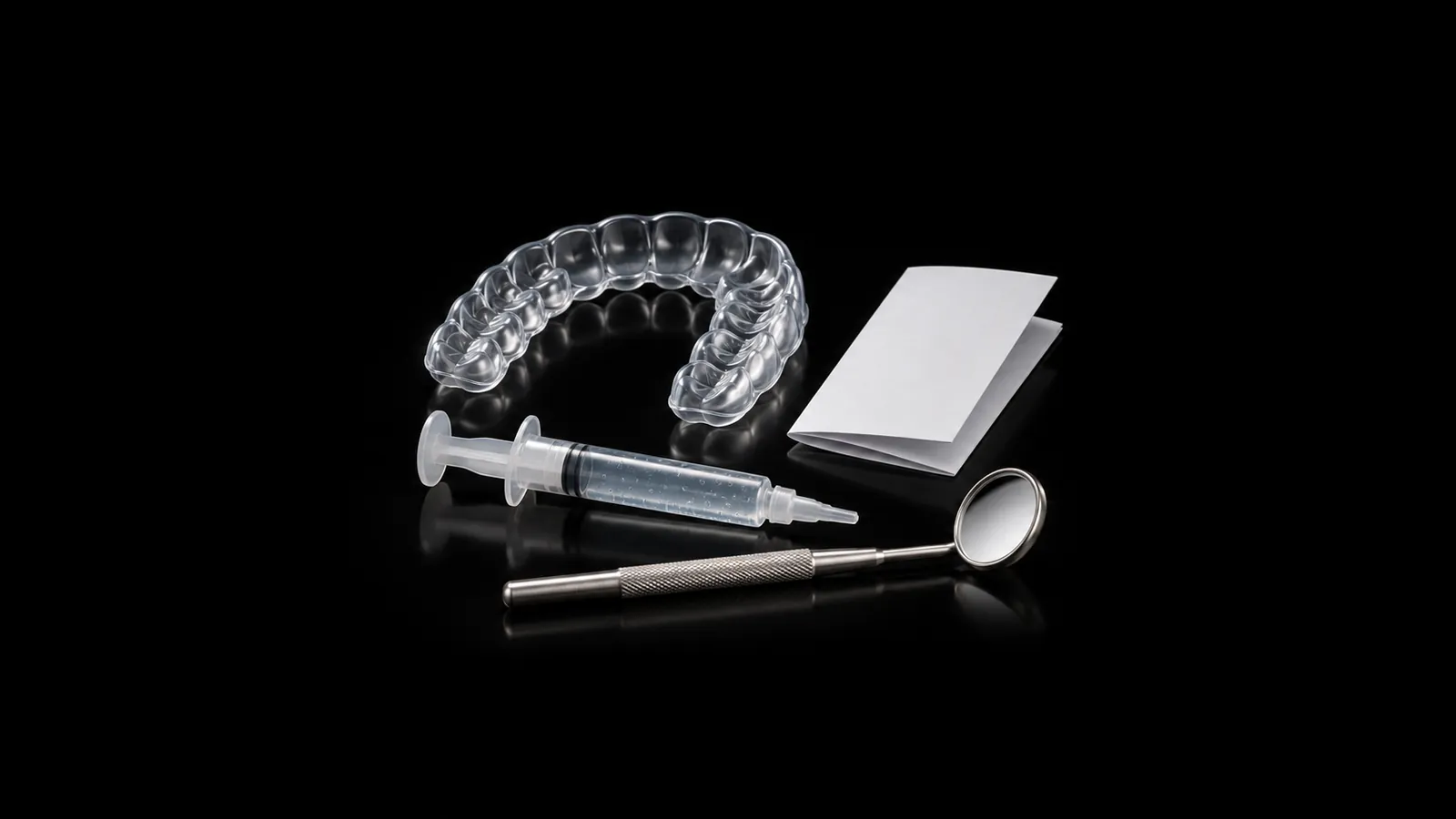
This is the most common effect. Teeth may react to cold, heat or sweet things during treatment and in the days after. The NHS lists it among possible effects, and the ADA notes that it is temporary in most cases. According to Leeds Teaching Hospitals, it usually fades a few days after stopping. If it is bothersome, the dentist can space out applications, shorten them or suggest a toothpaste for sensitive teeth. Sensitivity that does not settle after stopping should be checked, as it may reveal decay or a crack.
Sore or white gums
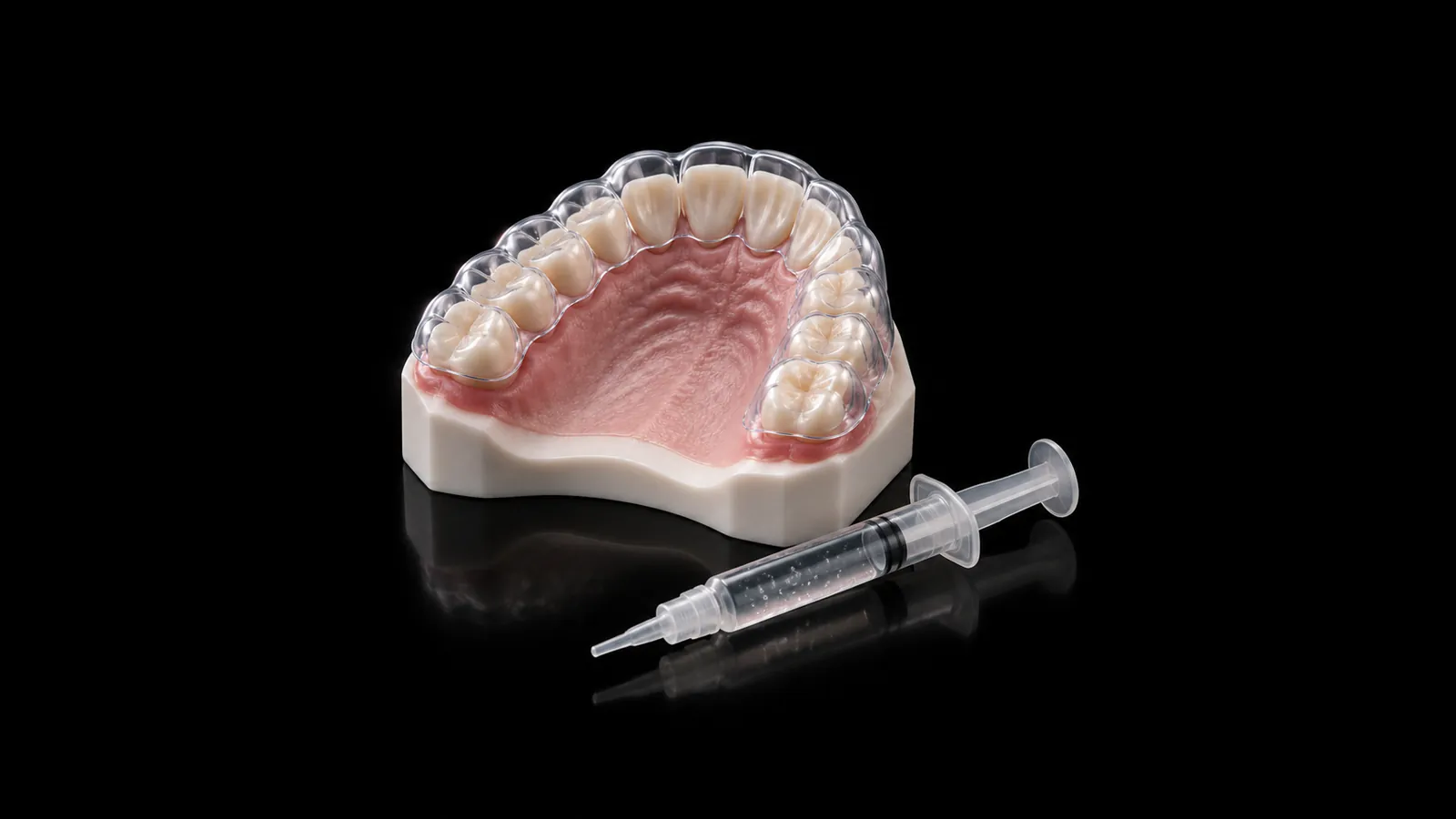
The gel can irritate the gums if it spills out of the tray or stays in contact for too long. The NHS lists sore gums and white patches on the gums among possible effects. Leeds Teaching Hospitals describes this whitish appearance as temporary and says the risk is reduced by using the right amount of gel and wiping away any excess. In the surgery, a barrier protects the gums during the session. Gums that stay sore, swollen or bleed beyond a few days should be checked by the dentist.
Throat, mouth and swallowed gel
The NHS also mentions a sore throat. With trays used at home, it mainly happens when too much gel is placed in the tray and ends up swallowed or reaching the back of the mouth. These protocols advise using the amount shown, often a small drop per tooth, removing any excess and keeping the product out of children’s reach. At the clinic, whitening is done in the chair, after an examination: the gel is applied and removed by the dentist, and nothing is applied at home. If mouth or throat irritation persists after a session, ask the clinic for advice.
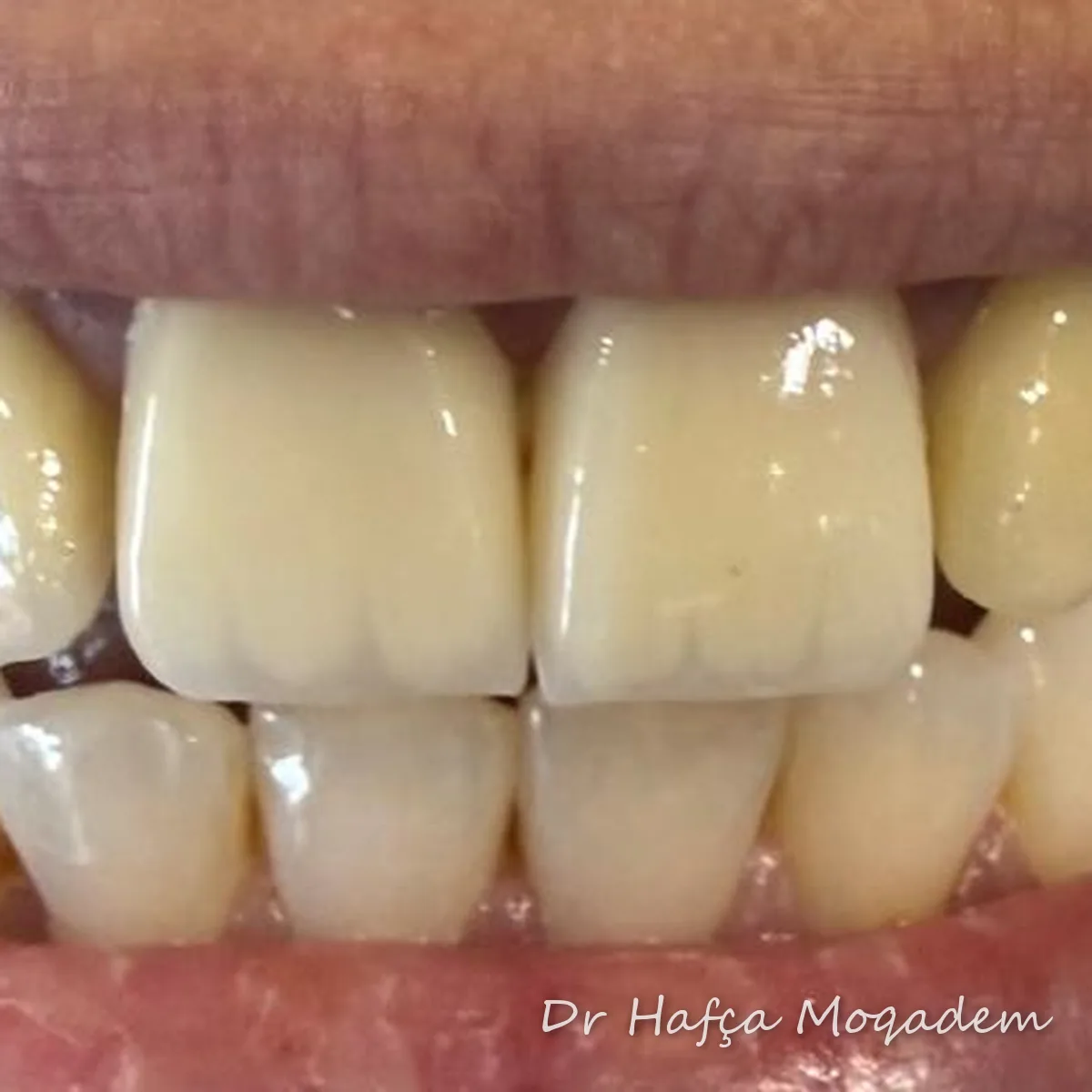
Used to a dental protocol, peroxide lightens the tooth without grinding it down. The ADA does warn that overuse can damage enamel, which is why the dentist sets the length and frequency of applications. Crowns, veneers, composite and fillings do not change colour: after treatment, the difference in shade compared with natural teeth may become more visible. This is not damage, but something to plan for, because these restorations may need to be redone afterwards to match the new shade of your natural teeth.
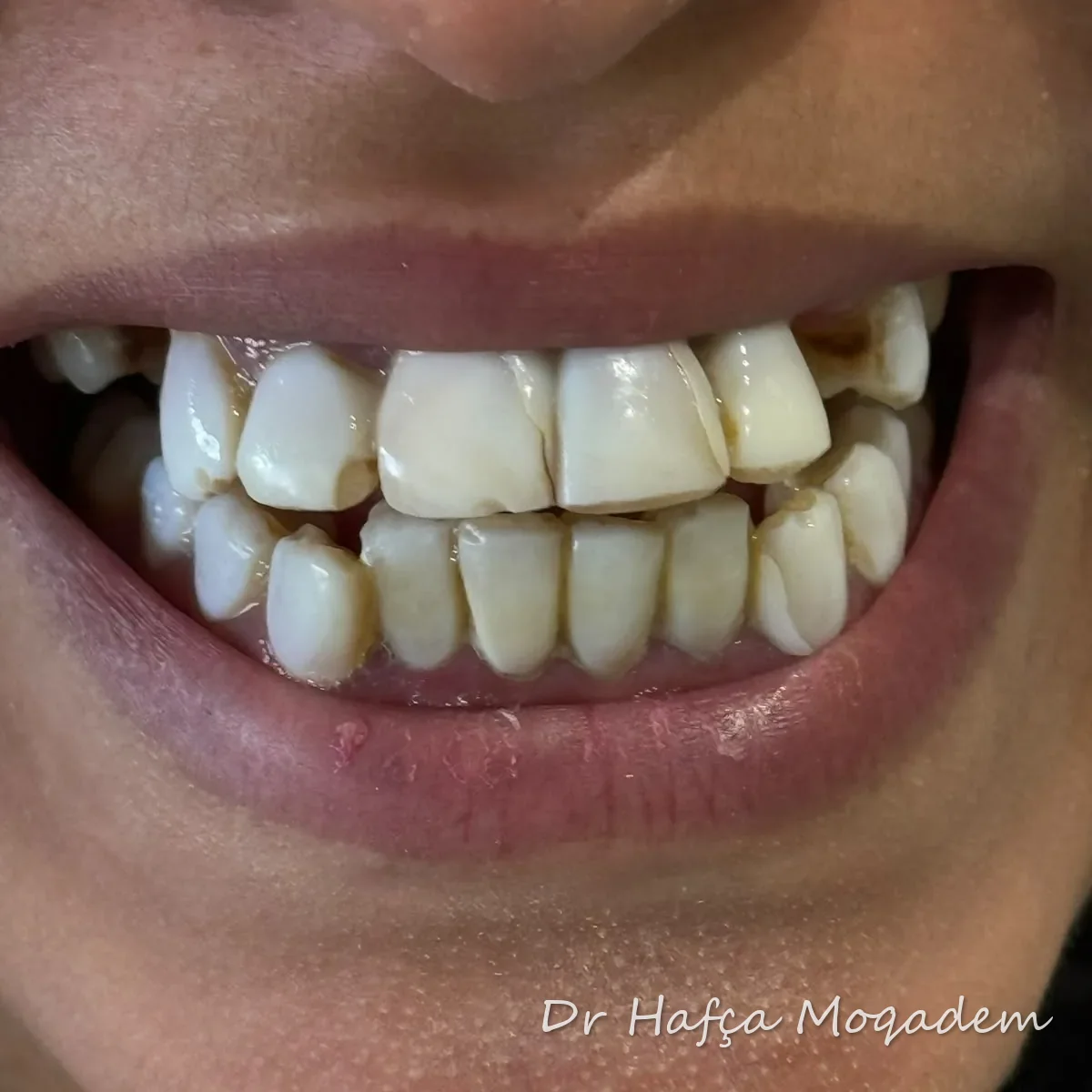
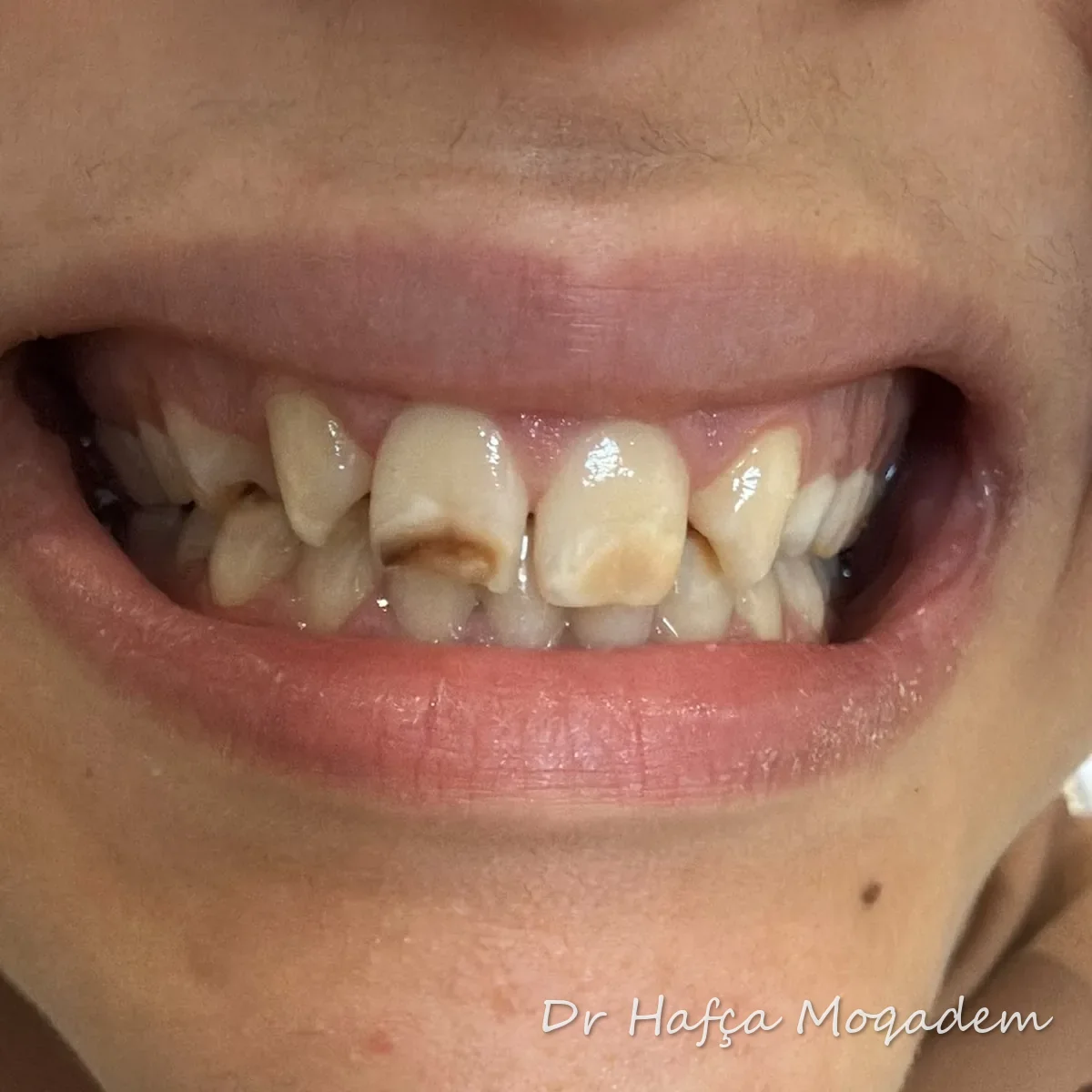
Before
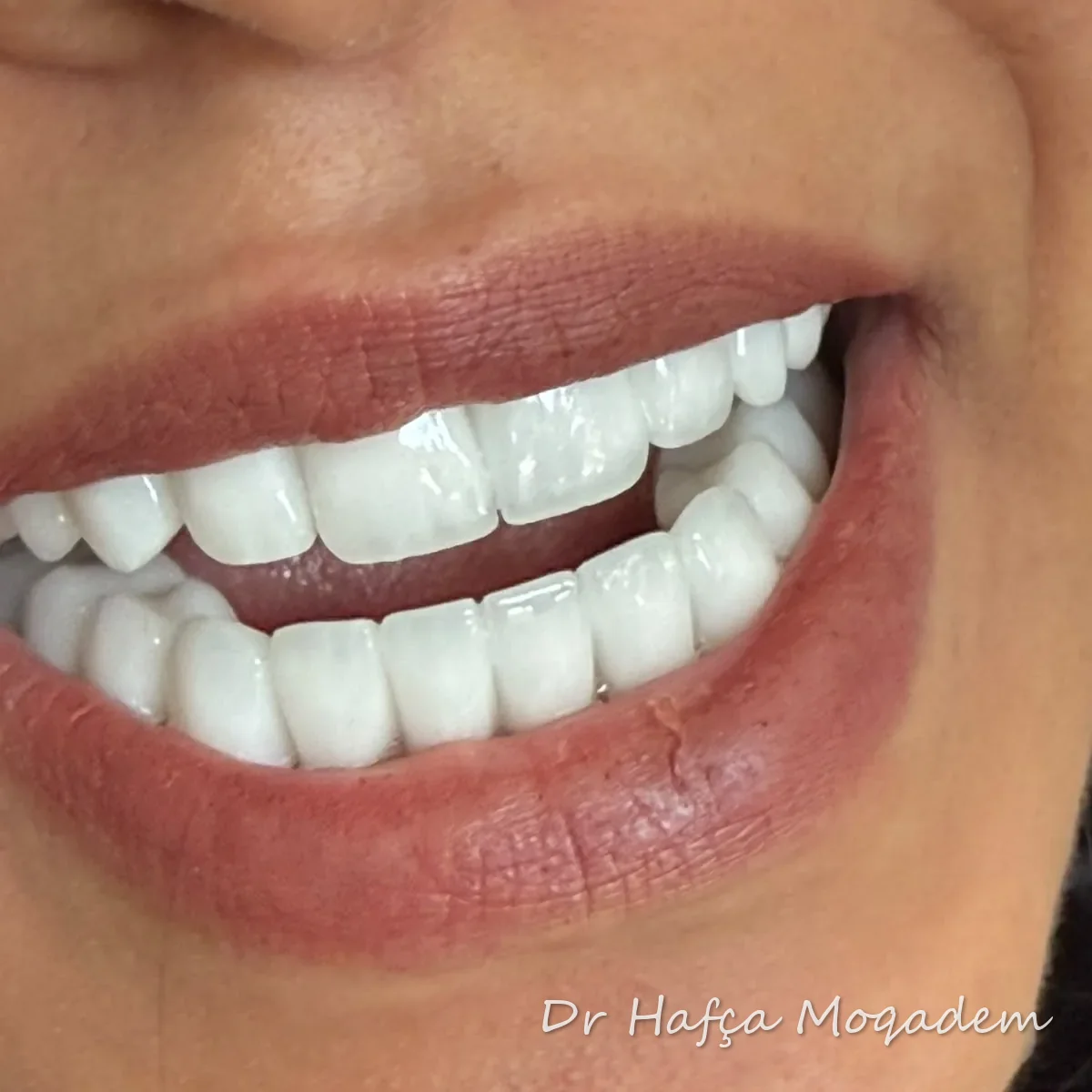
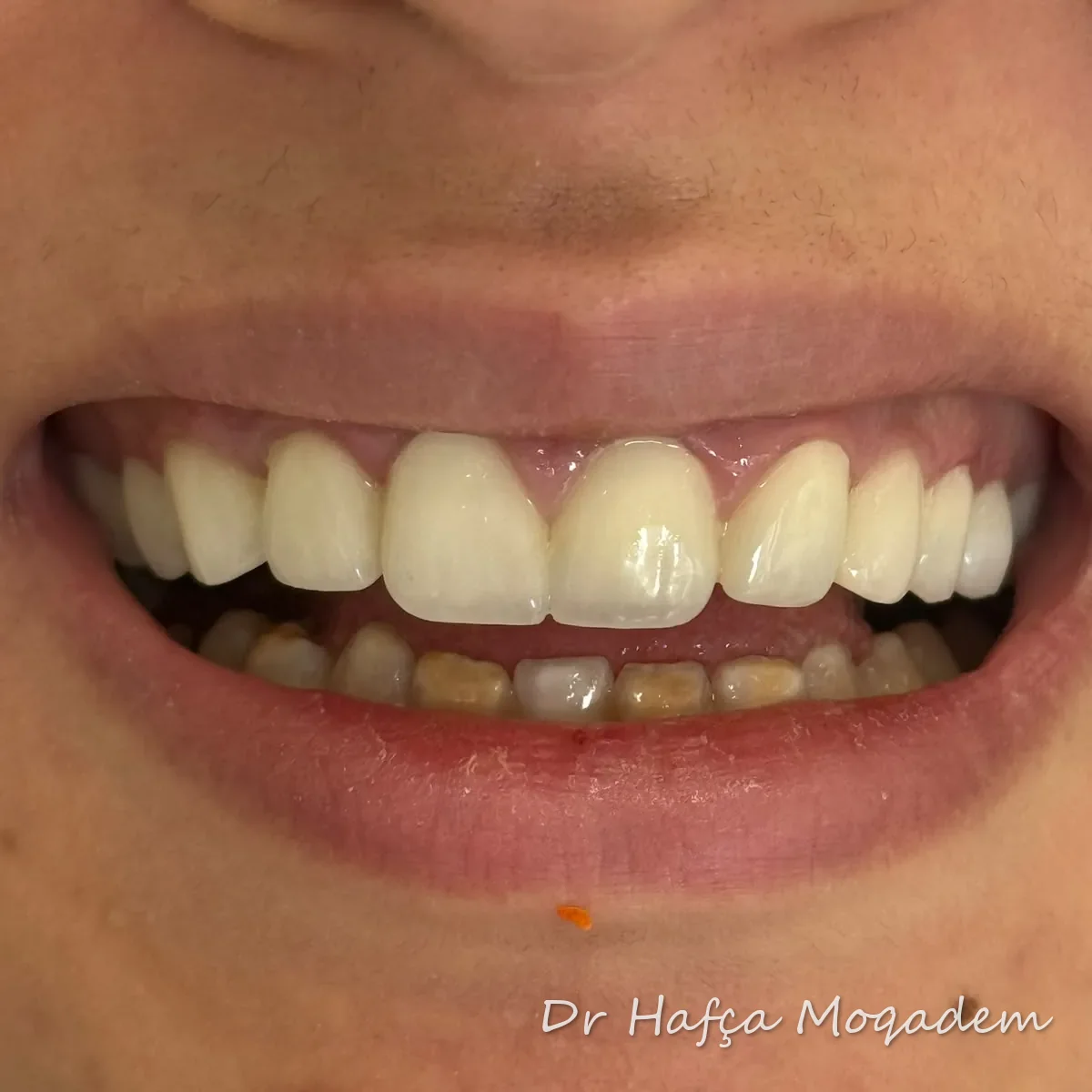
After
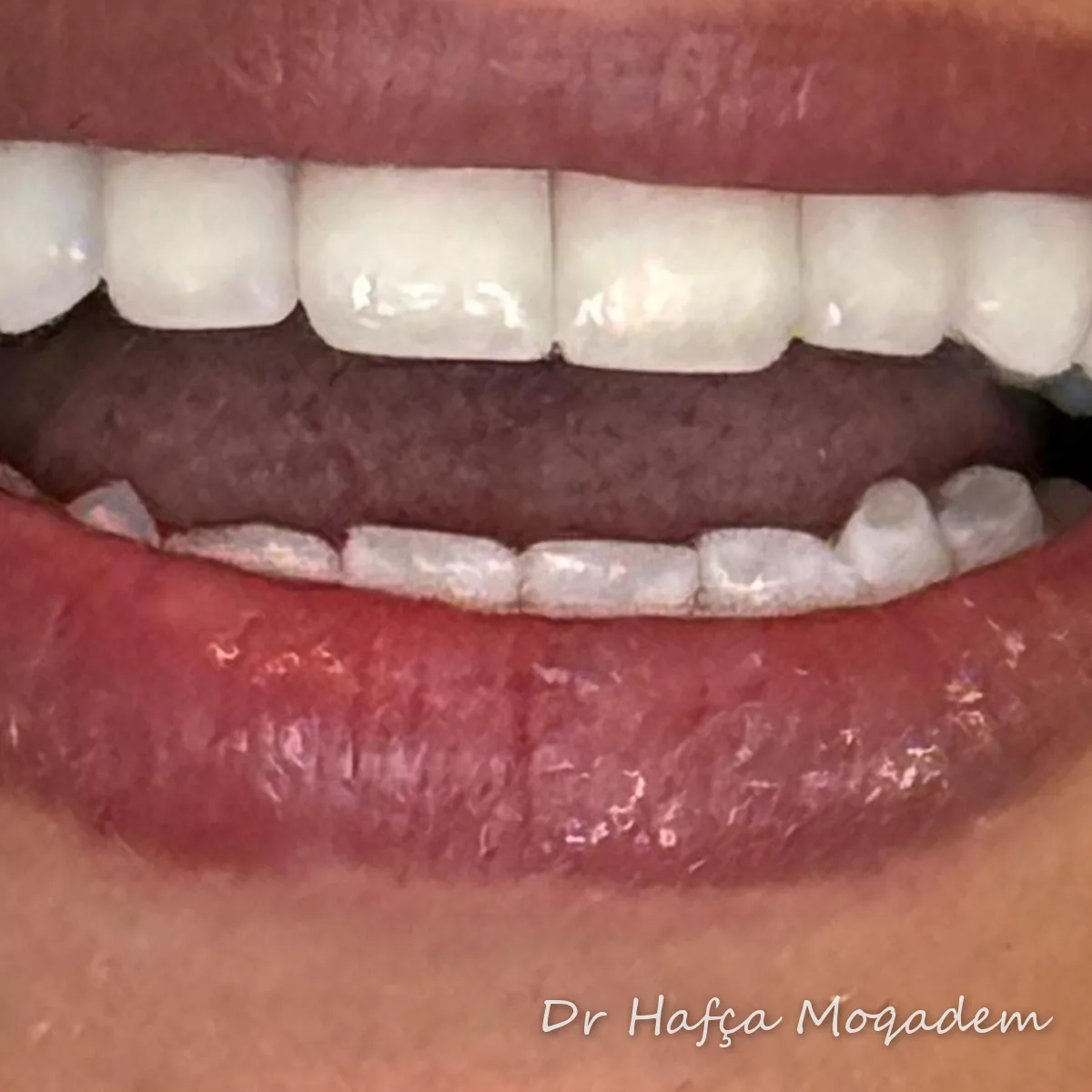
Real case from the clinic Hollywood smile, another patient of the clinic before and after. See the cases: Hollywood smile
Products that increase the risks
In the European Union, Directive 2011/84/EU reserves products with more than 0.1% and up to 6% hydrogen peroxide for dentists, with a first application carried out or supervised by the dentist, and prohibits their use under 18. Stronger products sold online, whitening done in beauty salons and standard trays that let gel spill onto the gums fall outside these safeguards. The NHS describes them as less effective and potentially harmful. Acidic or abrasive home remedies can also wear enamel away.
When to wait
Some situations call for delaying or adapting treatment. The NHS does not recommend whitening during pregnancy or breastfeeding, or for people whose teeth or gums are not healthy, and does not offer it to anyone under 18. Decay, an exposed root, a crack or a leaking old filling is treated first, because the gel can cause strong sensitivity there. Also mention any known allergy or existing sensitivity: the dentist can then adapt the product or duration, or suggest another option altogether.
Have your teeth examined and cleaned before starting. Do not use a kit bought elsewhere alongside the treatment, and do not add more whitening products to speed things up. Report any discomfort rather than putting up with it. Stop and see the dentist if pain is severe, if it continues after stopping, if a gum swells or bleeds, or if a tooth changes colour unevenly. A review after treatment checks the result and the health of your gums.
The visual guide
Shade, shape, position: 3 different goals
Principles to help you prepare your questions. The assessment makes it possible to know what suits your situation.
Item
Principle
To clarify at the clinic
Whitening
Lightens natural teeth.
Does not change the shape; existing restorations do not whiten.
Composite
Adds a resin to correct certain shape defects.
Maintenance, touch-ups and possibilities depend on the tooth.
Veneers
Cover the visible surface to change shape and appearance.
Some preparation may be needed and must be explained before any decision.
A daily guide
Brushing time, in practice.
The NHS recommends about 2 minutes of brushing, twice a day, with a fluoride toothpaste.
Choose the questions you would like to ask. Your choices stay on this page and are neither saved nor sent.
Guéliz clinic, Marrakech
Your check-up at the Guéliz clinic.
An article does not replace an examination. At the clinic, Dr Hafça Moqadem examines you, explains the options and gives you a written plan before any treatment.
Call the clinic, write to us on WhatsApp, or choose a day and a time yourself: your request reaches the clinic's WhatsApp and they will confirm the appointment.
A small tooth, a chipped edge, a small gap: composite bonding may be one of the options. Here is how it works, what it does not do and how to prepare your appointment.
A Hollywood smile is not a shade, it is an overall project. Understand what it changes, what it requires and how to decide calmly, with no promise of an identical smile for everyone.
Usually not: a ceramic veneer needs a little enamel removed, and enamel does not grow back. A veneer can be repaired or replaced, but you cannot go back to the original tooth.