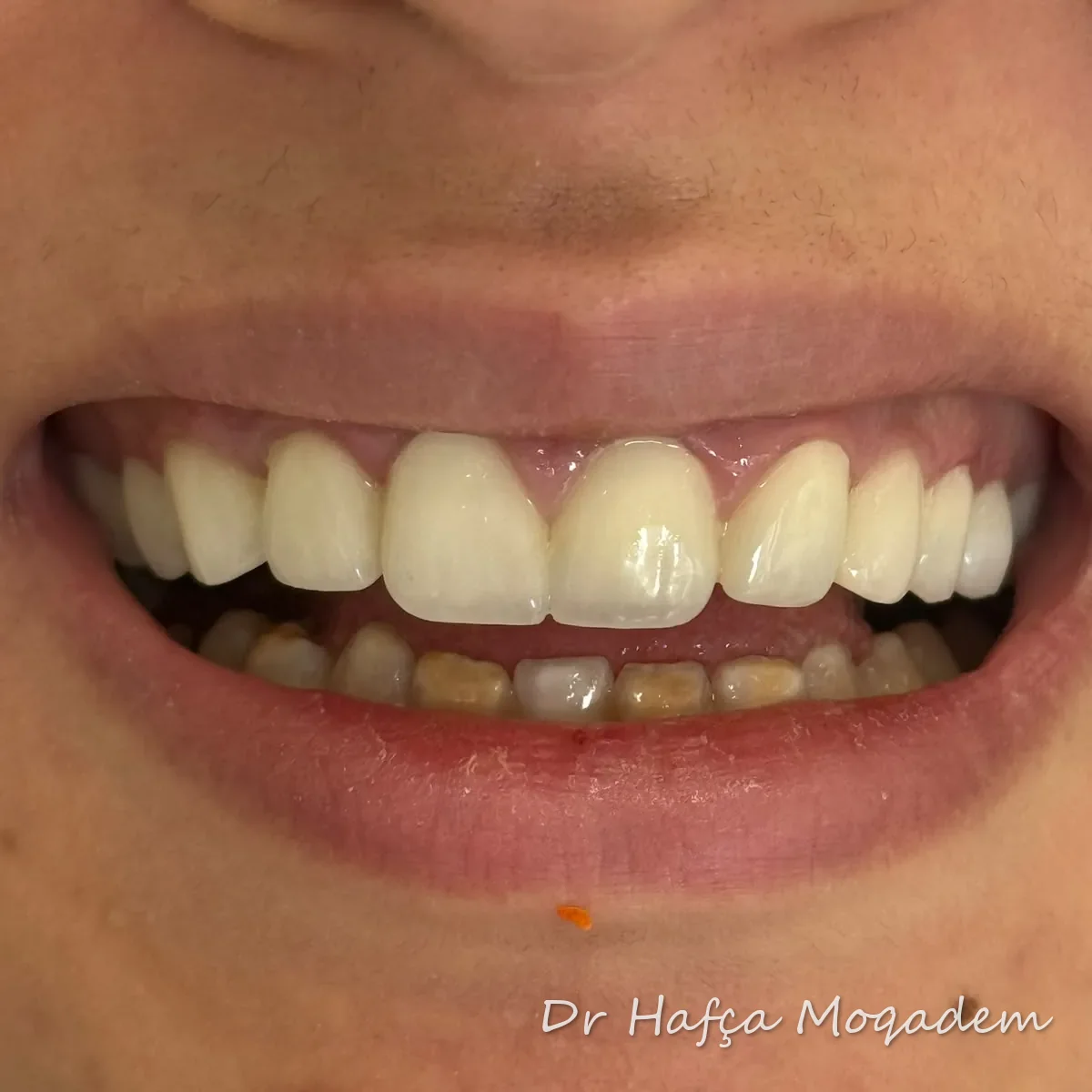
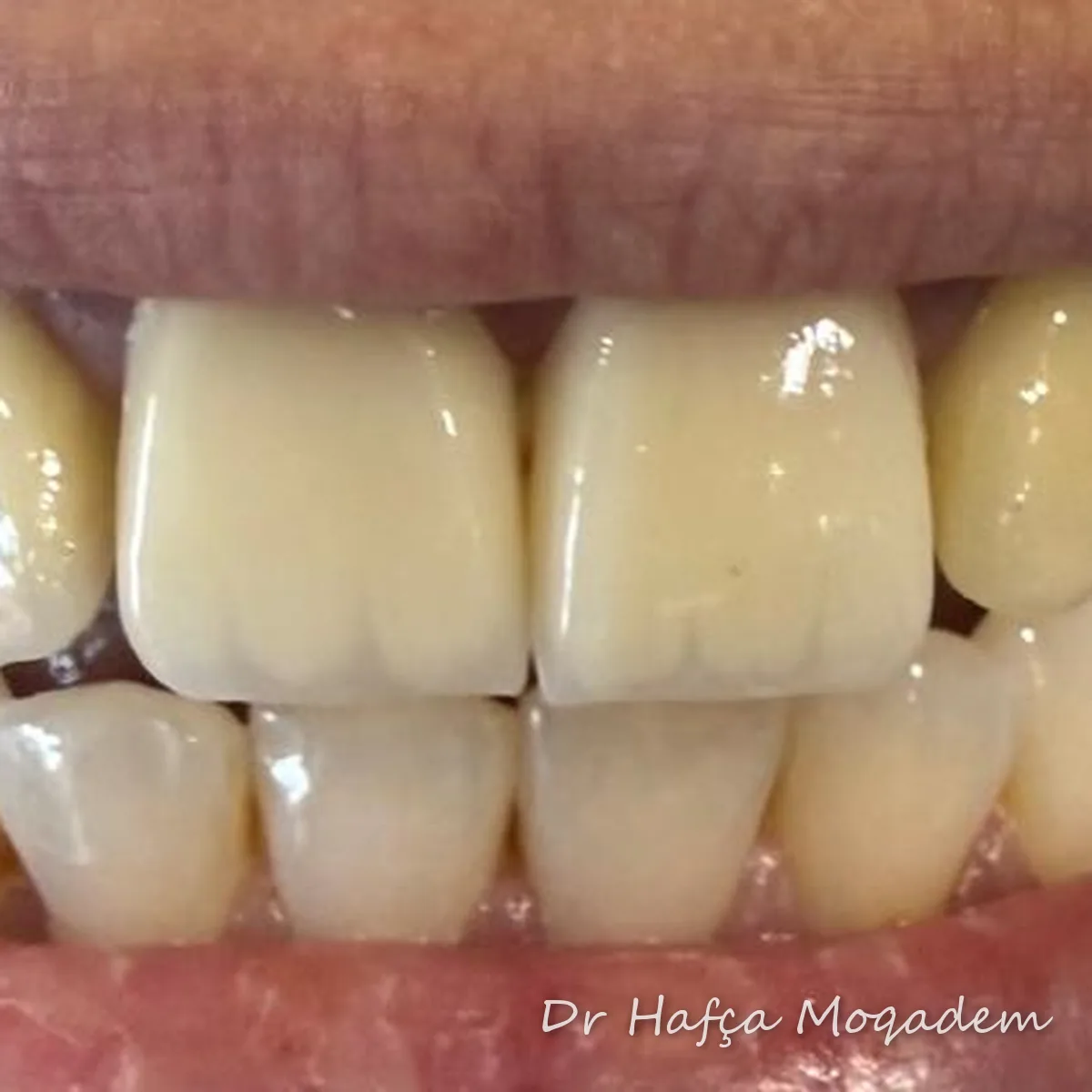
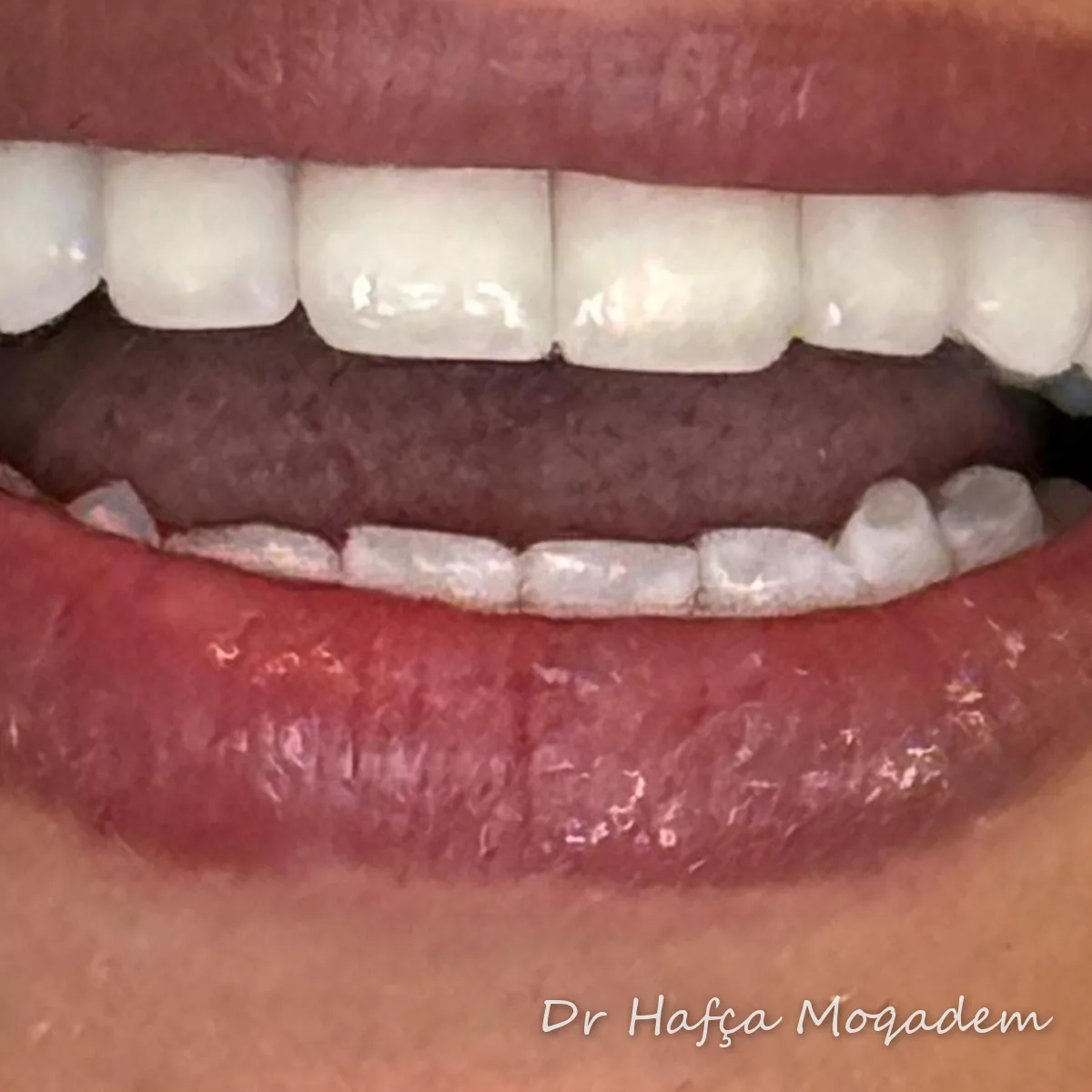
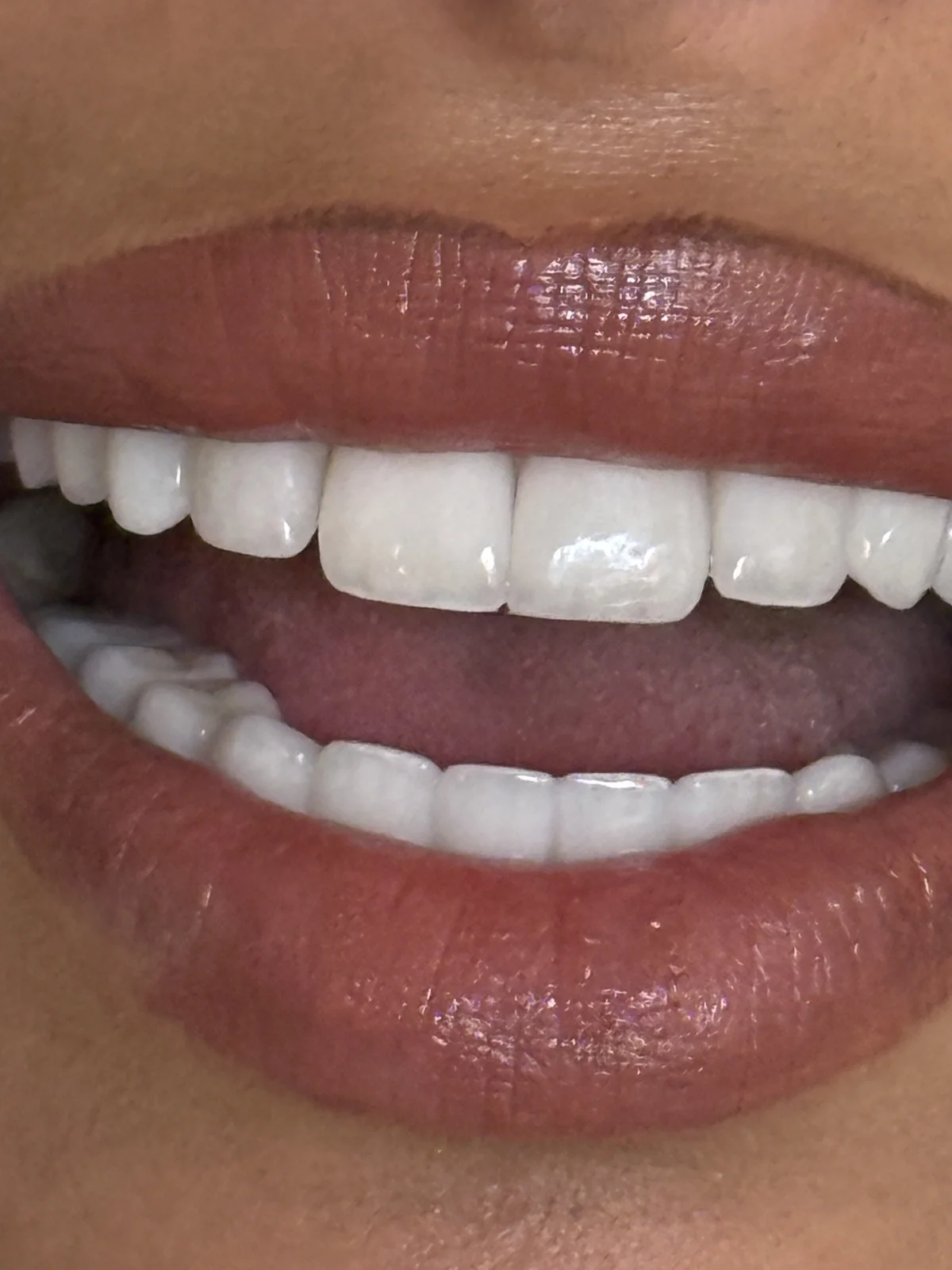
After teeth whitening: foods to avoid and aftercare
Coffee, tea, red wine, curry, tomato sauces and tobacco re-stain teeth. What to cut down on during and after whitening, and how to look after the result.
Published by Dr Hafça Moqadem, Dental surgeon in Marrakech4 min read
Trained in aesthetic veneers at the Institut de la Facette in Marseille, Dr Moqadem carries out veneers, whitening and smile design. Each plan starts from your face and your smile, and you approve it before any treatment.
Certificate in aesthetic veneers from the Institut de la Facette, Marseille.
Doctor of dental surgery (state diploma).
Former attaché at Beth Israel Hospital, stomatology department, New York.
CFI graduate in implantology and oral periodontology, Paris V Faculty of Medicine.
Certificate in advanced surgery from the Collège Américain de Paris.
Certificate in clear aligner orthodontics from the Centre de Sourire de Paris.
Certificate in dental and medical emergencies, Paris V.
Certificate in botulinum toxin and hyaluronic acid injections, Paris.
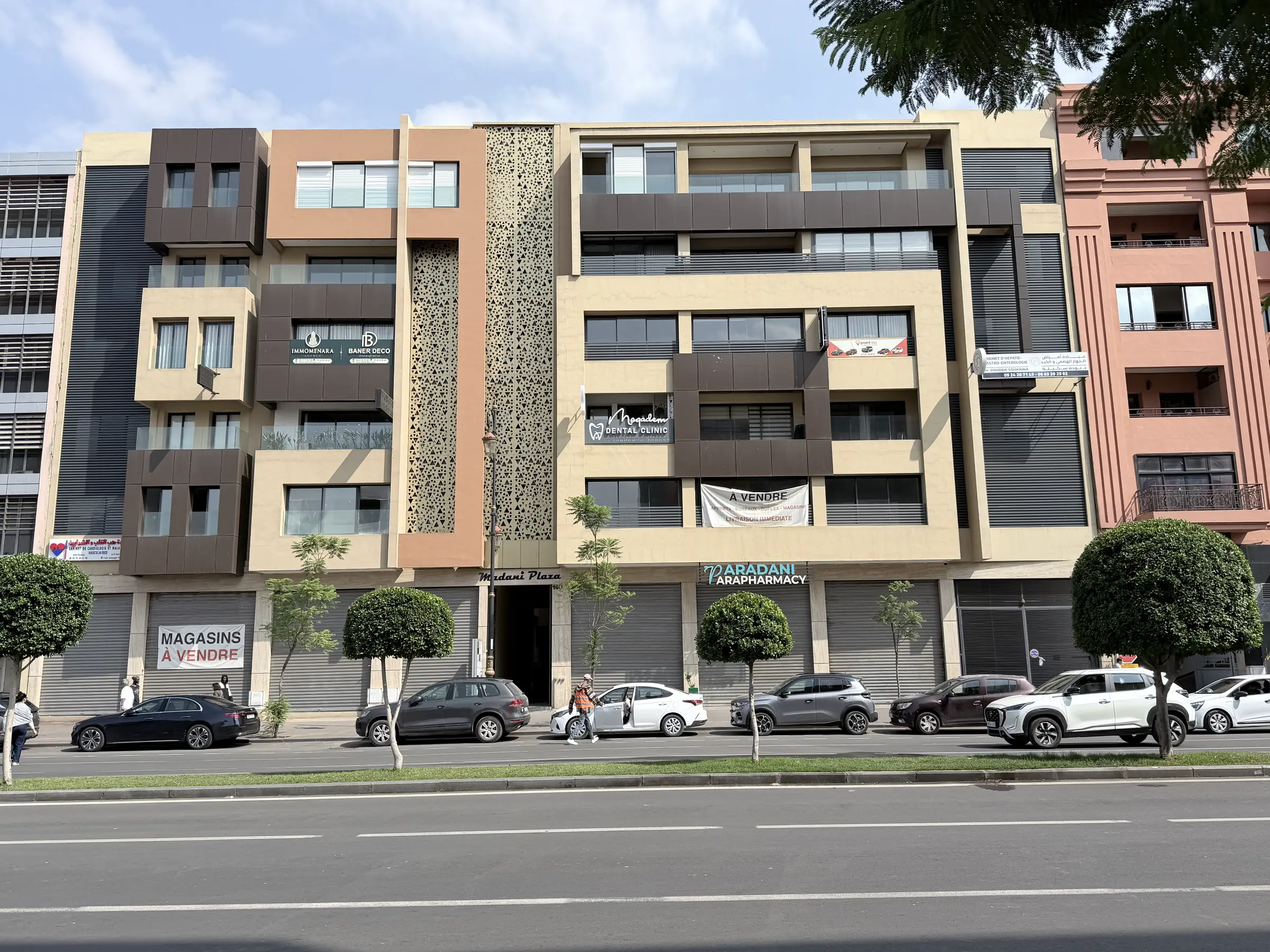
Looking for a dentist in Guéliz? Dr Hafça Moqadem welcomes you at Madani Plaza, Guéliz.
During and just after treatment, cut down on strongly coloured foods and drinks and tobacco.
Acidic foods can increase sensitivity and wear enamel.
Fluoride brushing and regular cleaning help keep the result.
Why diet matters after whitening
Whitening lightens the shade of your teeth, but it does not protect them from new stains. Pigments from coffee, tea, some spices and tobacco keep settling on the enamel surface, just as they did before treatment. During treatment and for a few days after, teeth can also be more sensitive to cold, heat or acidic foods. Dietary advice therefore has two aims: protecting the new shade and limiting discomfort. How long it applies depends on the product and the protocol, so follow your dental surgery’s instructions first.
Drinks that re-stain
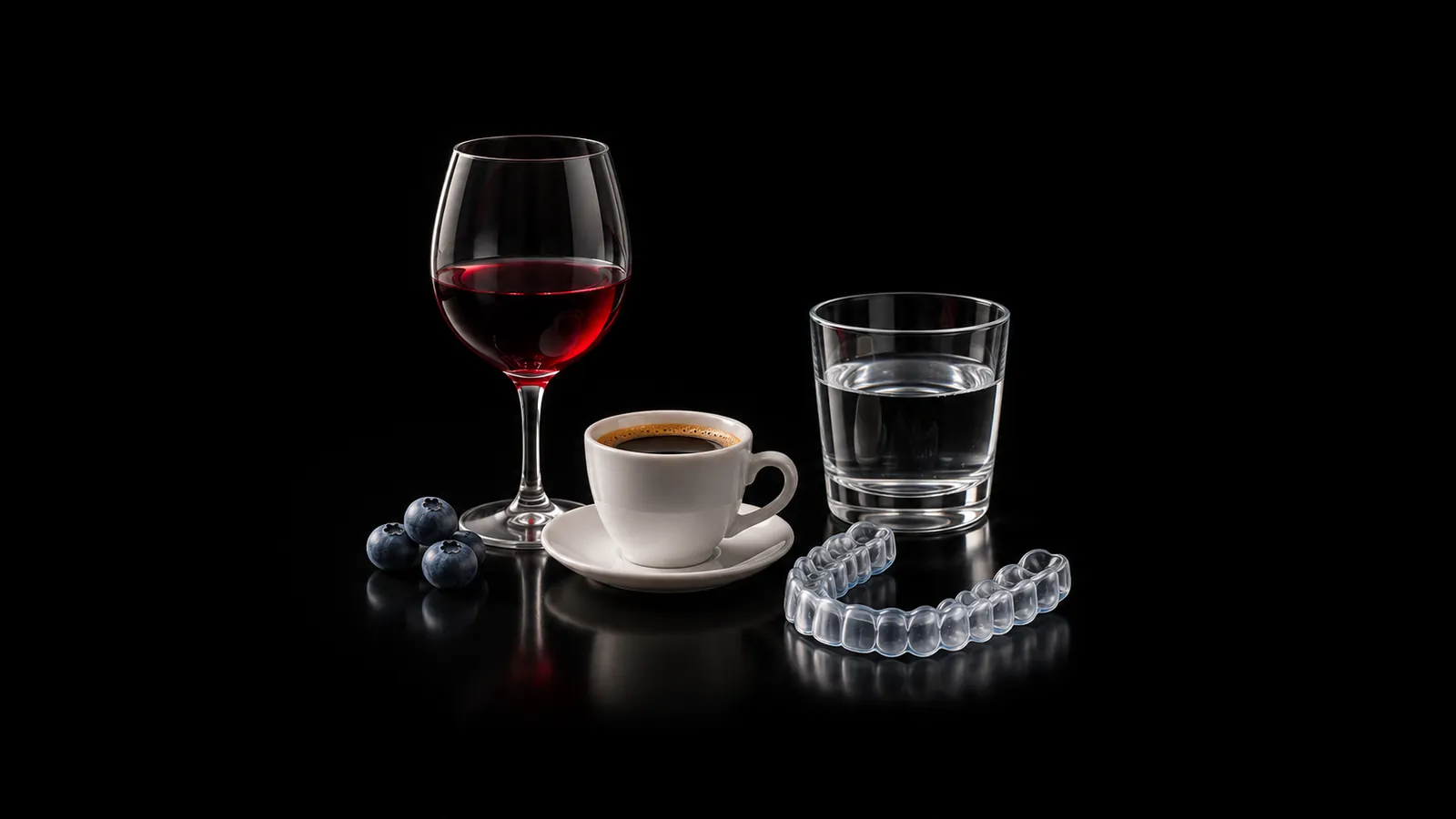
The ADA lists coffee, tea and red wine among the main staining culprits. Dark fizzy drinks, strongly coloured juices such as grape or pomegranate, and dark herbal teas work the same way. During treatment and just after, it is wise to cut down on them. If you do drink them, have them in one go rather than sipping throughout the day, use a straw for cold drinks and rinse your mouth with water afterwards. Water remains the drink to choose between meals for your teeth and your new shade.
Strongly coloured foods
Leeds Teaching Hospitals advises avoiding strongly coloured foods and drinks such as curry, red wine and tomato-based foods. In everyday cooking, this also includes tomato sauces, soy sauce, large amounts of turmeric and paprika, beetroot, blueberries and dark red fruit. The point is not to ban them for good, but to reduce them during the period your dentist recommends. After eating them, rinsing with water helps limit the build-up of pigment on the surface of the teeth, especially before brushing time.
Acidic foods and sensitivity
Citrus fruit, vinegar, fizzy drinks and energy drinks are acidic. The ADA notes that prolonged contact between acidic fruit or vinegar and teeth can damage enamel, the layer that protects against sensitivity and decay. After whitening, these foods can also trigger sensitivity. There is no need to give up fruit: eat it with meals rather than as a snack, do not hold it in your mouth for long and avoid brushing straight after something acidic. Very cold or very hot drinks may also be uncomfortable for a few days after treatment.
Tobacco is a well-known cause of tooth staining: the ADA explains that tar and nicotine leave yellow to brown deposits. Smoking during or after whitening shortens how long the result lasts. Leeds Teaching Hospitals also points out that teeth can darken again over time and may need whitening again in the future. If you smoke, whitening can be a good moment to talk to your doctor about stopping. Your dentist can also advise on how often you should have your teeth professionally cleaned.
During the cautious period, pale foods cause few problems: chicken, white fish, rice, pasta, bread, potatoes, plain yoghurt, cottage cheese, eggs, bananas and peeled apples. For drinks, water and milk are fine. There is no need to follow a very strict diet found online if your protocol does not call for it. What matters most is reducing how often you have staining foods and drinks, then returning to a varied diet while keeping good rinsing and brushing habits.
Daily oral hygiene
The NHS advises brushing twice a day for about 2 minutes, including last thing at night, with a toothpaste containing at least 1,350 ppm fluoride for adults. Spit out the toothpaste rather than rinsing, so the fluoride stays on your teeth. Clean between your teeth with floss or interdental brushes. If you use a mouthwash, choose a different time from straight after brushing. If you have sensitivity, a toothpaste for sensitive teeth can help. Avoid abrasive powders and charcoal, which can wear enamel.
How long you need to take care depends on the product and the protocol used; your surgery will tell you. After that, it is no longer about bans but about habits. According to the NHS, whitening results may last around 3 years with aftercare advice. Regular professional cleaning removes some surface staining. A top-up may be suggested later, on your dentist’s advice. Remember that crowns, veneers and composite do not whiten: if a restoration needs replacing, it is usually done once the new shade has settled.
The visual guide
Shade, shape, position: 3 different goals
Principles to help you prepare your questions. The assessment makes it possible to know what suits your situation.
Item
Principle
To clarify at the clinic
Whitening
Lightens natural teeth.
Does not change the shape; existing restorations do not whiten.
Composite
Adds a resin to correct certain shape defects.
Maintenance, touch-ups and possibilities depend on the tooth.
Veneers
Cover the visible surface to change shape and appearance.
Some preparation may be needed and must be explained before any decision.
A daily guide
Brushing time, in practice.
The NHS recommends about 2 minutes of brushing, twice a day, with a fluoride toothpaste.
Choose the questions you would like to ask. Your choices stay on this page and are neither saved nor sent.
Guéliz clinic, Marrakech
Your check-up at the Guéliz clinic.
An article does not replace an examination. At the clinic, Dr Hafça Moqadem examines you, explains the options and gives you a written plan before any treatment.
Call the clinic, write to us on WhatsApp, or choose a day and a time yourself: your request reaches the clinic's WhatsApp and they will confirm the appointment.
A small tooth, a chipped edge, a small gap: composite bonding may be one of the options. Here is how it works, what it does not do and how to prepare your appointment.
A Hollywood smile is not a shade, it is an overall project. Understand what it changes, what it requires and how to decide calmly, with no promise of an identical smile for everyone.
Usually not: a ceramic veneer needs a little enamel removed, and enamel does not grow back. A veneer can be repaired or replaced, but you cannot go back to the original tooth.