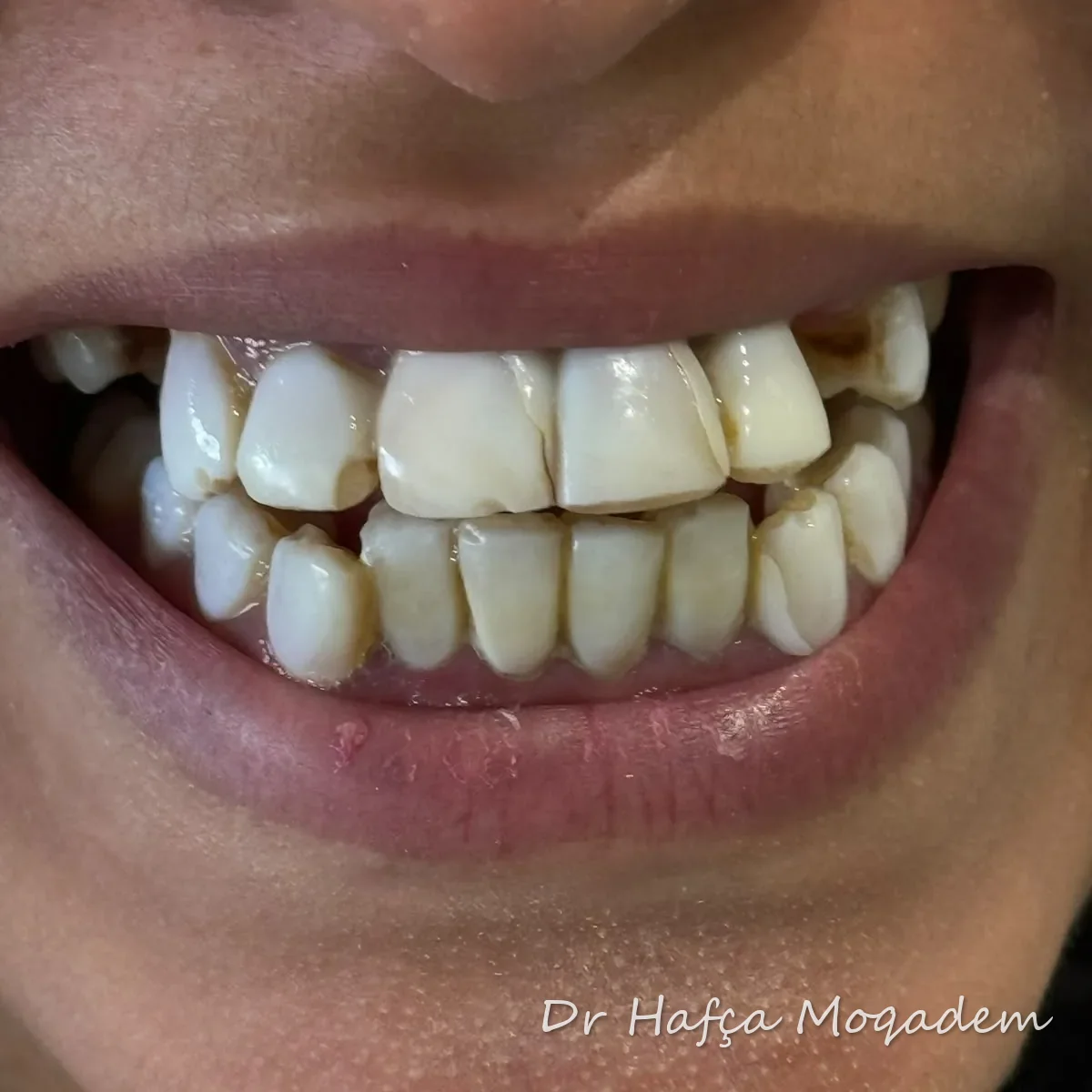
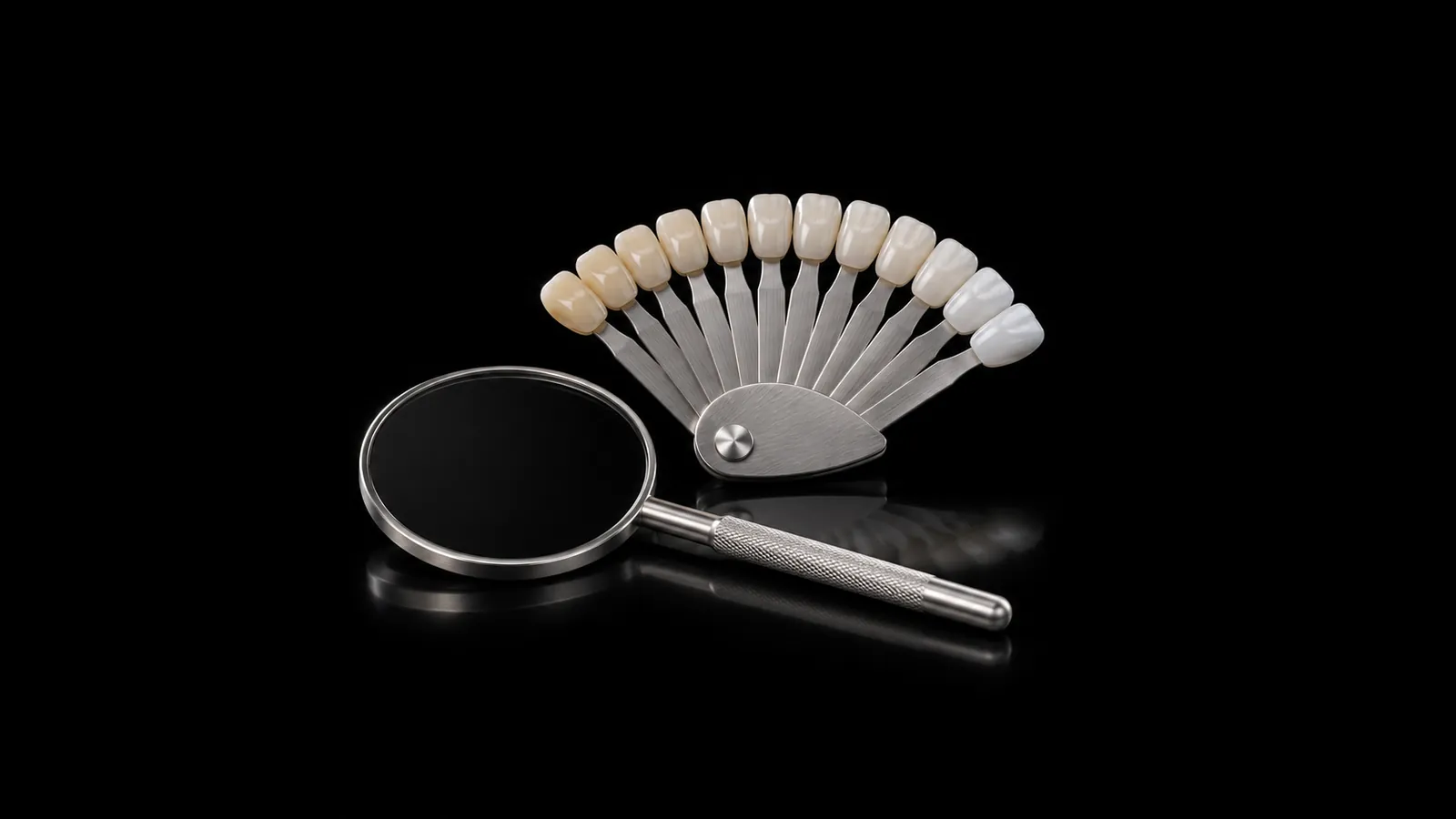
Deep staining, a chipped edge, an irregular shape, a small gap: veneers can be discussed once teeth and gums are healthy. They are not always the first option.
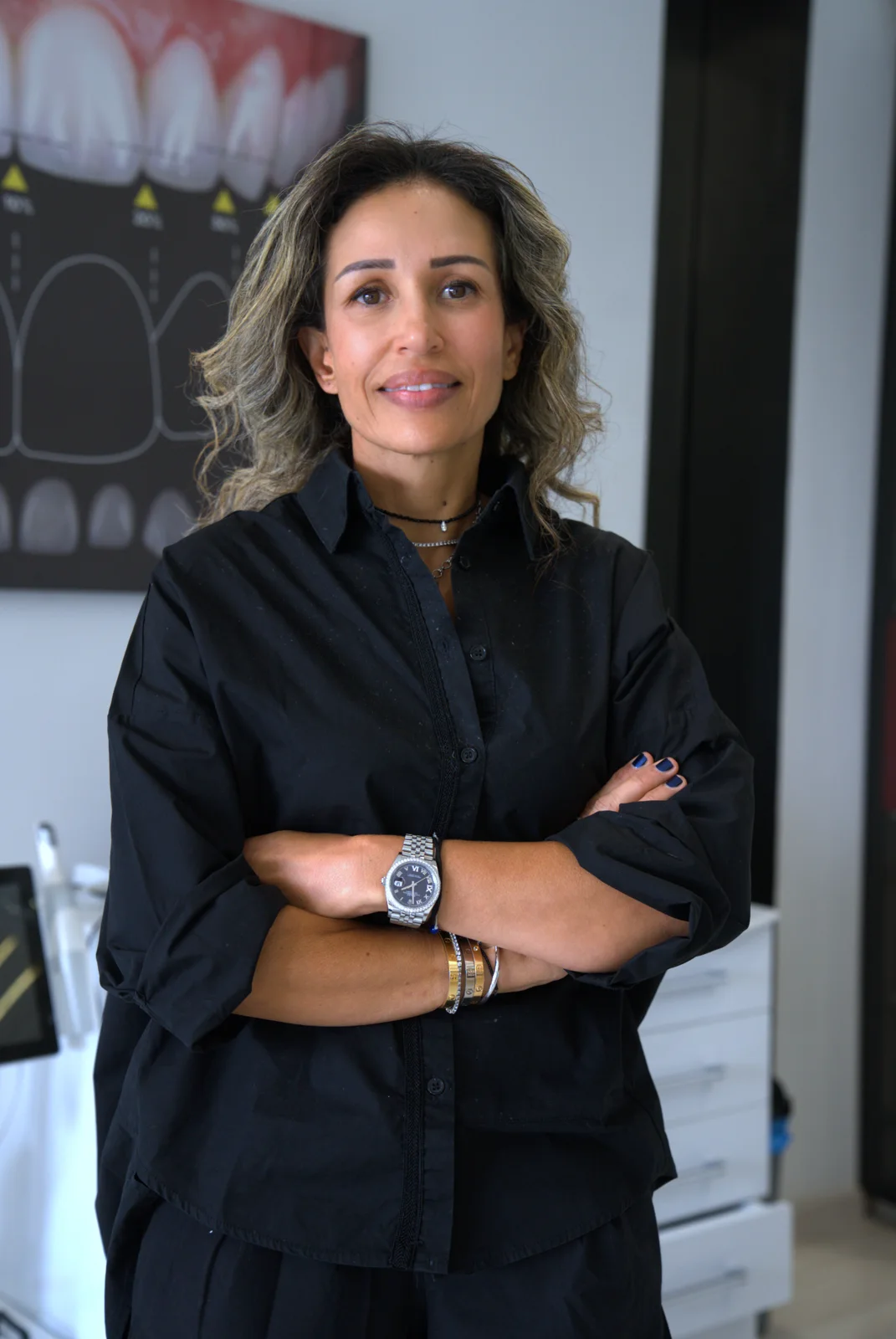
Published by Dr Hafça Moqadem, Dental surgeon in Marrakech4 min read
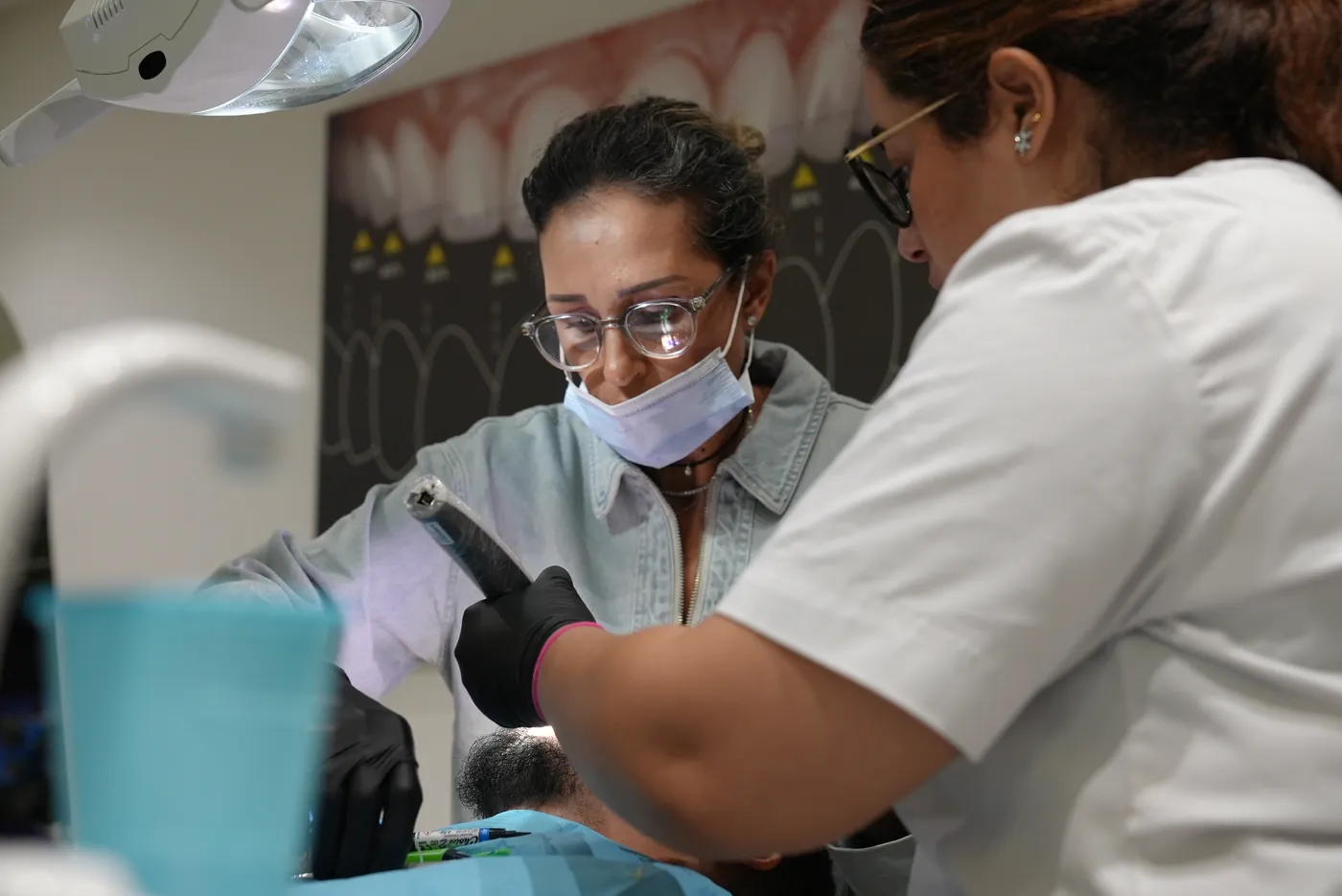
Trained in aesthetic veneers at the Institut de la Facette in Marseille, Dr Moqadem carries out veneers, whitening and smile design. Each plan starts from your face and your smile, and you approve it before any treatment.
Certificate in aesthetic veneers from the Institut de la Facette, Marseille.
Doctor of dental surgery (state diploma).
Former attaché at Beth Israel Hospital, stomatology department, New York.
CFI graduate in implantology and oral periodontology, Paris V Faculty of Medicine.
Certificate in advanced surgery from the Collège Américain de Paris.
Certificate in clear aligner orthodontics from the Centre de Sourire de Paris.
Certificate in dental and medical emergencies, Paris V.
Certificate in botulinum toxin and hyaluronic acid injections, Paris.
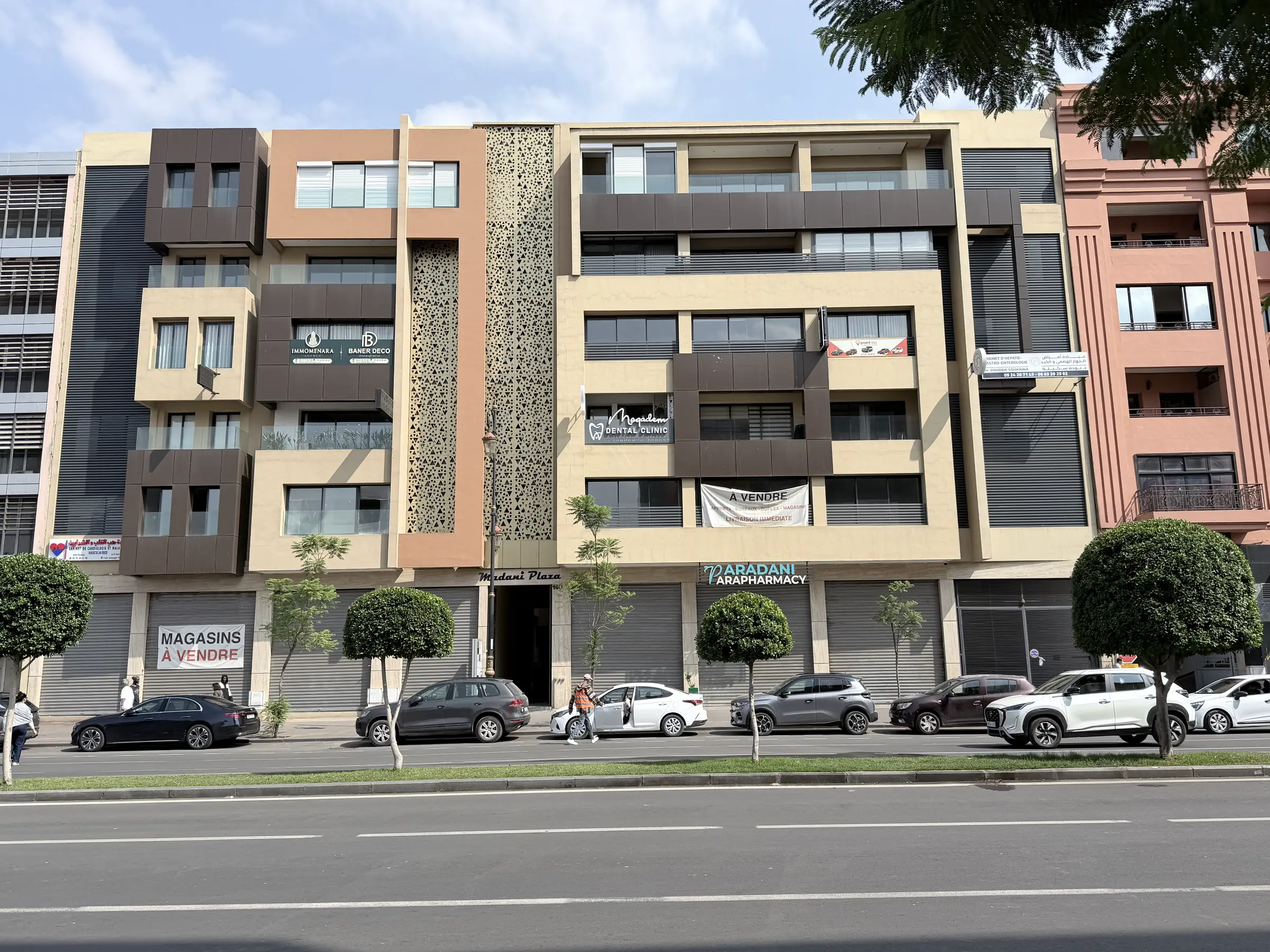
Looking for a dentist in Guéliz? Dr Hafça Moqadem welcomes you at Madani Plaza, Guéliz.
Veneers are discussed for the colour, shape, edges or small gaps of visible teeth.
Decay and gum disease are treated first.
Whitening, composite, orthodontics or a crown may suit better depending on the case.
What a veneer can correct
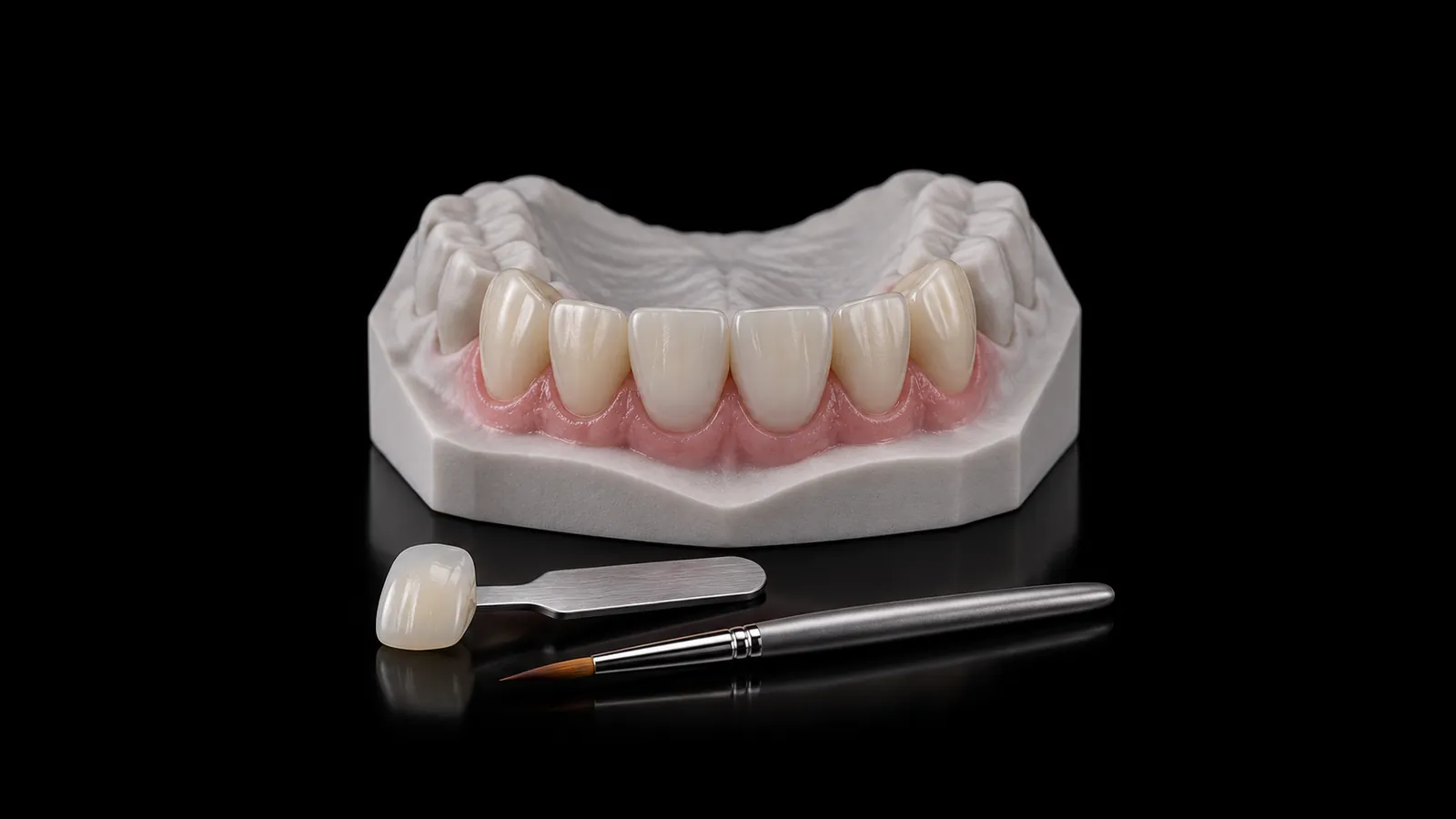
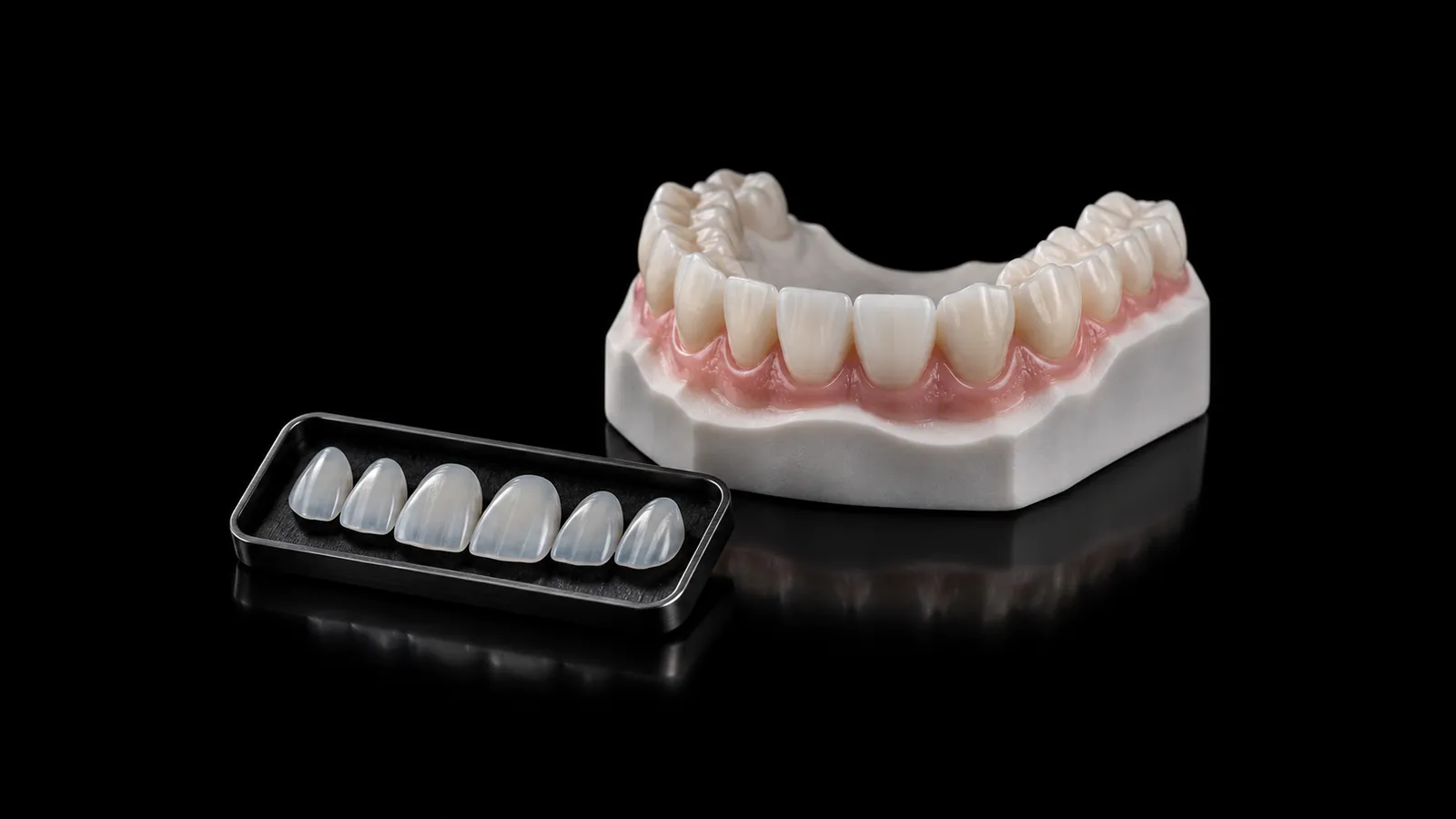
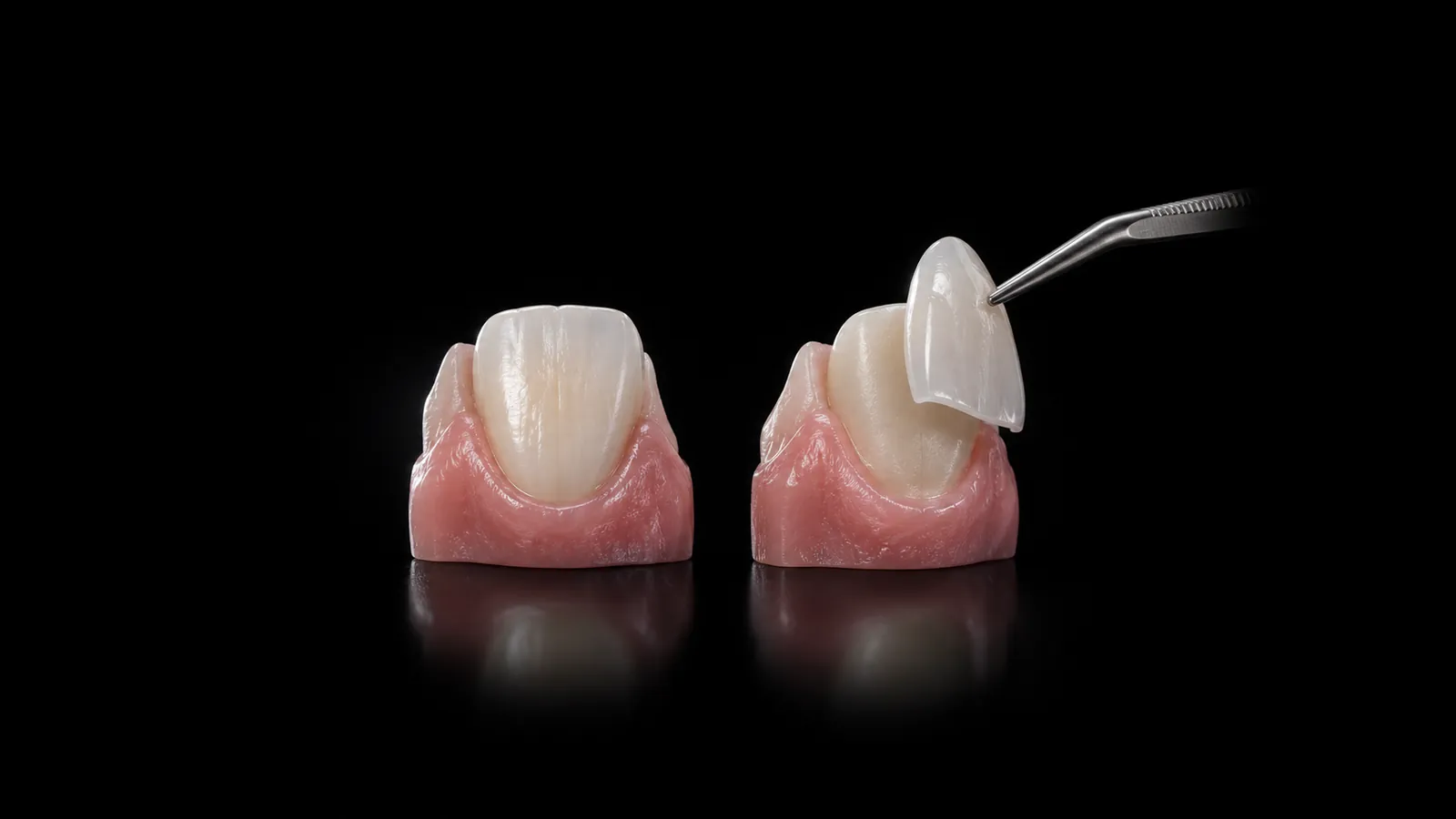
A veneer is a thin shell bonded to the front of a visible tooth. The ADA says veneers can address teeth that are chipped, stained, crooked or misshapen, and can mask gaps. Unlike a crown, a veneer does not cover the whole tooth. It changes the appearance of the visible surface: colour, shape, length, a damaged edge or a small gap between two teeth. It does not move the root, treat decay or replace a missing tooth. Starting from what you want to change helps decide whether a veneer is suitable.
Situations where veneers are often discussed
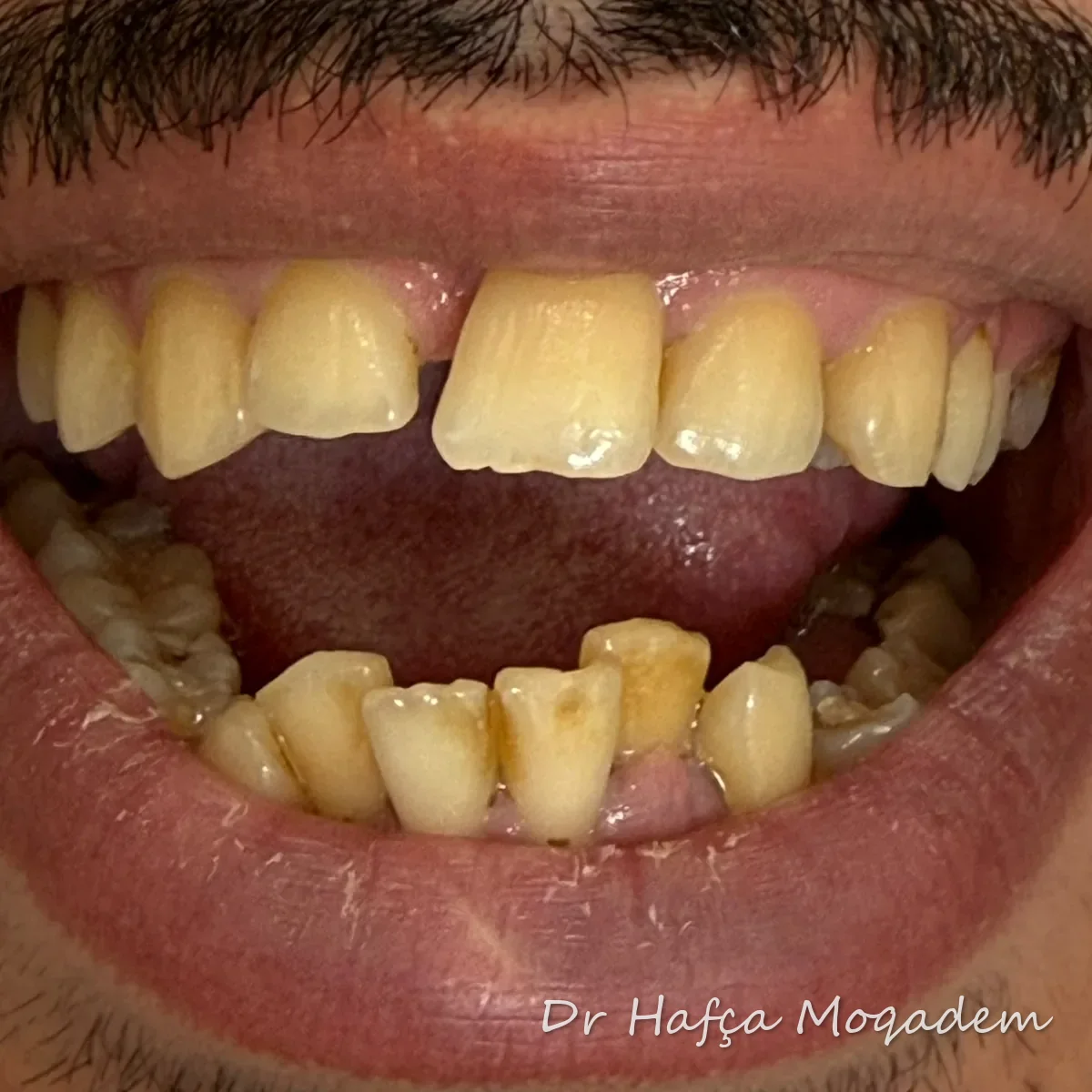
Several situations lead to a conversation about veneers: deep staining that responds poorly to whitening, front teeth that are worn or chipped along the edge, teeth that are irregular in shape or small, small gaps between the front teeth, or an overall smile plan involving several visible teeth. In that last case, a smile design with photos, impressions and sometimes a trial mock-up lets you see the result before deciding. Each situation is still assessed tooth by tooth, as two neighbouring teeth may need different solutions.
Conditions to meet first
Cleveland Clinic states that veneers are only an option if you are free of extensive cavities and gum disease. The ADA also notes that dental problems such as decay or gum disease must be treated first. The examination checks your bite, how much enamel is available, existing restorations and your daily hygiene. Bleeding gums or poorly controlled plaque put the edges of veneers at risk. A photo alone is therefore not enough to say whether veneers are suitable: a clinical examination is needed.
When another option comes first
If only the colour bothers you, whitening your natural teeth can be discussed first: it does not remove enamel. If teeth clearly overlap, orthodontics, for example with clear aligners, can move them into place without covering them. For one or two chipped teeth, bonded composite is often more conservative. A badly damaged or root-filled tooth may be better suited to a crown. Finally, the ADA says veneers may not be suitable if you clench or grind your teeth, or if you have a deep overbite.
Older marketing claimed that veneers were a solution of choice for fragile or sensitive teeth. It is not that simple. Sensitivity has a cause, such as decay, receding gums, wear or a crack, which is treated first. Cleveland Clinic even notes that teeth may become more sensitive to heat and cold after veneers are placed. A tooth weakened by a large filling or root canal treatment is often better suited to a crown. Veneers are mainly a response to a cosmetic request on healthy teeth.
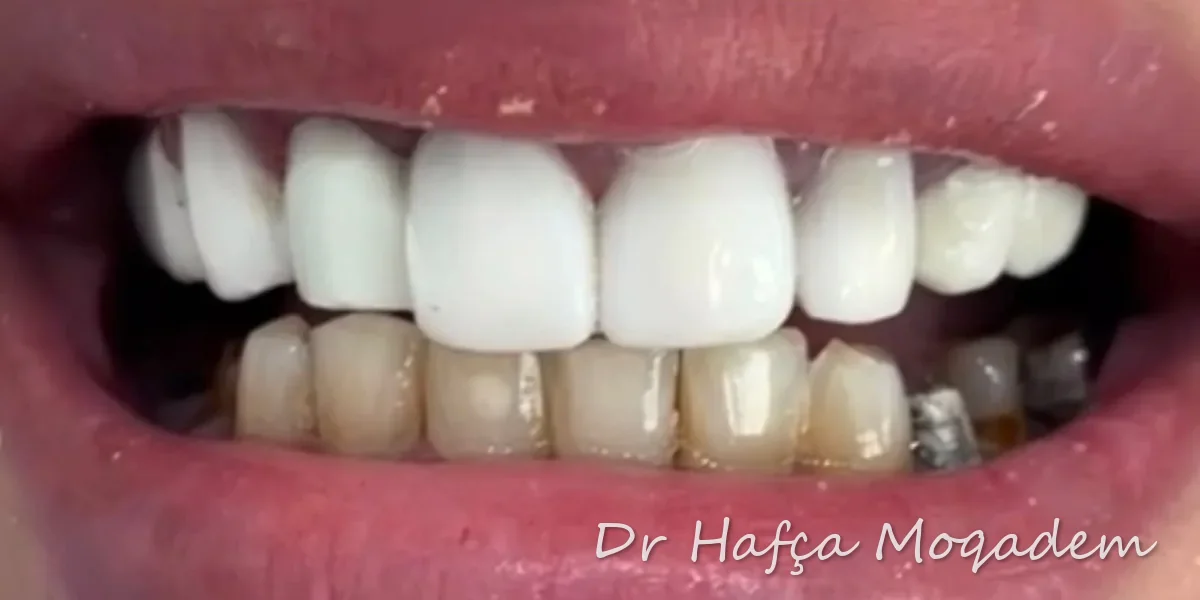
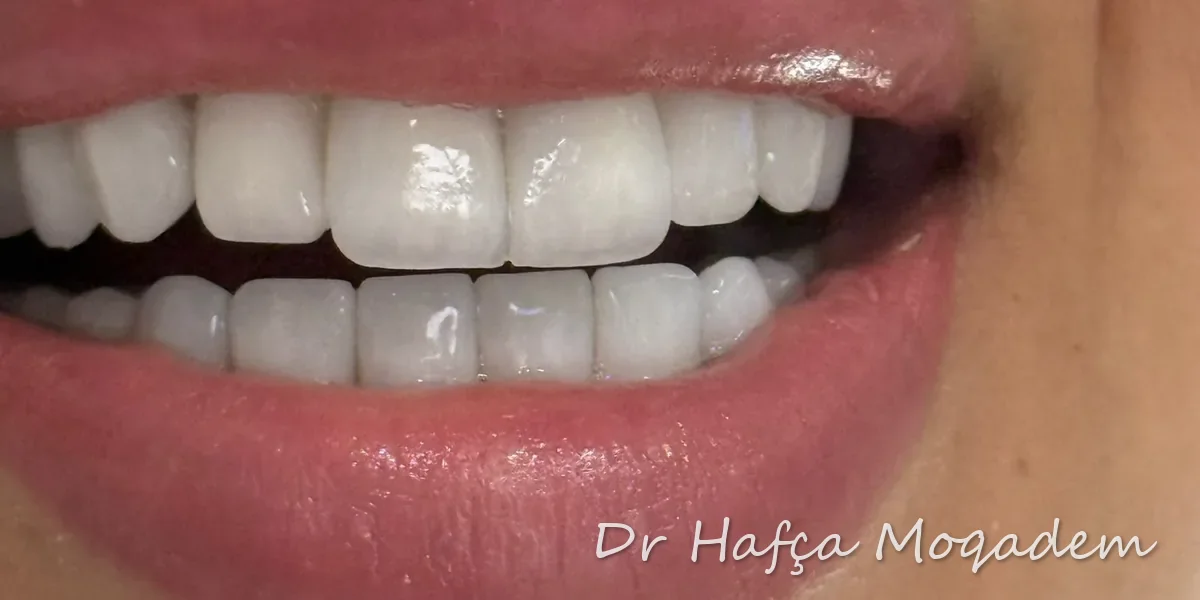
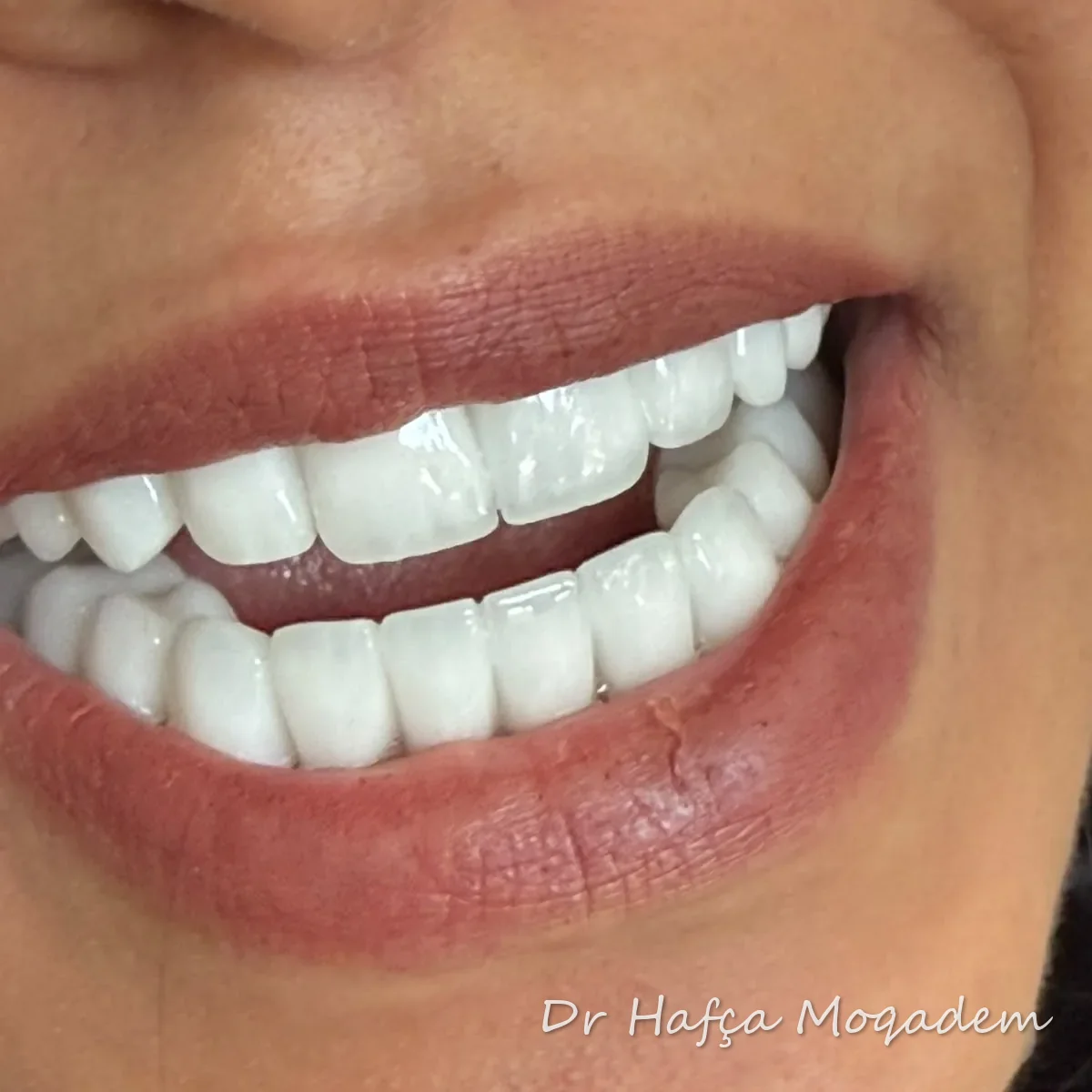
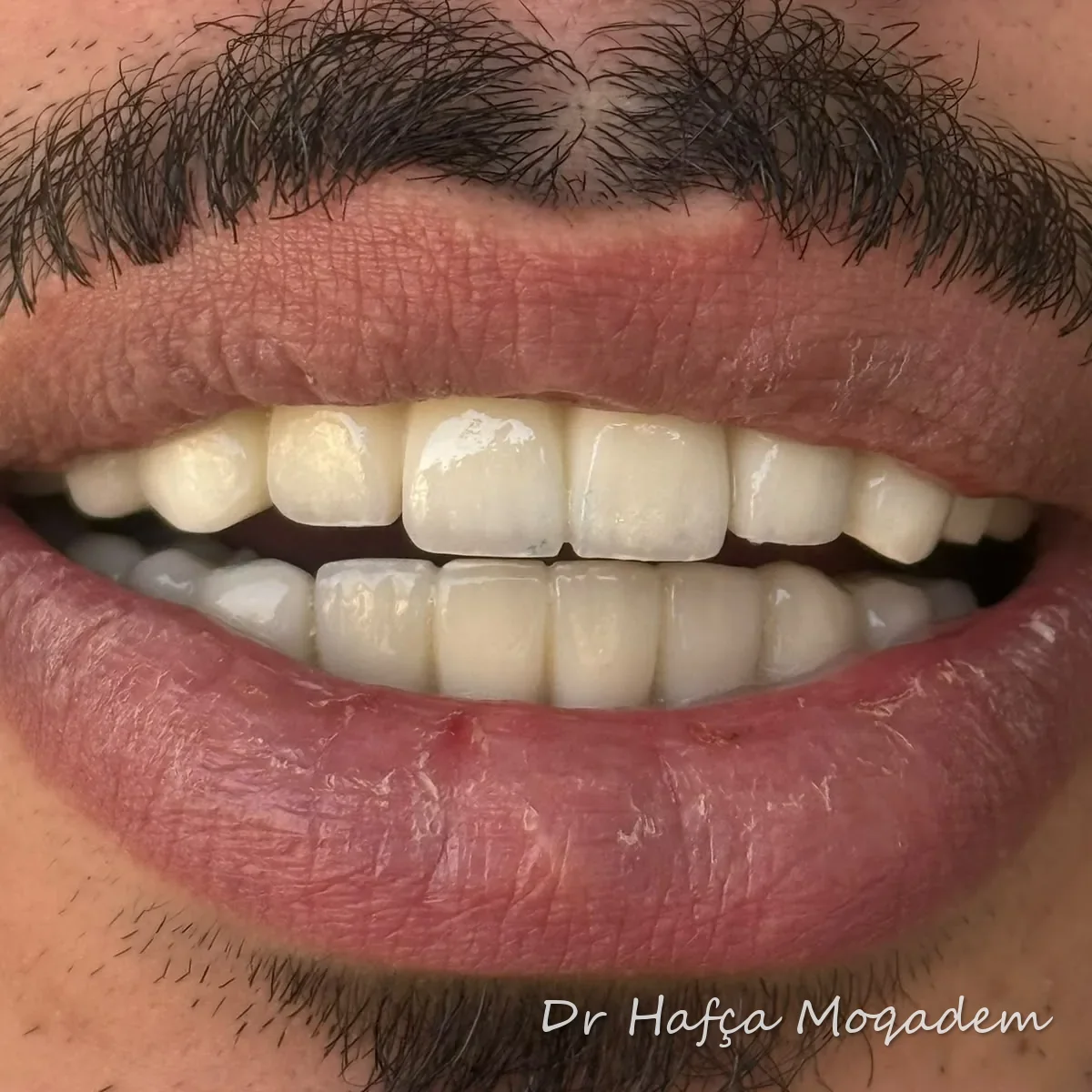
Before
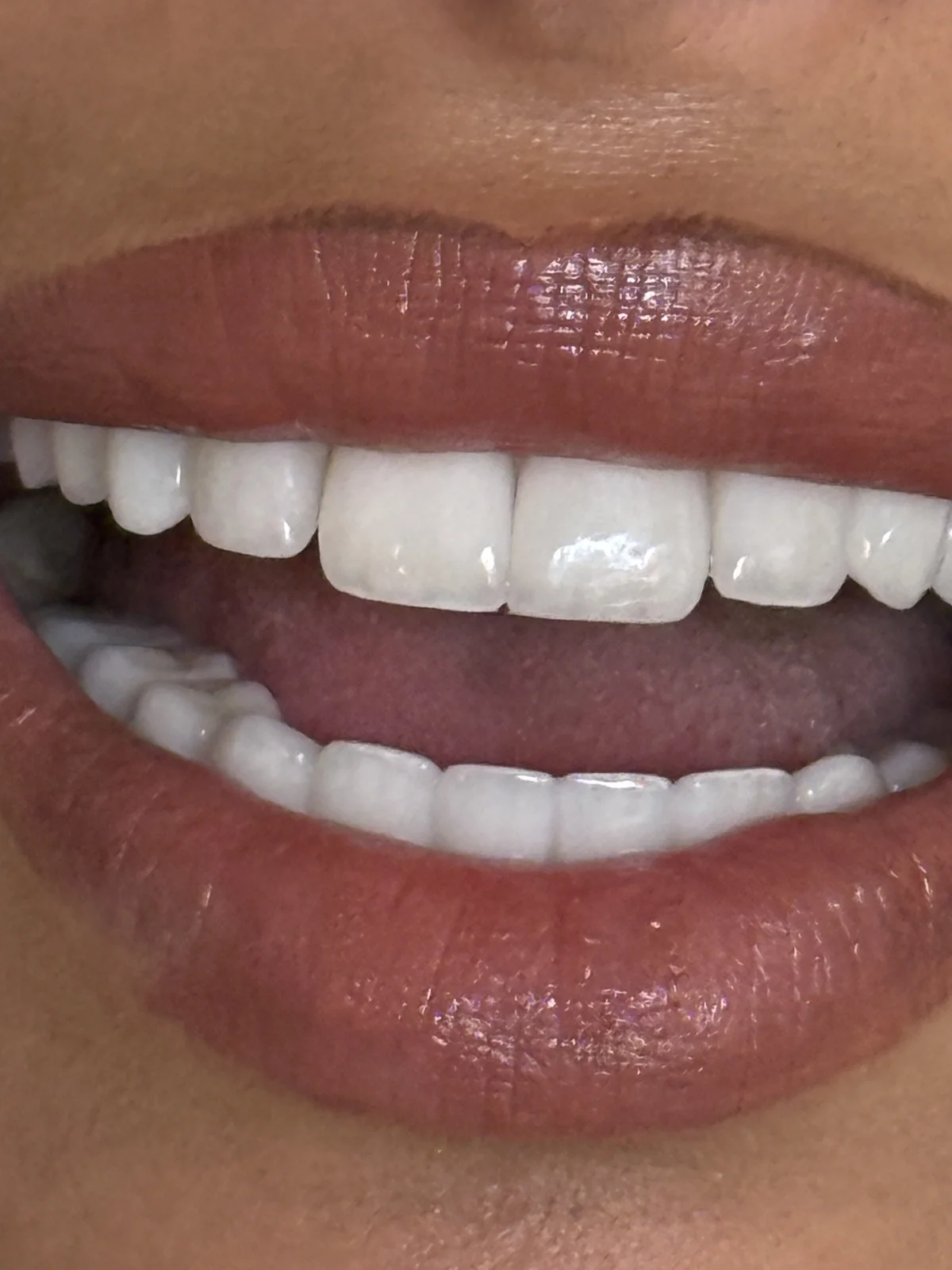
After
Real case from the clinic Hollywood smile, another patient of the clinic before and after. See the cases: Hollywood smile
A long-term commitment
For a ceramic veneer, some enamel is usually removed. The ADA states that treatment is not reversible for this reason. Cleveland Clinic gives an average lifespan of 10 to 15 years with proper care, after which a veneer may need repairing or replacing. The plan therefore has to be thought through over several decades: regular check-ups, daily care, a night guard if needed and possible replacements. Someone ready for this follow-up, with realistic expectations, is well placed to benefit from veneers.
Ceramic or composite
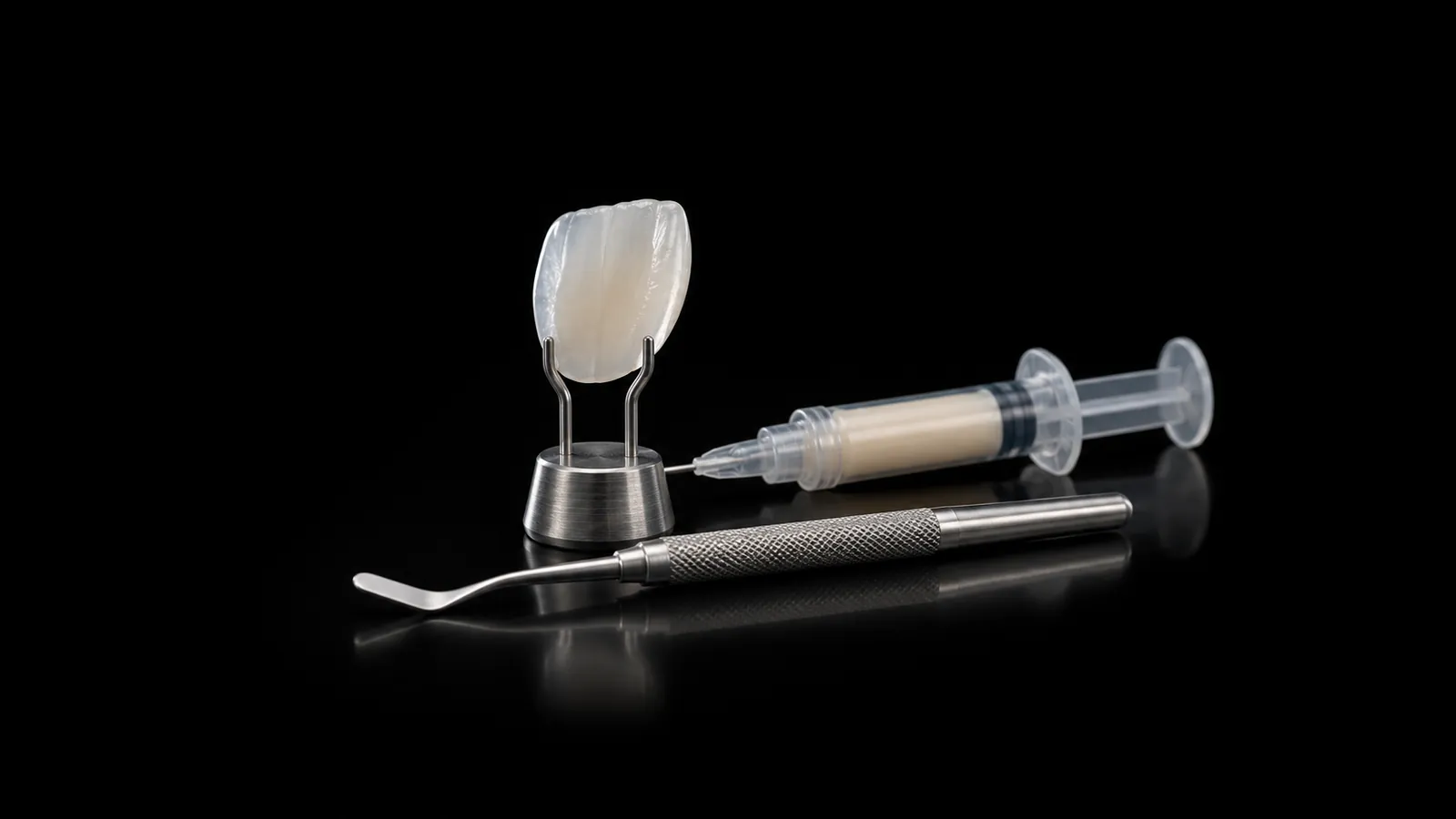
At the clinic, several materials are possible. e.max ceramic veneers are chosen for their strength, and hand-layered feldspathic veneers for a translucency close to natural enamel. Composite veneers are shaped directly on the tooth. According to the ADA, composite often needs less preparation and fewer visits and is easier to repair, but resists staining and wear less well. Ceramic keeps its colour better. The choice depends on the number of teeth, your bite, your habits and the result you want.
The plan starts with your request and an examination, then a study with photos and impressions, sometimes with a mock-up in the mouth. For ceramic, Cleveland Clinic usually describes two appointments, with a few weeks for fabrication and temporaries in between. Then come the try-in, bonding and a bite check. Ask which teeth are involved, what preparation is planned, which material and why, which alternatives exist and how aftercare works. You can take time to think before approving the plan.
The visual guide
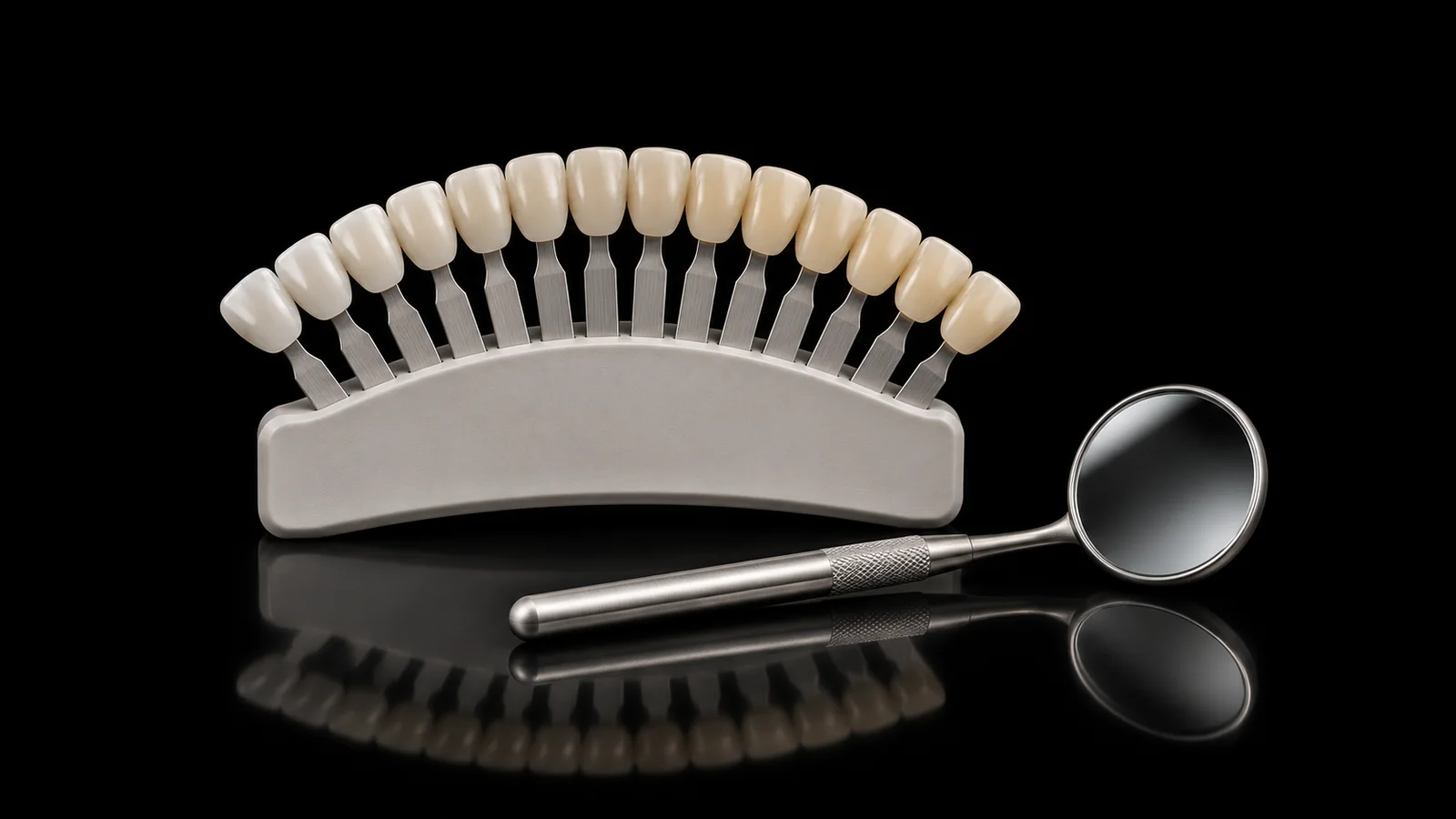
Shade, shape, position: 3 different goals
Principles to help you prepare your questions. The assessment makes it possible to know what suits your situation.
Item
Principle
To clarify at the clinic
Whitening
Lightens natural teeth.
Does not change the shape; existing restorations do not whiten.
Composite
Adds a resin to correct certain shape defects.
Maintenance, touch-ups and possibilities depend on the tooth.
Veneers
Cover the visible surface to change shape and appearance.
Some preparation may be needed and must be explained before any decision.
A daily guide
Brushing time, in practice.
The NHS recommends about 2 minutes of brushing, twice a day, with a fluoride toothpaste.
Choose the questions you would like to ask. Your choices stay on this page and are neither saved nor sent.
Guéliz clinic, Marrakech
Your check-up at the Guéliz clinic.
An article does not replace an examination. At the clinic, Dr Hafça Moqadem examines you, explains the options and gives you a written plan before any treatment.
Call the clinic, write to us on WhatsApp, or choose a day and a time yourself: your request reaches the clinic's WhatsApp and they will confirm the appointment.
A small tooth, a chipped edge, a small gap: composite bonding may be one of the options. Here is how it works, what it does not do and how to prepare your appointment.
A Hollywood smile is not a shade, it is an overall project. Understand what it changes, what it requires and how to decide calmly, with no promise of an identical smile for everyone.
Usually not: a ceramic veneer needs a little enamel removed, and enamel does not grow back. A veneer can be repaired or replaced, but you cannot go back to the original tooth.