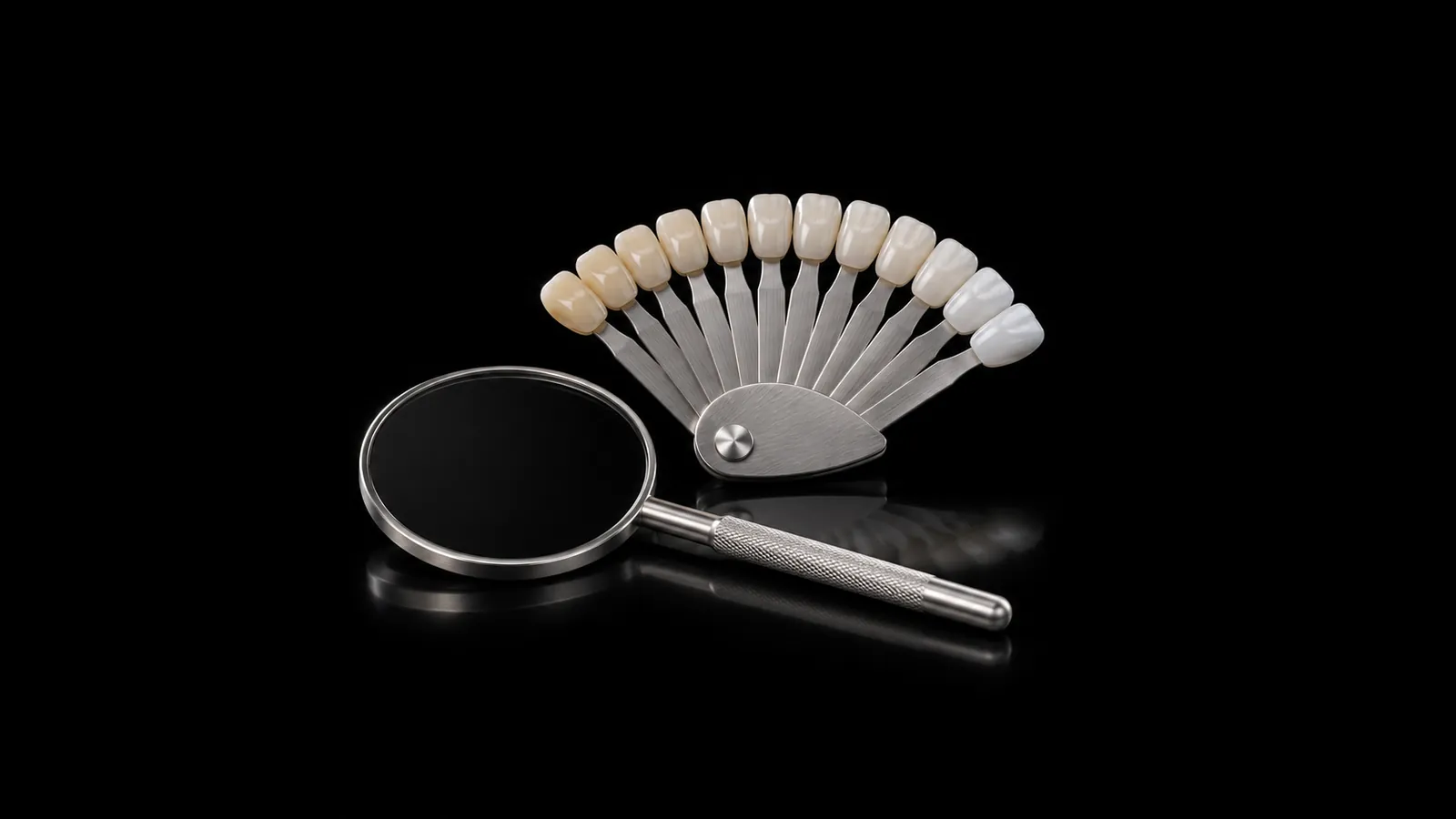
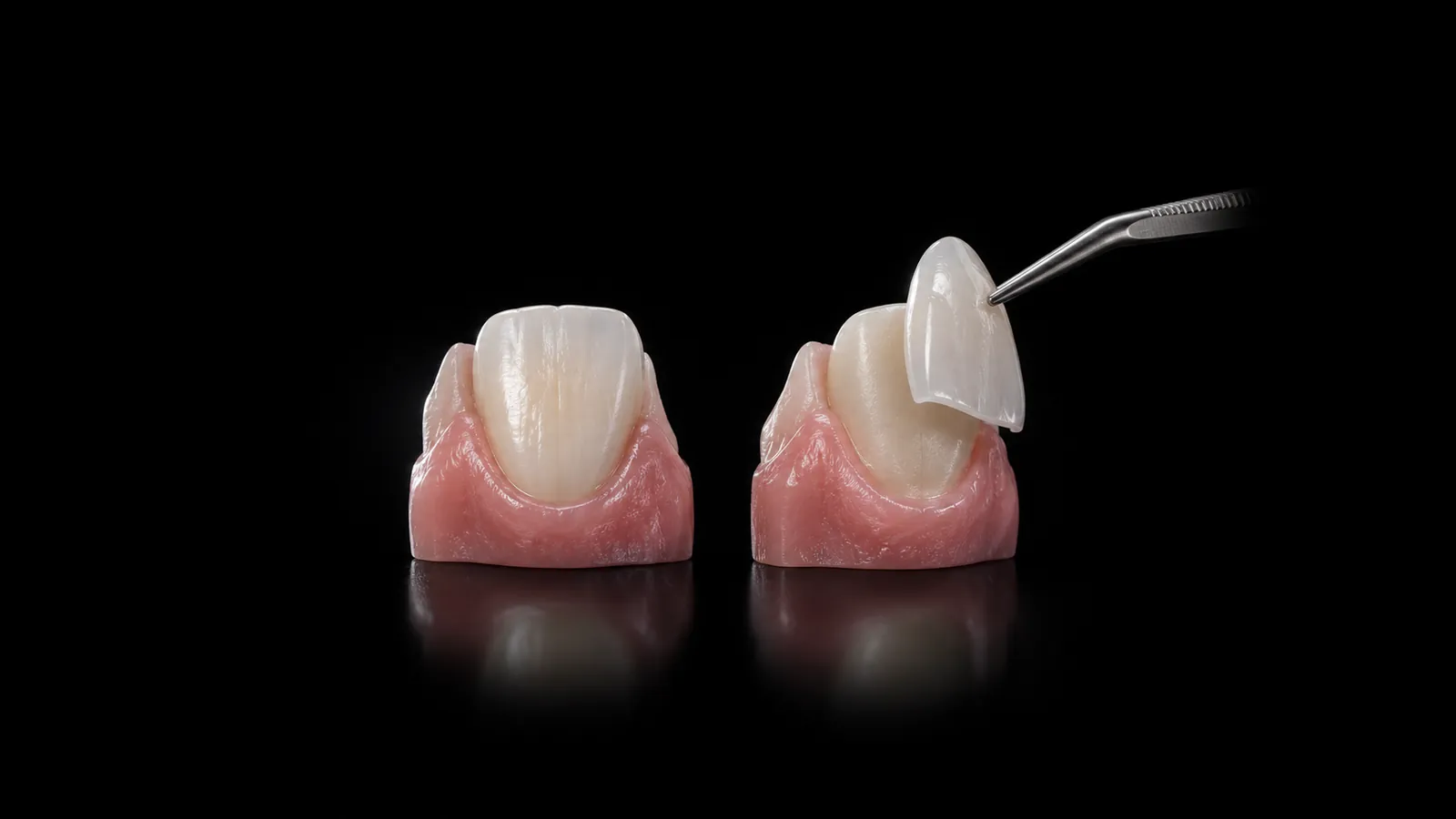
Tooth sensitivity has a cause: decay, receding gums, wear or a crack. A veneer is not a treatment for sensitivity, and it can make a tooth sensitive for a few days itself.
Published by Dr Hafça Moqadem, Dental surgeon in Marrakech4 min read
Trained in aesthetic veneers at the Institut de la Facette in Marseille, Dr Moqadem carries out veneers, whitening and smile design. Each plan starts from your face and your smile, and you approve it before any treatment.
Certificate in aesthetic veneers from the Institut de la Facette, Marseille.
Doctor of dental surgery (state diploma).
Former attaché at Beth Israel Hospital, stomatology department, New York.
CFI graduate in implantology and oral periodontology, Paris V Faculty of Medicine.
Certificate in advanced surgery from the Collège Américain de Paris.
Certificate in clear aligner orthodontics from the Centre de Sourire de Paris.
Certificate in dental and medical emergencies, Paris V.
Certificate in botulinum toxin and hyaluronic acid injections, Paris.
Sensitivity is treated according to its cause, before any cosmetic plan.
A veneer does not cover an exposed root or treat decay.
Temporary sensitivity is possible after fitting; if it persists, it needs checking.
A veneer is not a treatment for sensitivity
You sometimes read that veneers protect sensitive teeth. That is too simple. A veneer is a cosmetic restoration bonded to the front of the tooth: it can cover worn enamel on that surface, but it does not treat decay, receding gums or a crack. It can even make the tooth more sensitive for a while after fitting. Before talking about veneers, it is therefore important to understand where the sensitivity comes from. The cause decides the treatment, not the symptom, and some causes need prompt care.
Possible causes of sensitivity
The ADA lists several causes: tooth decay, a fractured tooth, worn fillings, gum disease, worn enamel and an exposed root. Wear can come from brushing too hard, frequent acidic foods or drinks, or clenching and grinding. Receding gums uncover the root, which is not protected by enamel. Note what triggers the discomfort, cold, sweet things or brushing, how long it lasts and which teeth are affected: these details help the dentist focus the examination and, if needed, the X-rays.
Treatment depends on the cause
Once the cause is identified, the ADA describes several options. A desensitising toothpaste may be enough for mild sensitivity. A fluoride gel or varnish can be applied in the surgery. A crown, inlay or bonded composite can cover a damaged area. A gum graft can protect an exposed root. Finally, root canal treatment may be needed if the pulp is involved. Decay or gum disease is treated before any veneer plan, because placing a restoration over an active problem invites complications later.
When veneers may have a role
Veneers can be considered when the concern is also cosmetic and the front teeth are worn, chipped or irregular in shape, once any active problems have been treated. For a small area, bonded composite can sometimes cover worn enamel while staying conservative. For several teeth, ceramic veneers can be compared. The ADA notes, however, that decay and gum disease must be treated first, and that veneers may not be suitable if you clench or grind your teeth or have a deep overbite.
Cleveland Clinic notes that teeth may become more sensitive to heat and cold after veneers are placed. With a ceramic veneer, enamel preparation and the period with temporaries can also be less comfortable. The gum around veneers may stay slightly tender for a few days. These effects usually settle. Report them rather than putting up with them: sensitivity that gets worse, spontaneous pain at night or discomfort when chewing may point to a high bite or another problem that needs checking.
A veneer covers the visible front of the tooth crown, not the root. If sensitivity comes from a receding gum, a veneer will not fix it. The dentist then looks for the cause of the recession, such as brushing too hard or gum disease, and may suggest gum treatment, a protective varnish or, in some cases, a graft. The edge of a veneer must also follow the gum precisely: an edge that is too thick traps plaque and can keep inflammation and sensitivity going.
Clenching, grinding and erosion
Clenching and grinding wear enamel and can cause sensitivity. They also expose veneers to fractures and debonding. The ADA says veneers may not be suitable in this case, and a night guard may be suggested after an examination. Erosion from frequent acidic drinks should also be reduced, otherwise it continues around the restorations. Dealing with these causes before and after veneers protects both your natural teeth and the veneers, and makes sensitivity less likely to return.
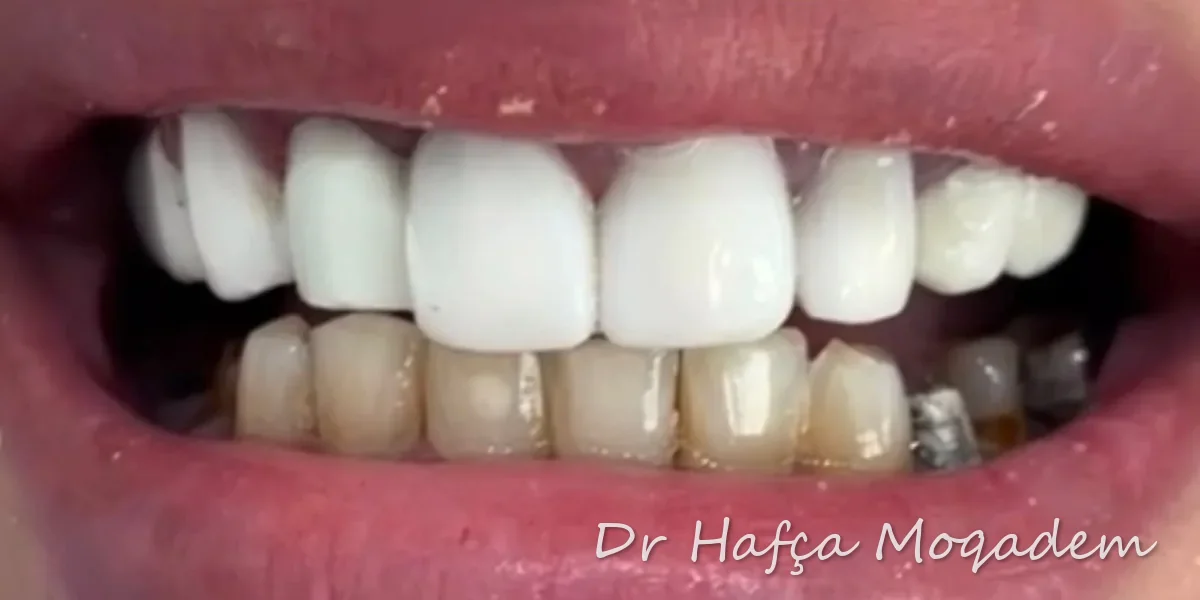
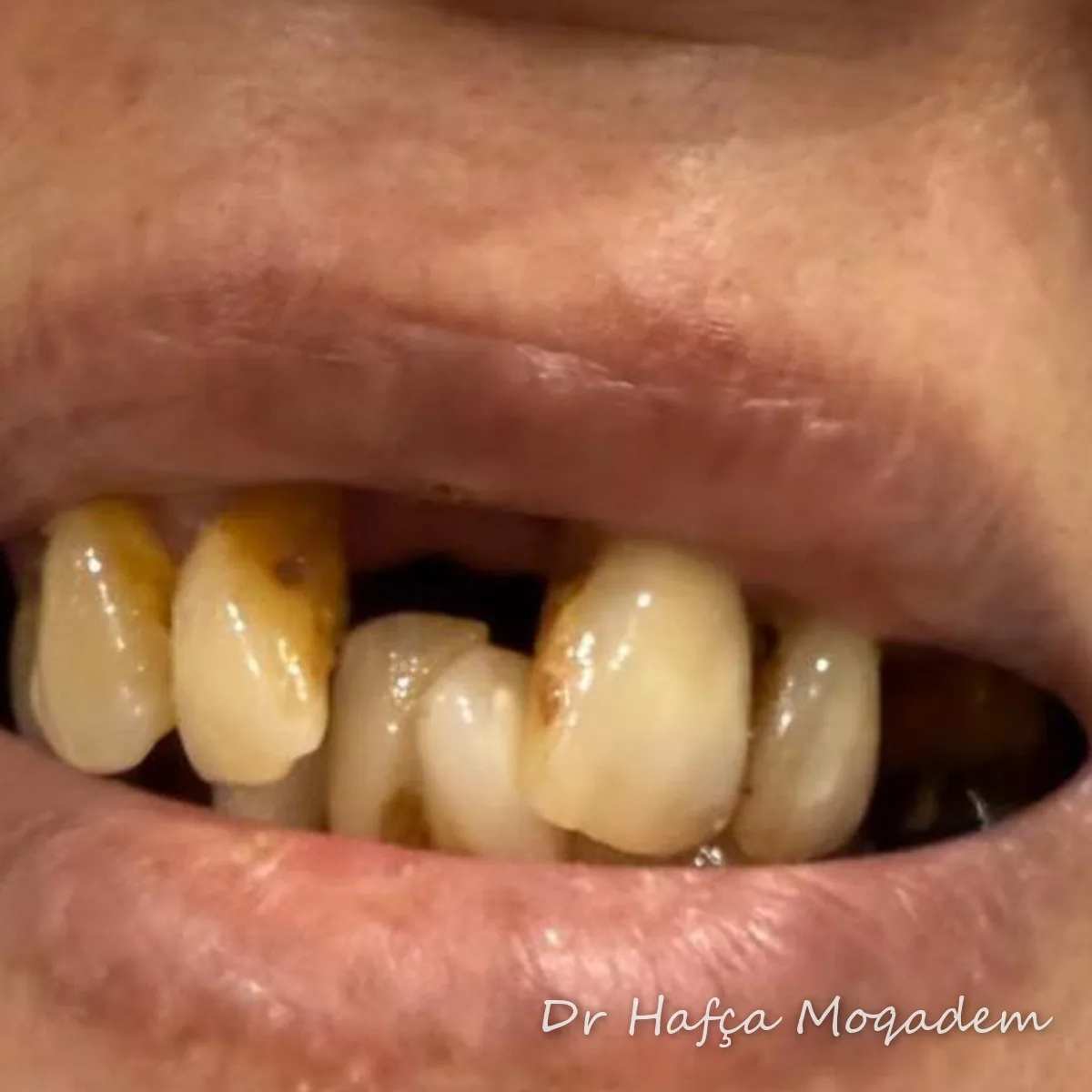
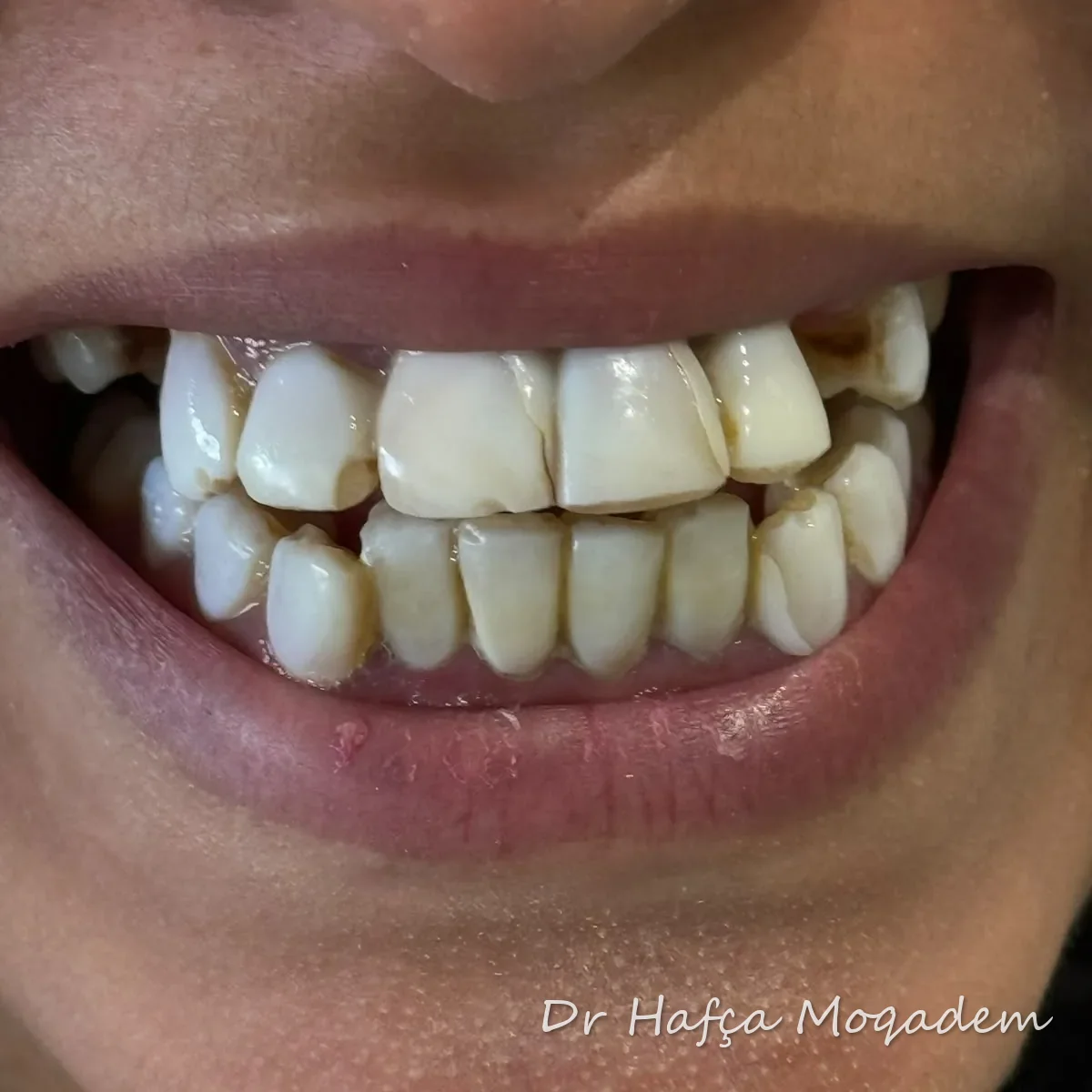
Before
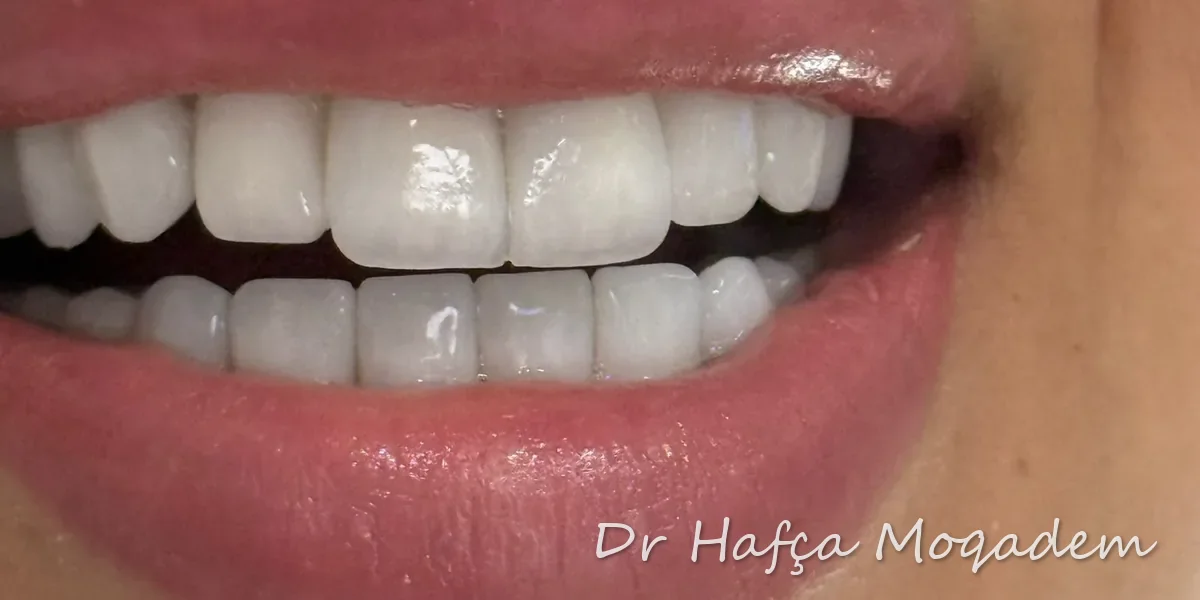
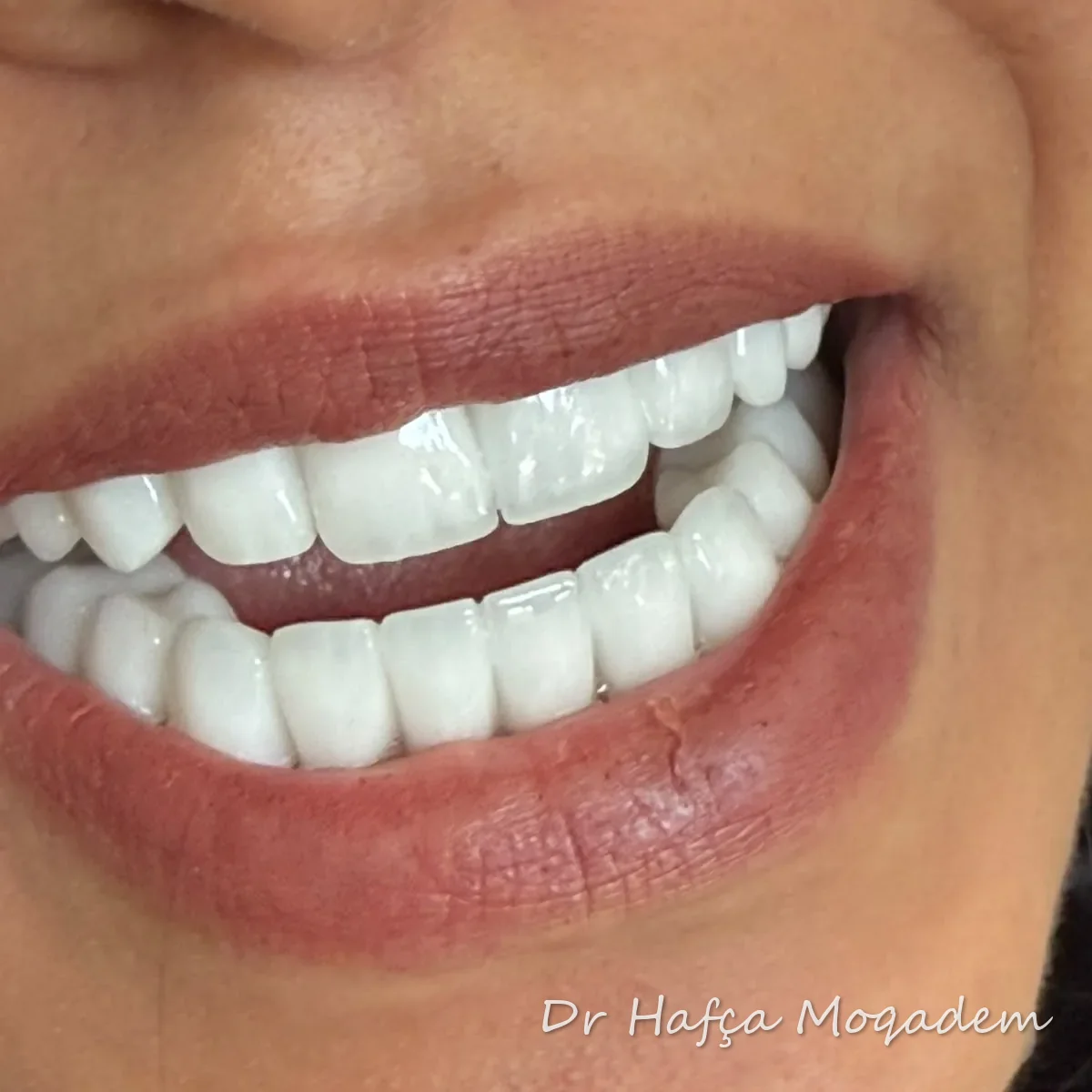
After
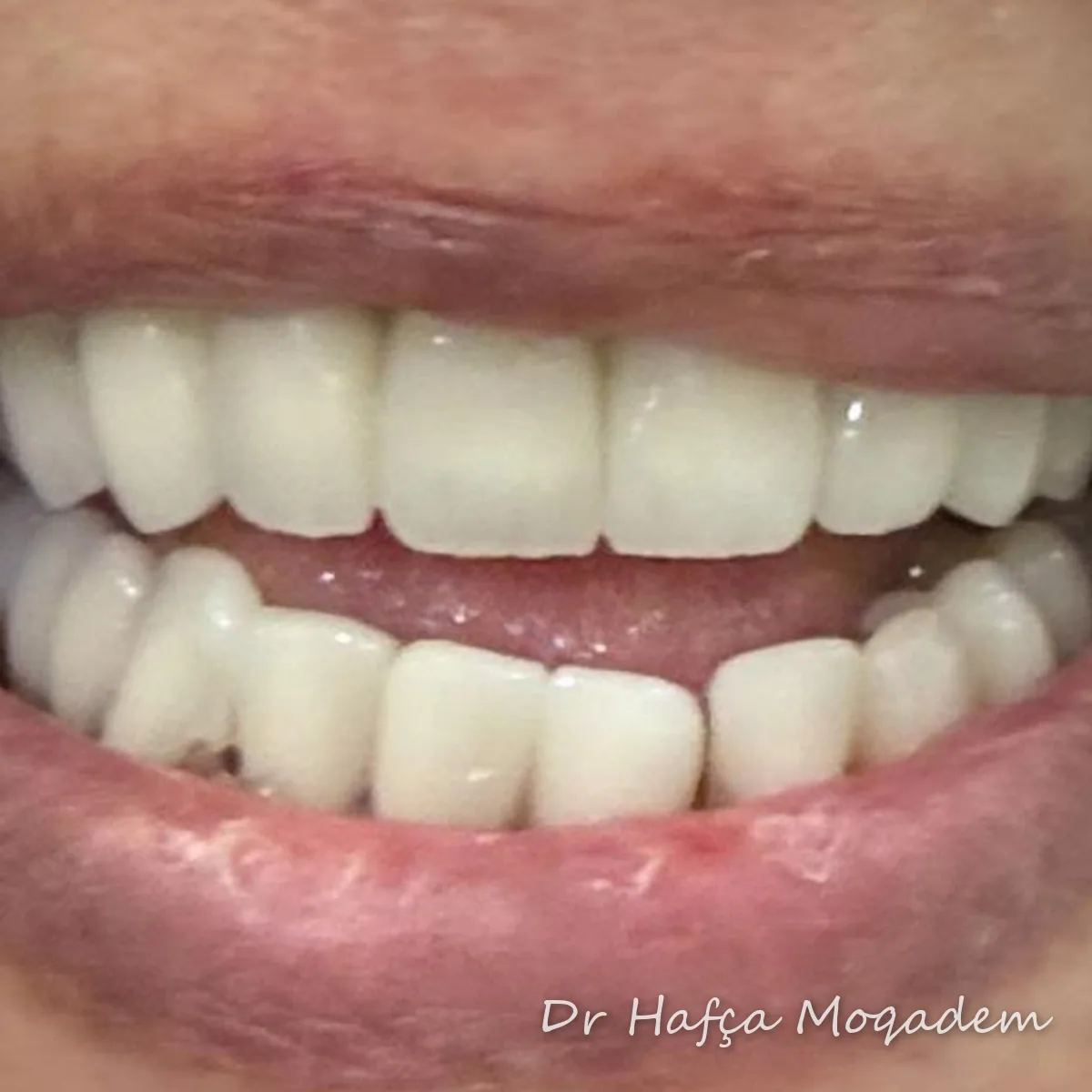
Real case from the clinic Hollywood smile, another patient of the clinic before and after. See the cases: Hollywood smile
Hygiene, toothpaste and follow-up
The NHS advises brushing twice a day for about 2 minutes with a toothpaste containing at least 1,350 ppm fluoride, spitting rather than rinsing and cleaning between your teeth. For veneers, Cleveland Clinic recommends a soft-bristled brush and a non-abrasive fluoride toothpaste. A toothpaste for sensitive teeth can be used on your dentist’s advice. Avoid abrasive whitening powders. See your dentist if sensitivity lasts more than a few weeks, affects only one tooth or comes with spontaneous pain.
The visual guide
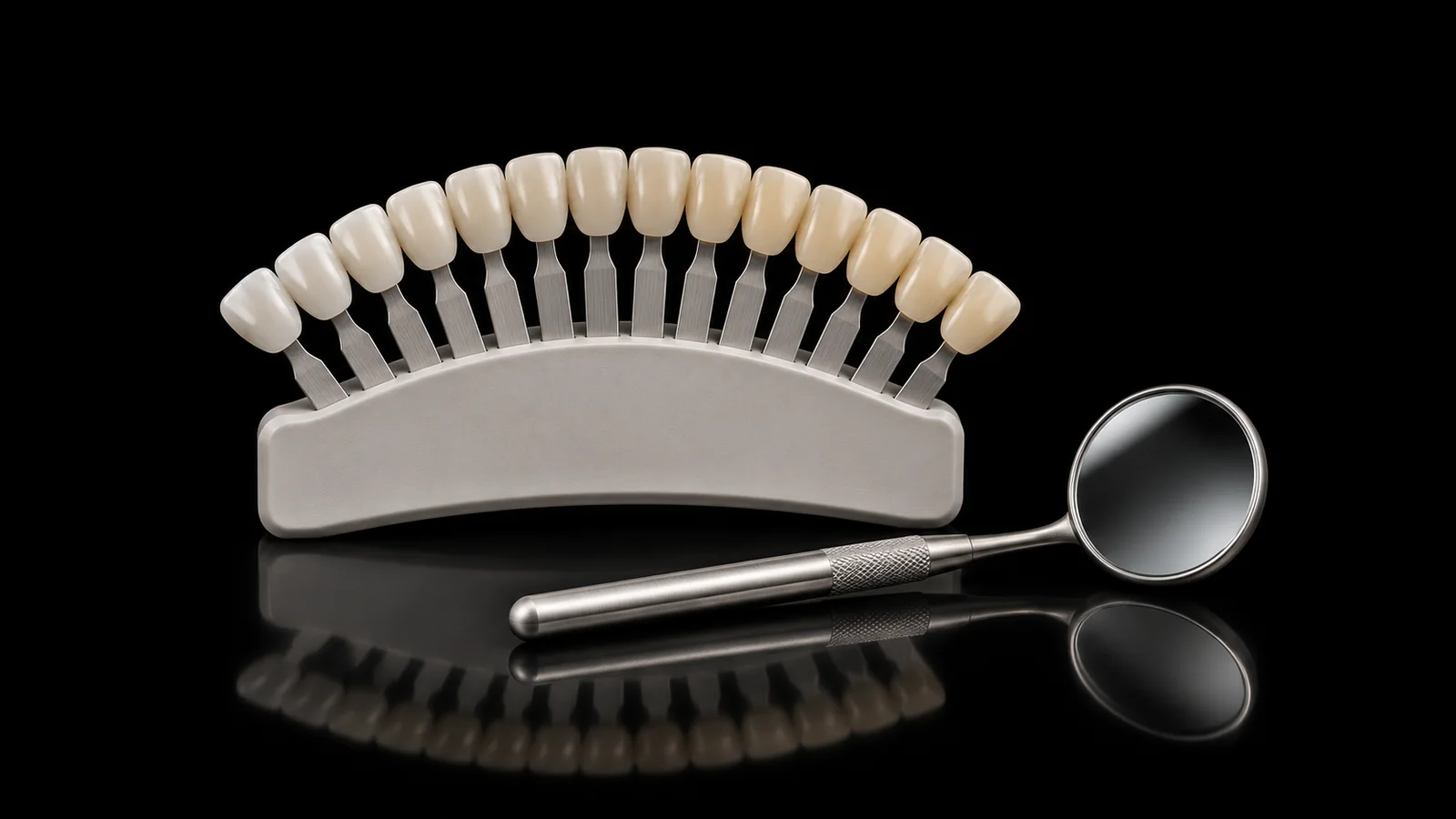
Shade, shape, position: 3 different goals
Principles to help you prepare your questions. The assessment makes it possible to know what suits your situation.
Item
Principle
To clarify at the clinic
Whitening
Lightens natural teeth.
Does not change the shape; existing restorations do not whiten.
Composite
Adds a resin to correct certain shape defects.
Maintenance, touch-ups and possibilities depend on the tooth.
Veneers
Cover the visible surface to change shape and appearance.
Some preparation may be needed and must be explained before any decision.
A daily guide
Brushing time, in practice.
The NHS recommends about 2 minutes of brushing, twice a day, with a fluoride toothpaste.
Choose the questions you would like to ask. Your choices stay on this page and are neither saved nor sent.
Guéliz clinic, Marrakech
Your check-up at the Guéliz clinic.
An article does not replace an examination. At the clinic, Dr Hafça Moqadem examines you, explains the options and gives you a written plan before any treatment.
Call the clinic, write to us on WhatsApp, or choose a day and a time yourself: your request reaches the clinic's WhatsApp and they will confirm the appointment.
A small tooth, a chipped edge, a small gap: composite bonding may be one of the options. Here is how it works, what it does not do and how to prepare your appointment.
A Hollywood smile is not a shade, it is an overall project. Understand what it changes, what it requires and how to decide calmly, with no promise of an identical smile for everyone.
Usually not: a ceramic veneer needs a little enamel removed, and enamel does not grow back. A veneer can be repaired or replaced, but you cannot go back to the original tooth.