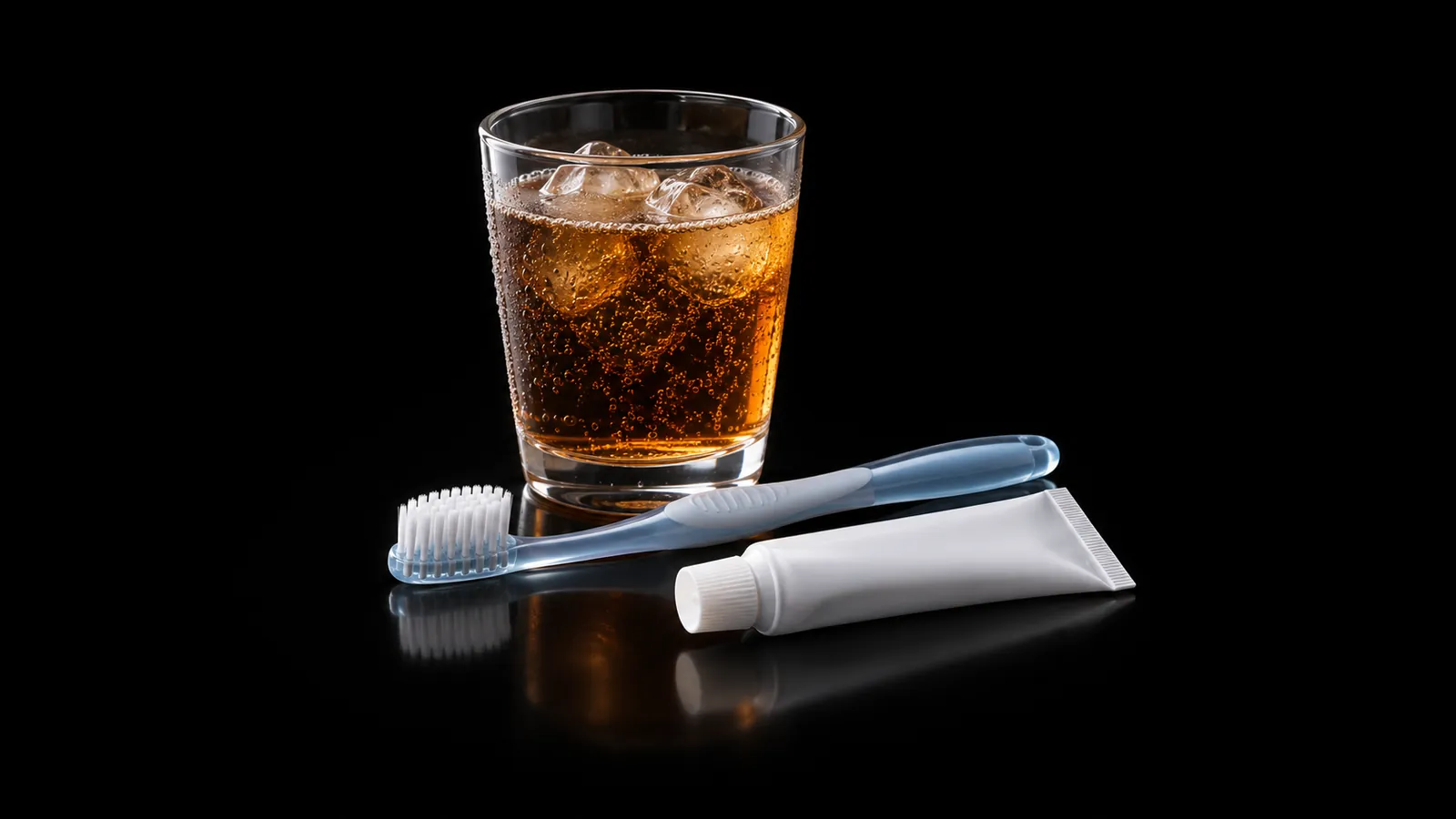
Sugary drinks and brushing, useful guidelines
Sugar, acidity, when to brush and fluoride toothpaste: practical guidelines to protect your teeth when you have sugary drinks.
Read the articleToothache usually comes from decay or its consequences, but it can also signal an abscess, a crack, sinusitis, and rarely a problem that is not dental at all.
Published by Dr Hafça Moqadem, Dental surgeon in Marrakech4 min read
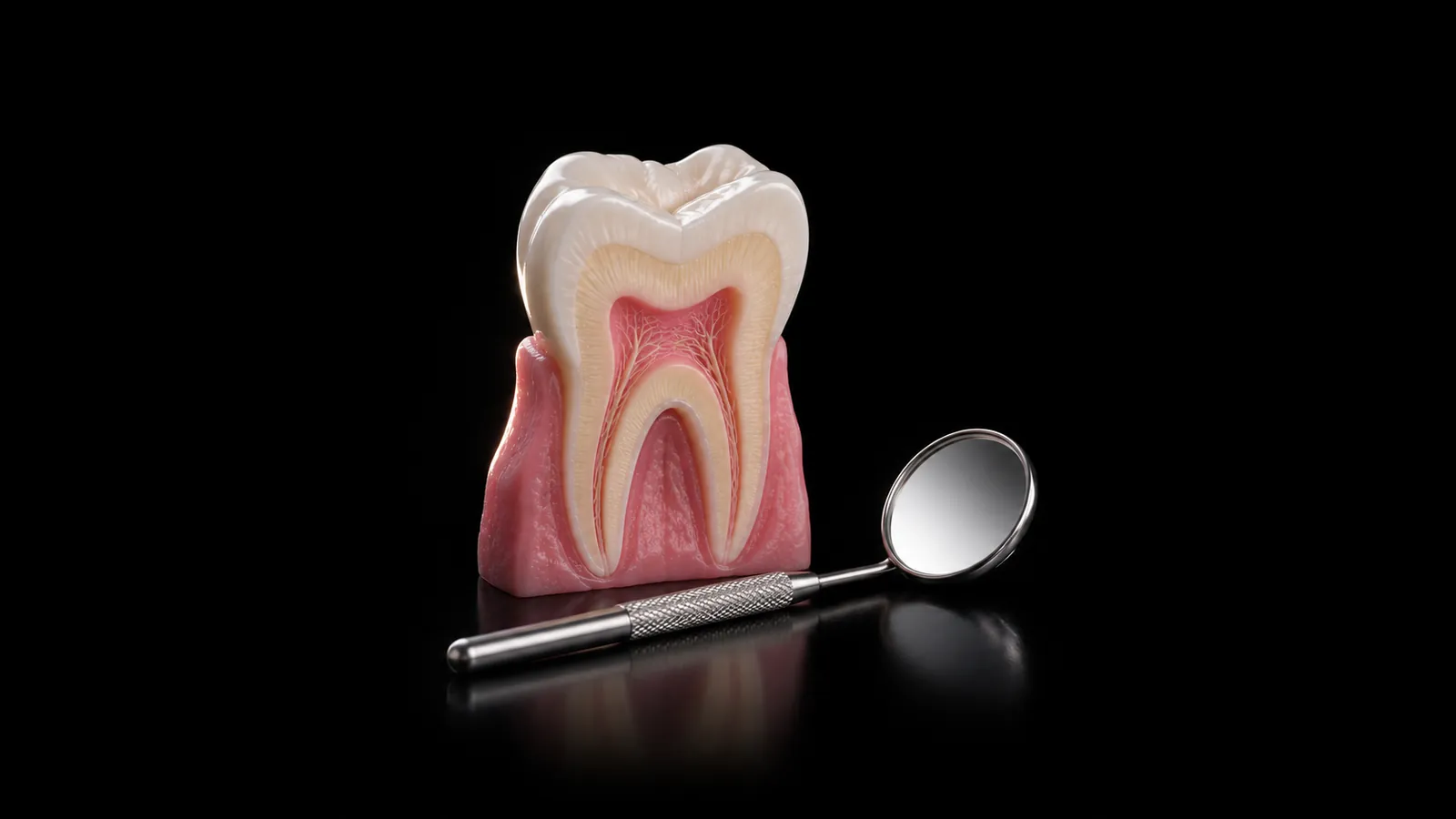
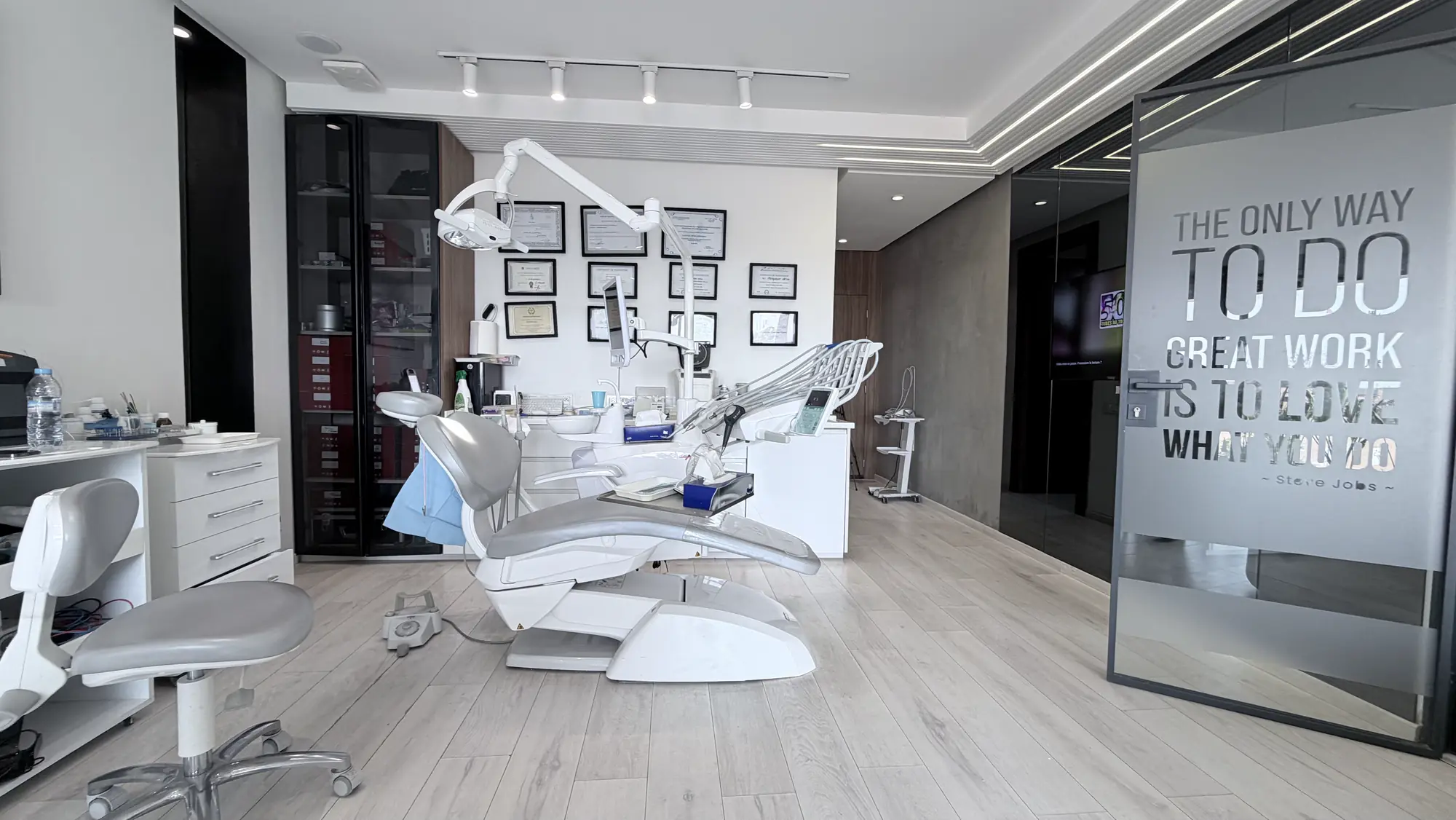
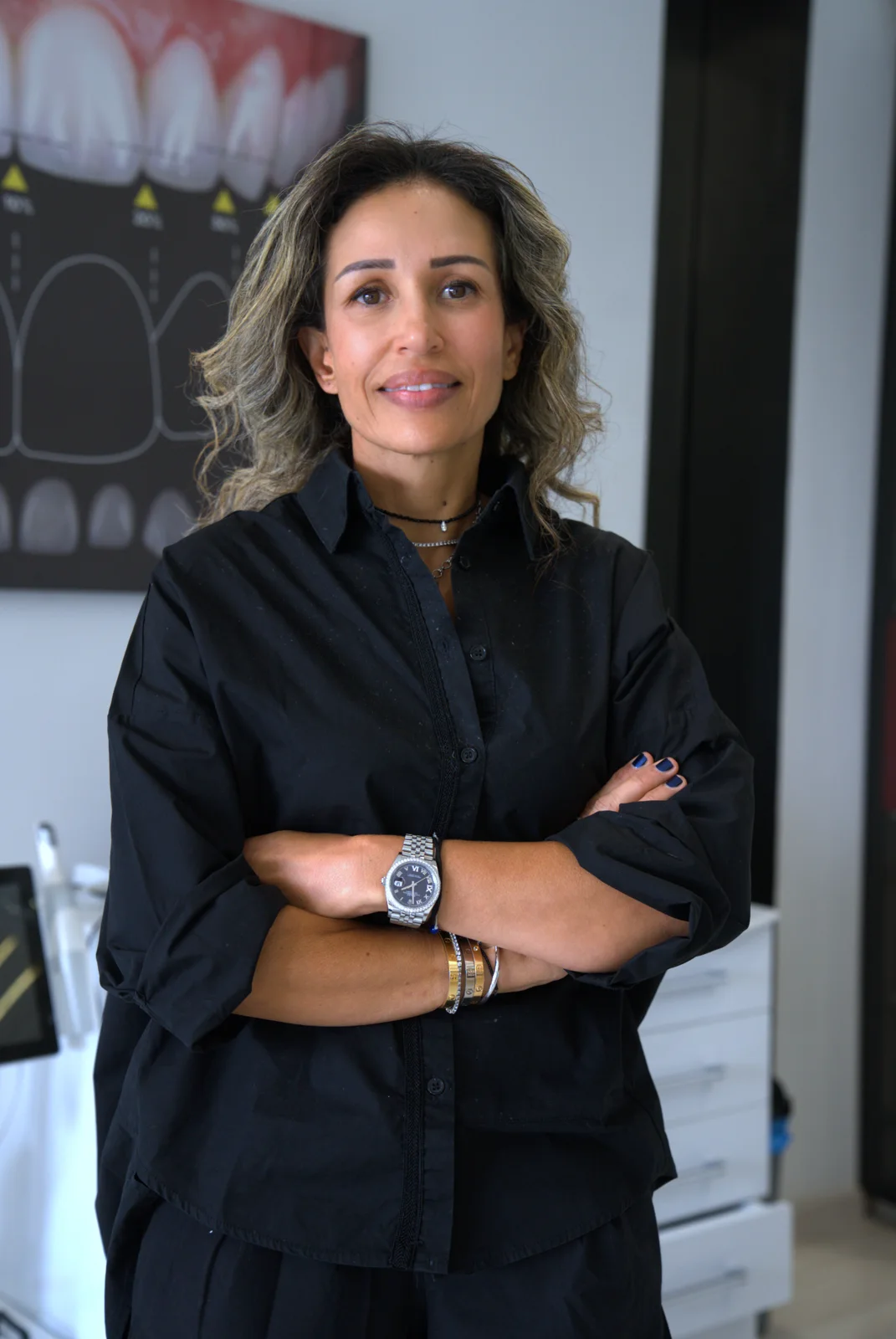
At the Guéliz clinic, Dr Hafça Moqadem carries out the consultation, the check-up and routine care herself. She shows you what she sees during the examination and on the X-rays before suggesting any treatment.
Looking for a dental surgeon in Marrakech? Dr Hafça Moqadem welcomes you at Madani Plaza, Guéliz.
The MSD Manual says most toothaches are caused by decay and its consequences: inflammation of the pulp, the nerve of the tooth, and sometimes an abscess when the infection reaches the tip of the root. The NHS and Cleveland Clinic also list a cracked or broken tooth, a damaged filling or crown, teeth grinding, gum disease and a partly erupted wisdom tooth that becomes infected. Where you feel the pain does not always point to the tooth responsible. That is why an examination, and often an X-ray, are needed before choosing a treatment.
Some features point towards a diagnosis without replacing it. According to the MSD Manual, in a healthy tooth pain triggered by cold stops almost immediately; if it lingers for more than a few seconds, the pulp is probably damaged. Throbbing pain that wakes you at night or returns for no reason suggests more advanced inflammation. Pain when chewing can signal a crack or an infection at the root tip. A swollen gum, a bad taste or pus point towards an abscess. Note these details, how long the pain has lasted and what relieves it: this information helps the dentist a great deal.
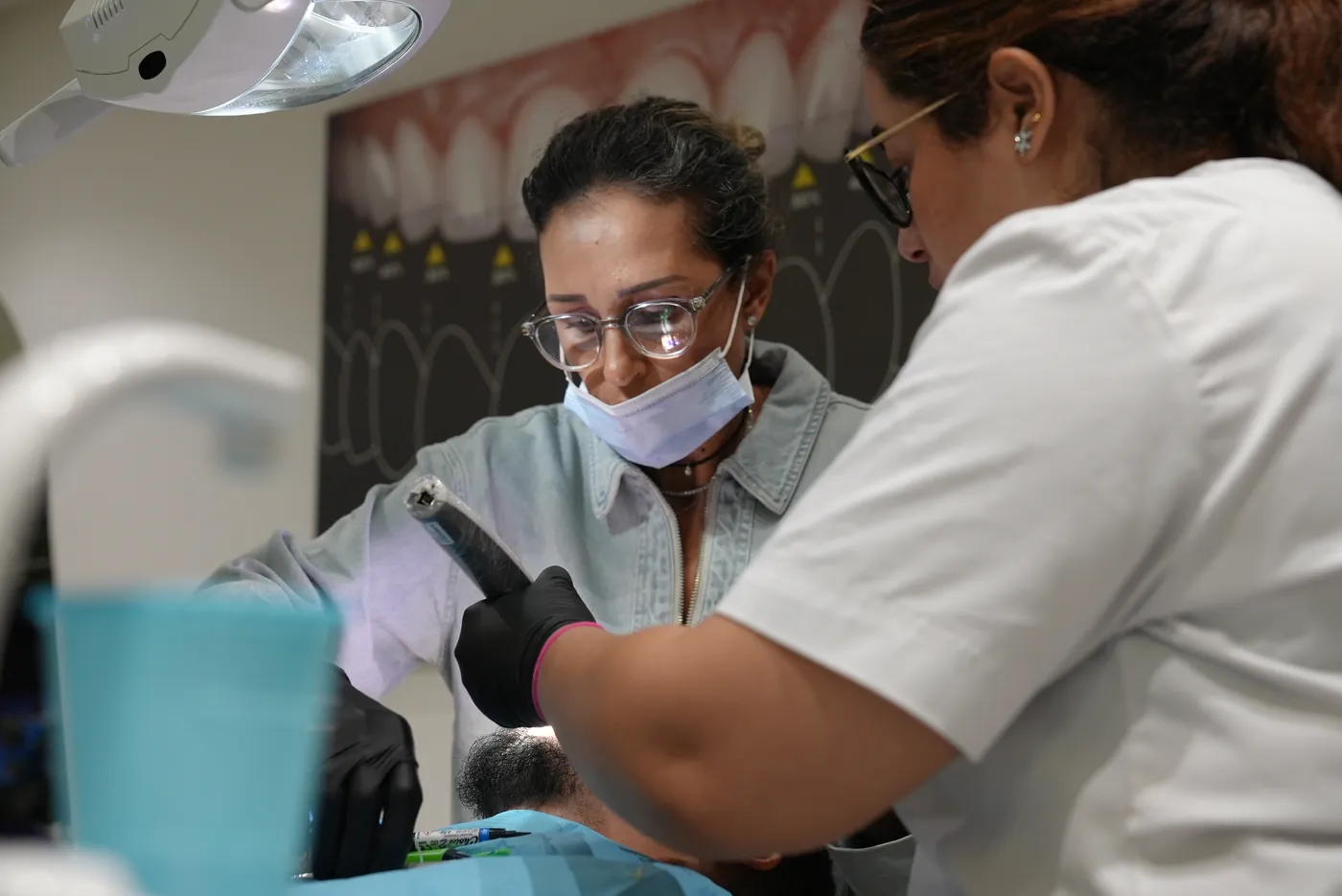
Not every pain felt in the teeth is dental. The MSD Manual explains that sinusitis is often felt as pain in the upper teeth near the sinus, especially during or after a cold, sometimes with a headache and tenderness over the sinus. Clenching or grinding can also cause widespread pain in the teeth and jaw. More rarely, jaw pain accompanies a heart problem: the NHS says to call emergency services straight away if you have chest pain spreading to your arms, neck or jaw. In that case, do not book a dental appointment.
The NHS advises seeing a dentist if toothache lasts more than 2 days, if painkillers do not ease it, or if your cheek or jaw is swollen. It asks for prompt care when the pain comes with a high temperature, pain when biting, red gums or a bad taste in the mouth. Cleveland Clinic adds pain when opening the mouth wide to the reasons to be seen. The MSD Manual recommends seeing a dentist as soon as possible for swelling over the jaw, very severe pain or pus draining from the base of a tooth. Do not delay the appointment if the pain eases for a while.
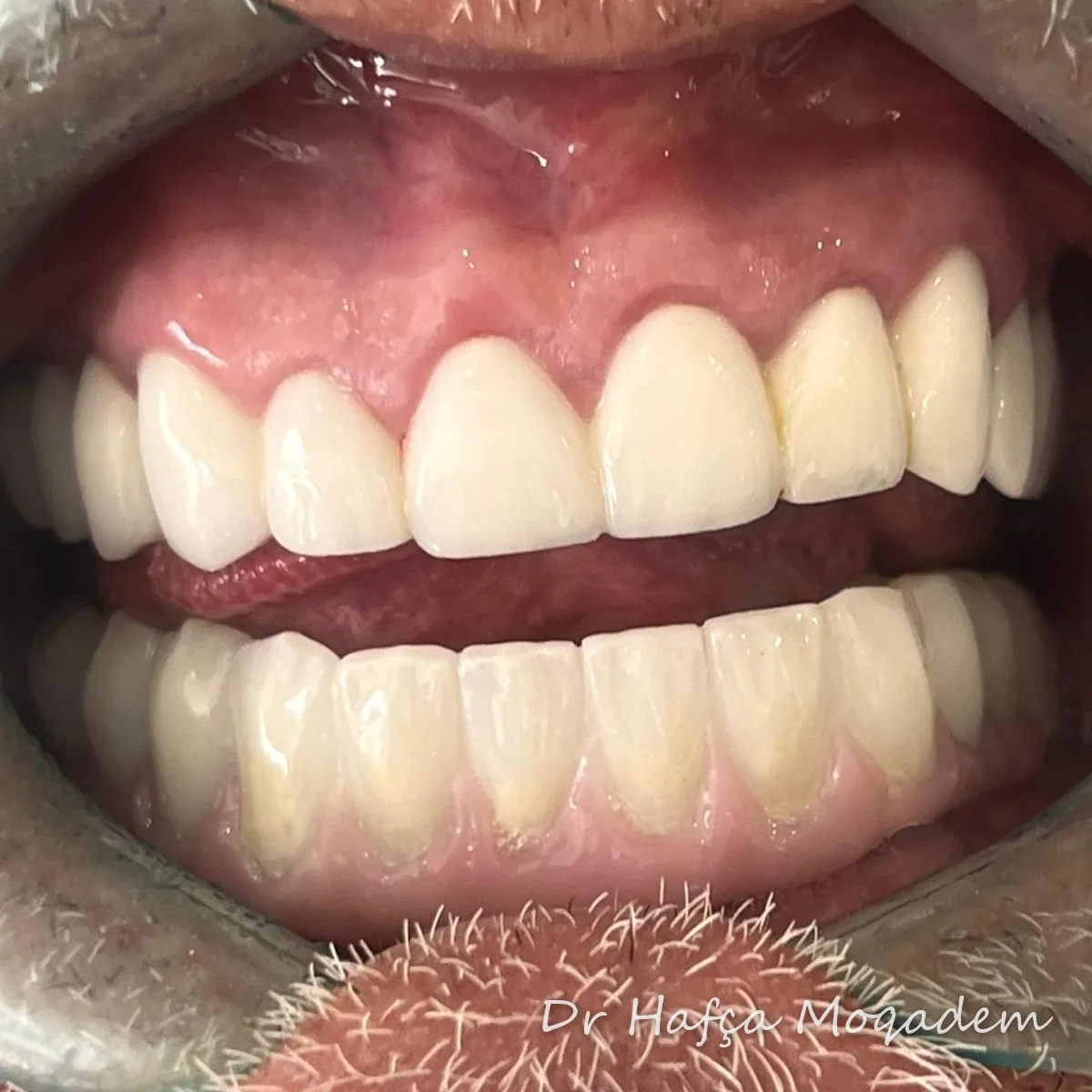
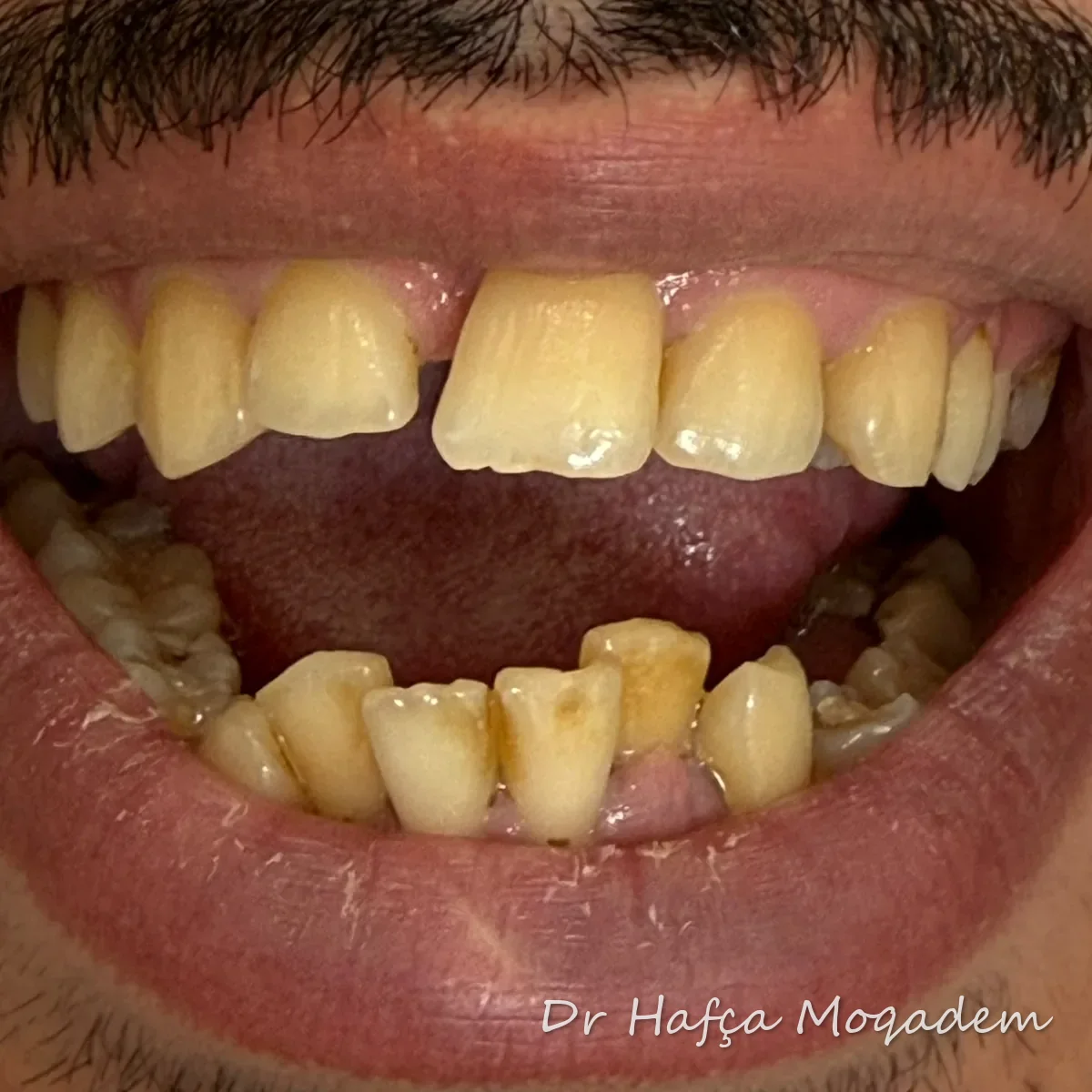 Before
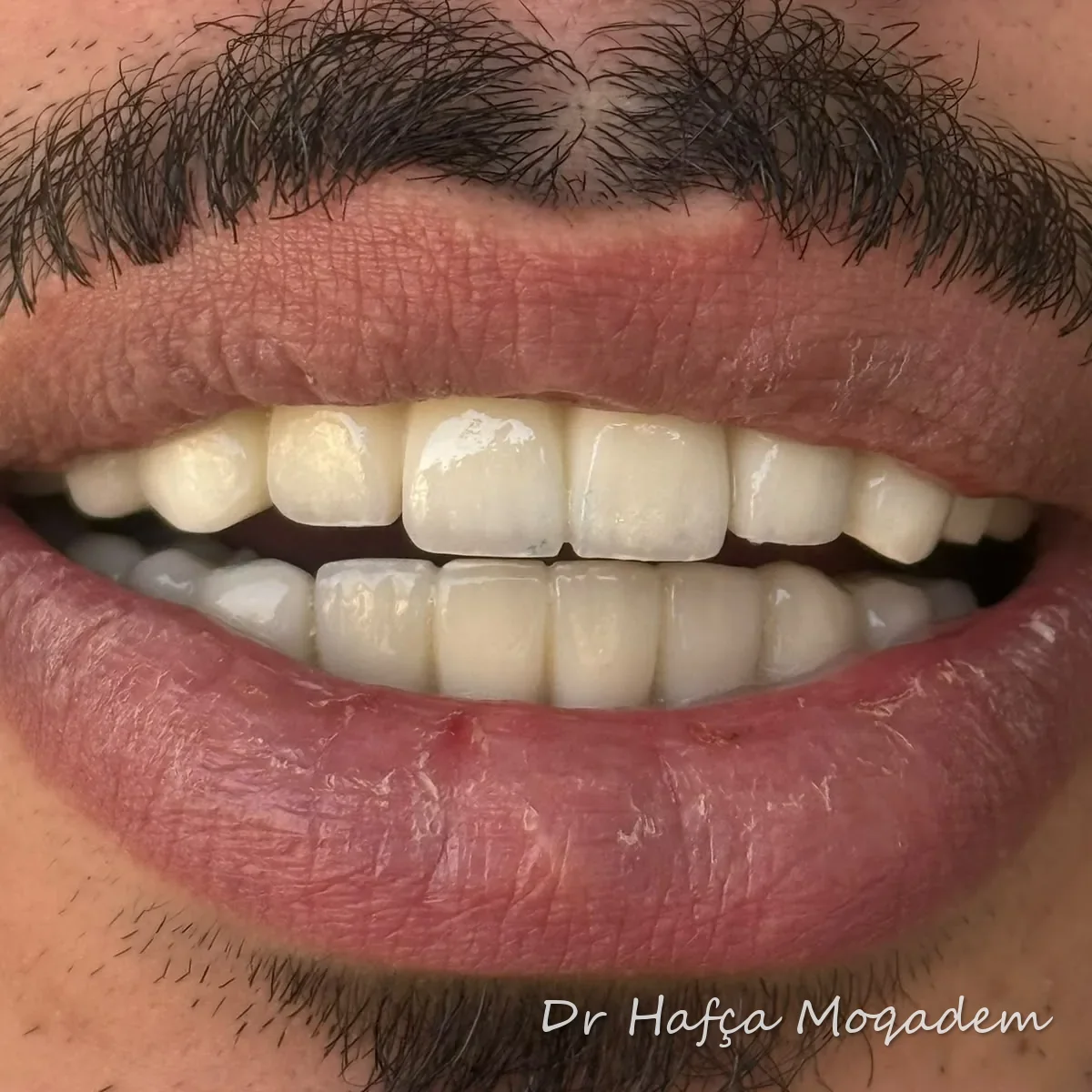 After
Real case from the clinic Hollywood smile, a patient of the clinic before and after. See the cases: Hollywood smile
A dental infection can, rarely, spread. The NHS says to go to emergency services if the area around your eye or your neck swells, or if swelling in your mouth or neck makes it hard to breathe, swallow or speak; in that case, do not drive yourself. The MSD Manual also lists as warning signs a headache with confusion, fever, swelling or tenderness of the floor of the mouth, and difficulty seeing or double vision. Cleveland Clinic mentions a fever above 38.3 °C, bleeding that does not stop with pressure and swelling below the eye.
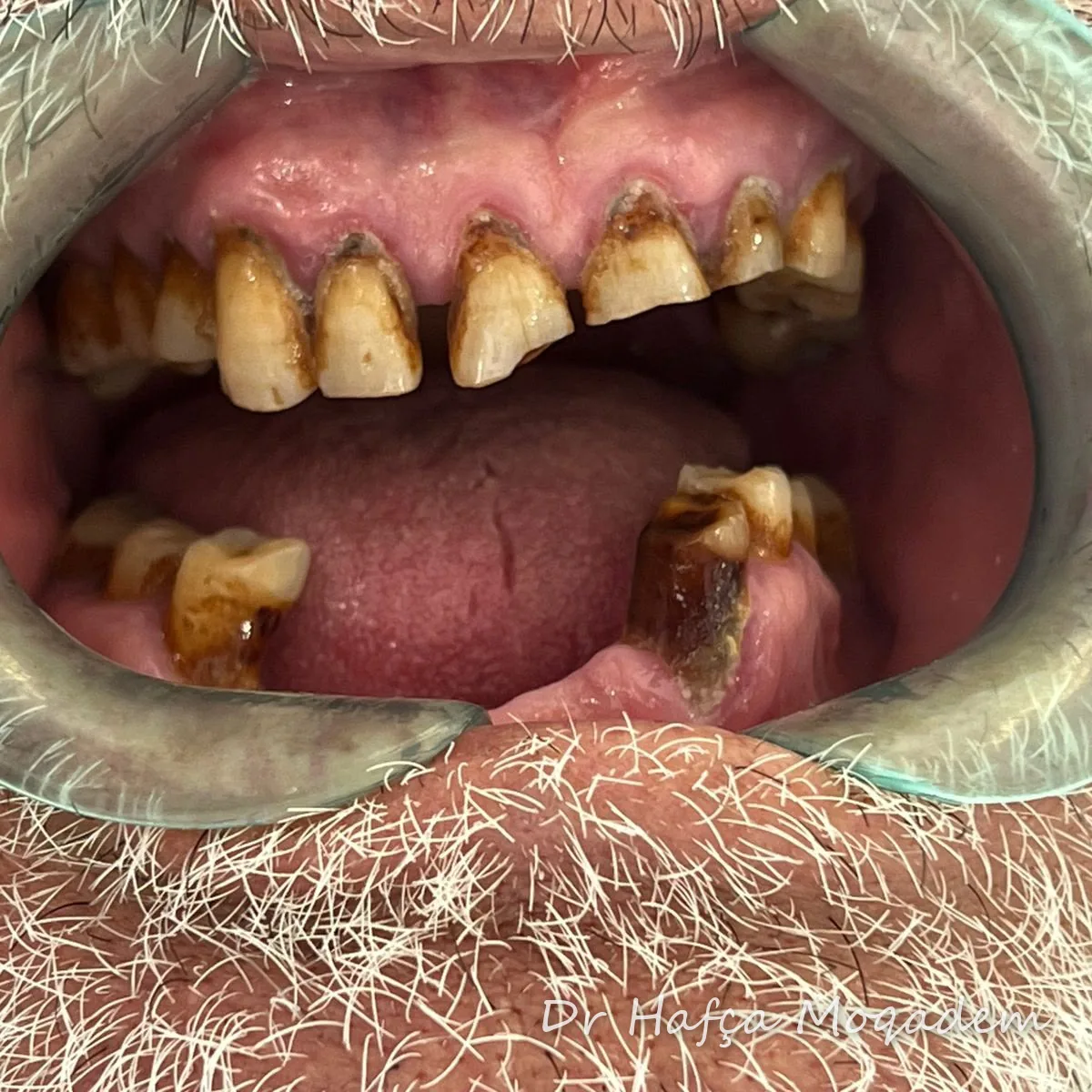 Before
 After
Real case from the clinic All-on-4, a patient of the clinic: before, then with his fixed arches on implants. See the cases: All-on-4 / All-on-6
The NHS suggests a few measures to ease moderate pain: take a painkiller such as paracetamol or ibuprofen, asking a pharmacist for advice and following the leaflet; use a pain-relieving mouth gel; rinse with warm salt water and spit it out, which is not suitable for children; eat soft foods and chew on the other side. Avoid sweet, very hot or very cold foods, and do not smoke. These steps relieve pain but do not treat the cause: decay or infection keeps progressing. Tell the clinic about medicines already taken, any allergies and your current treatments.

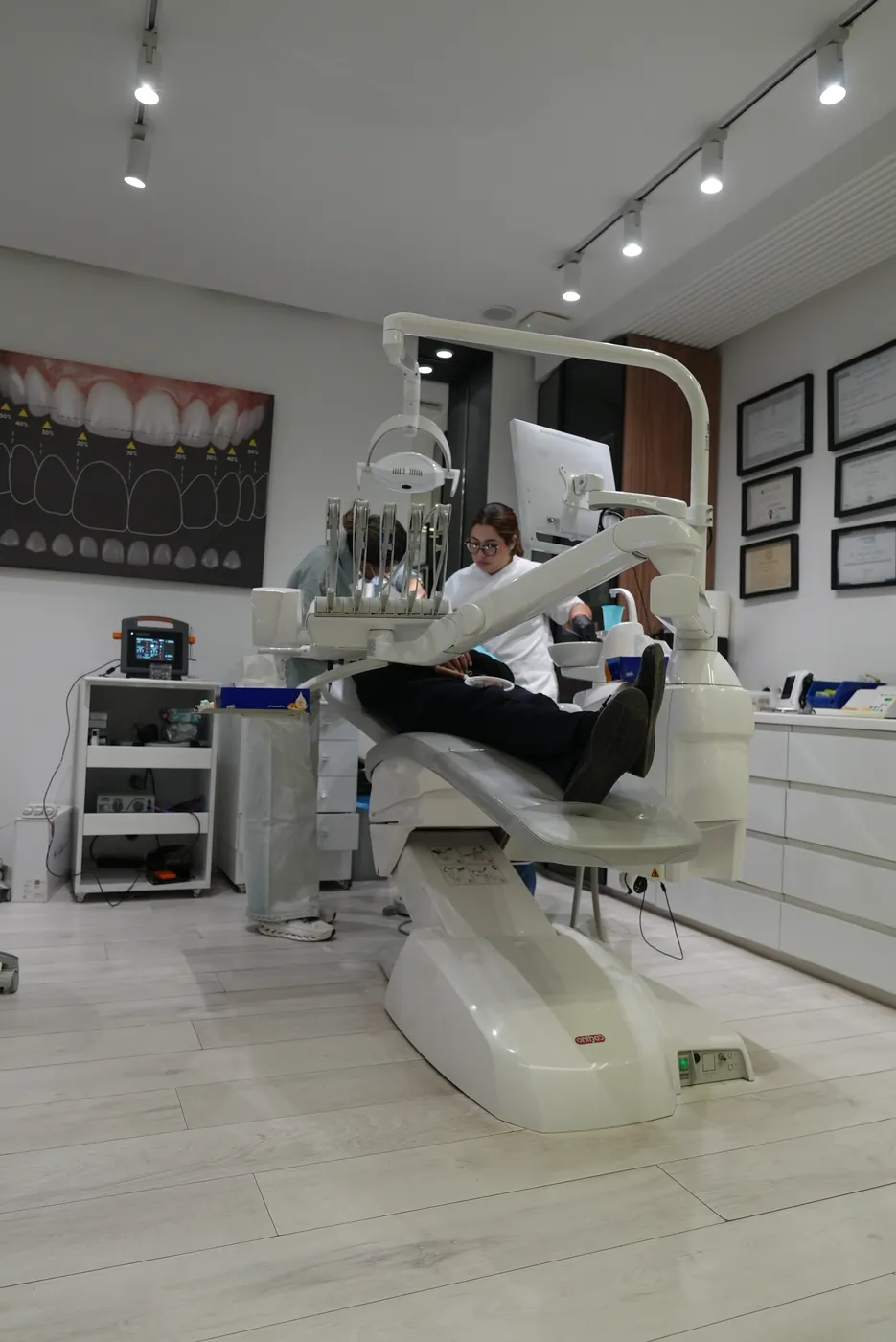
The MSD Manual describes the examination: questions about the pain and your history, an examination of the face, mouth and teeth, a cold test, and X-rays in most cases. Treatment depends on the cause. A small cavity or chip is repaired with a filling. If infection reaches the pulp, root canal treatment removes the inflamed tissue inside the tooth. A tooth that is too damaged may have to be extracted, with the infection cleaned out. An abscess may be drained. Antibiotics are kept for certain situations and do not replace treatment of the tooth itself.
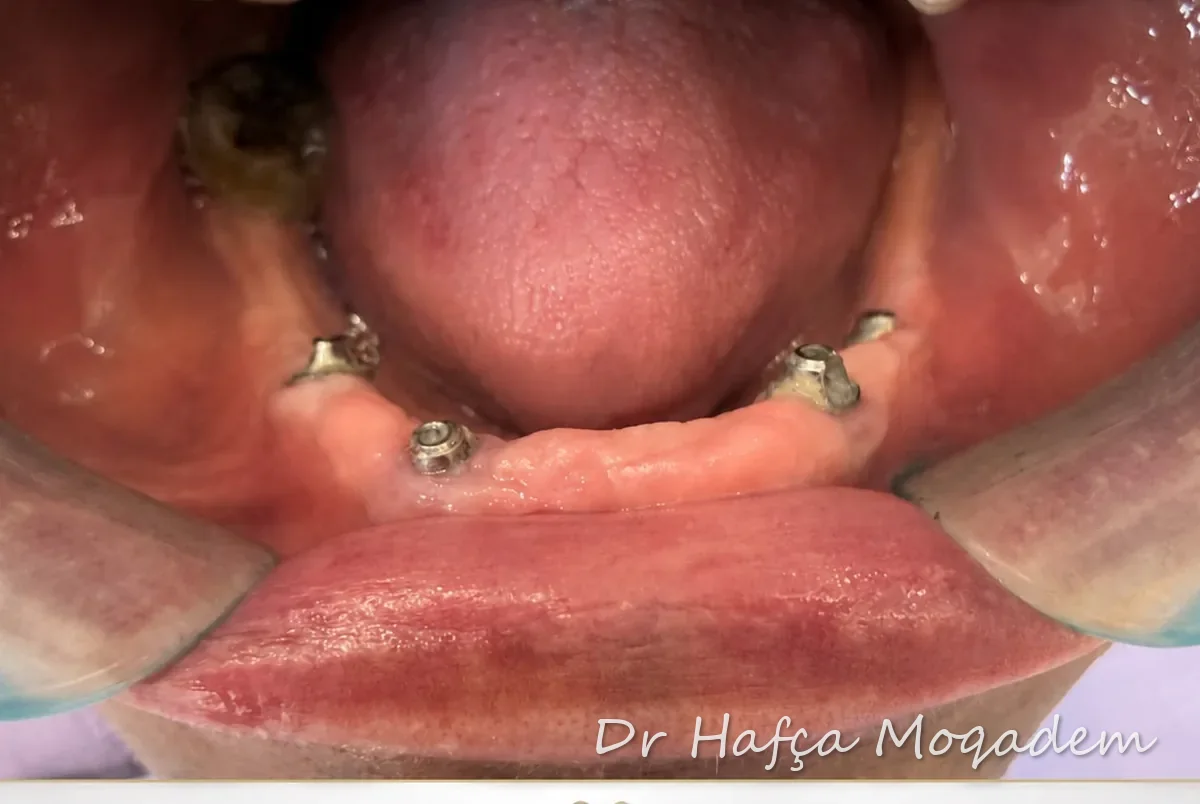 Before
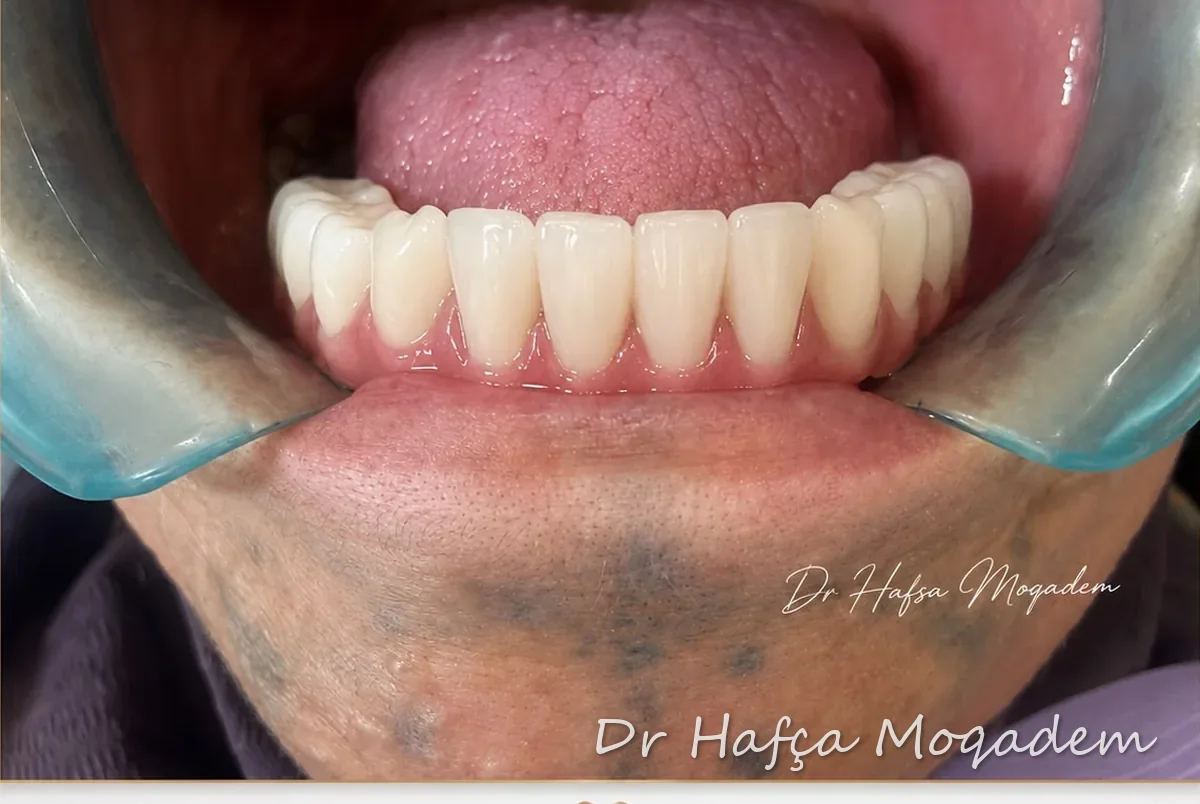 After
Real case from the clinic All-on-4, a patient of the clinic: the implants in place, then the fixed arch. See the cases: All-on-4 / All-on-6
Not every toothache can be prevented, but many start with neglected decay or gums. Brush at least twice a day with fluoride toothpaste, clean between your teeth every day with floss or interdental brushes, and limit snacking and sugary drinks. The NHS recommends a check-up if you have not had one for two years, or one year for under-18s. If you clench or grind your teeth, mention it: a night guard can be discussed. New sensitivity, bleeding gums or a tooth that changes colour deserve an examination before pain sets in.
The visual guide
Principles to help you prepare your questions. The assessment makes it possible to know what suits your situation.
| Item | Principle | To clarify at the clinic |
|---|---|---|
| Examine | Listen to your discomfort and examine the mouth. | Additional tests are offered if necessary. |
| Explain | Compare the options and their limits. | The treatment depends on the diagnosis and on your expectations. |
| Follow up | Check the treatment and adapt your routine. | The follow-up schedule is personalised. |
A daily guide
The NHS recommends about 2 minutes of brushing, twice a day, with a fluoride toothpaste.
Source: NHS, How to keep your teeth clean. A prevention guide, with no prediction of an individual result.
Your next appointment
Choose the questions you would like to ask. Your choices stay on this page and are neither saved nor sent.

Guéliz clinic, Marrakech
An article does not replace an examination. At the clinic, Dr Hafça Moqadem examines you, explains the options and gives you a written plan before any treatment.
Call the clinic, write to us on WhatsApp, or choose a day and a time yourself: your request reaches the clinic's WhatsApp and they will confirm the appointment.
2nd floor, No. 180 Madani Plaza, Boulevard Abdelkrim Al Khattabi, Guéliz, Marrakech
Sugar, acidity, when to brush and fluoride toothpaste: practical guidelines to protect your teeth when you have sugary drinks.
Read the articleThere is no official ranking of dentists. Here are practical criteria for choosing a practitioner who suits your needs, and the questions to ask.
Read the articleWhere to look for a dental surgeon, which documents to bring and which questions to ask to make good use of your first consultation.
Read the articleBoth can move teeth, but they are not lived with in the same way. Compare them, then prepare the question that matters: which one suits your mouth?
Read the articleA small tooth, a chipped edge, a small gap: composite bonding may be one of the options. Here is how it works, what it does not do and how to prepare your appointment.
Read the articleA Hollywood smile is not a shade, it is an overall project. Understand what it changes, what it requires and how to decide calmly, with no promise of an identical smile for everyone.
Read the articleReplacing one or several teeth can be done in three very different ways. Understand what each one asks of you, day to day and at the clinic, before choosing.
Read the articleA quote alone is not enough to choose: here is what to prepare before the trip, check on arrival and organise for follow-up once you are back home.
Read the articleTo find out more about the general information in this article:
Hello. Choose a question below and the answer will appear here.